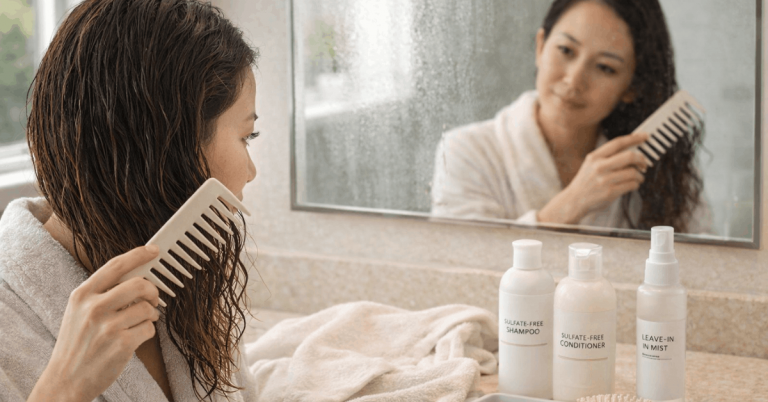
That pile of short, snapped strands on your bathroom counter has nothing to do with your shampoo. The tools sitting in your drawer are doing the real damage every single morning.
Hair breakage builds up through tiny daily stresses that go completely unnoticed. A rough brush. A tight elastic. A cotton towel twisted hard around wet strands.
The frustrating part? Spending $40 on a deep conditioning mask while dragging a brush with bent bristles through tangled hair cancels out every drop of that treatment.
This is a guide for the person who has tried serums and oils and still sees breakage. The fix starts with what your hands are holding, not what’s in the bottle.
Hair Breakage vs. Hair Shedding: Do Your Tools Even Matter?
A lot of people see strands on their brush and panic. But loose hair on a brush could mean two completely different things, and the fix for each one is different.
Breakage shows up as short, uneven pieces. These snap off mid-strand because of friction, tension, or heat. Shedding is full-length hair falling out naturally as part of the growth cycle. Shedding is normal. Breakage is a signal that something in your routine is too rough.
How to Tell Breakage Apart from Shedding
The fastest test is length. Pick up one of those stray hairs and look at it. A shed hair has a tiny white bulb at the root end and runs the full length of your hair. A broken strand is shorter, jagged, and has no bulb.
Tools cause breakage. They do not cause shedding. So if your brush is full of short, snapped pieces every morning, the problem is mechanical. Something is pulling, catching, or heating your hair past its limit.

This distinction matters because it tells you where to spend your money. No amount of biotin supplements will fix breakage caused by a worn-out comb scraping across your strands 365 days a year.
The Five Forces That Snap Hair
Hair breaks through five specific forces during daily care:
- Tension from pulling stretches hair past its elastic limit, causing it to snap at the weakest point
- Friction from rough or worn tool surfaces slowly strips the outer cuticle layer
- Force from fast, heavy brushing puts sudden mechanical stress on fragile strands
- Tool mismatch concentrates pressure on the wrong sections, like using a fine-tooth comb on thick curls
- Wet handling without gentle tools puts stress on hair that is already at its weakest state
Each of these forces comes directly from the tools and habits in a daily routine. The right tools reduce all five at once.
Also read: How to Build a Skincare Routine You Can Maintain
Picking the Right Brush and Comb to Stop Hair Breakage
The brush gets the most contact time with your hair. It touches every strand, sometimes twice a day. That makes it the single most impactful tool swap for reducing breakage.
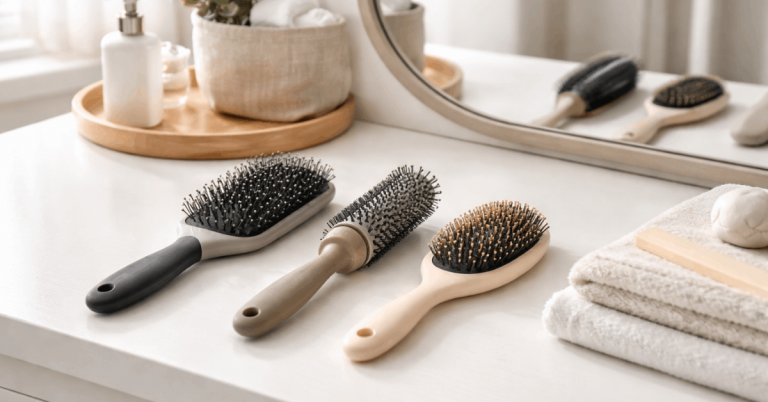
Brush Bristle Type and Flexibility
Stiff bristles yank through tangles. Flexible bristles bend with the hair and absorb resistance instead of transferring it straight to the strand. A brush with soft, flexible bristles and a wide head distributes tension across more strands per stroke, so no single hair bears the full load.
I think the common advice to “invest in treatments before upgrading your brush” gets it backwards, because a $12 brush with flexible bristles contacts your hair 730 times a year while a weekly hair mask sits on it for maybe 10 minutes per session. The math favors the brush.
One thing nobody seems to talk about: bristle condition degrades over time. Bent, frayed, or broken bristles catch on hair and create friction that did not exist when the brush was new. That old brush sitting in your drawer for three years? It is working against your hair now, even if it worked fine originally.
Wide-Tooth Combs and Detangling Brushes
Detangling puts the highest tension on hair out of any daily task. A wide-tooth comb lets knots release gradually because the spacing gives hair room to slide through instead of being forced apart.
Detangling brushes with flexible bristles follow the path of the knot rather than tearing straight through it. Rounded tips on either tool reduce snagging on individual strands. And lighter tools give better control, which means less accidental yanking.
The technique matters as much as the tool. Start detangling at the ends and work upward toward the roots. Going root-to-tip pushes every tangle down the shaft and compounds them into a bigger knot that requires more force to clear.
Heat Tools and Hair Breakage: Temperature Settings Matter More Than Brand
Heat tools weaken hair protein bonds. That part is simple. But the difference between safe heat and destructive heat comes down to specific tool features, not whether a flat iron costs $30 or $130.
Temperature Control and Even Heat Distribution
An adjustable temperature setting is the single most protective feature on any heat tool. Fine hair needs lower temperatures. Thick or coarse hair can handle higher settings. Using one temperature for all hair types is a common mistake that causes unnecessary damage.
Even heat distribution across the plates or barrel matters just as much. Hot spots, where one area of the plate runs hotter than the rest, burn strands unevenly. Smooth ceramic or tourmaline surfaces lower friction during the pass, which means less pulling and less cuticle damage per use.
| Feature | Protective Tool | Damaging Tool |
|---|---|---|
| Temperature | Adjustable settings (250°F to 400°F range) | Single fixed temperature |
| Heat distribution | Even across plates or barrel | Hot spots that burn unevenly |
| Surface material | Smooth ceramic or tourmaline | Rough or scratched metal plates |
| Airflow (dryers) | Low heat, diffuser option | High heat, concentrated nozzle only |
The tool with adjustable temperature and smooth plates will cause less breakage regardless of its price tag.
A smart pre-styling habit: let hair air-dry to about 80% before applying any heat tool. This cuts heat exposure time significantly and reduces the total stress on each strand.
Hair Accessories That Secretly Cause Breakage
Accessories stay in contact with hair for hours. A tight ponytail holder worn for an 8-hour workday puts continuous tension on the same spot at the roots and along the strand.
Gentle Ties vs. Tight Elastics
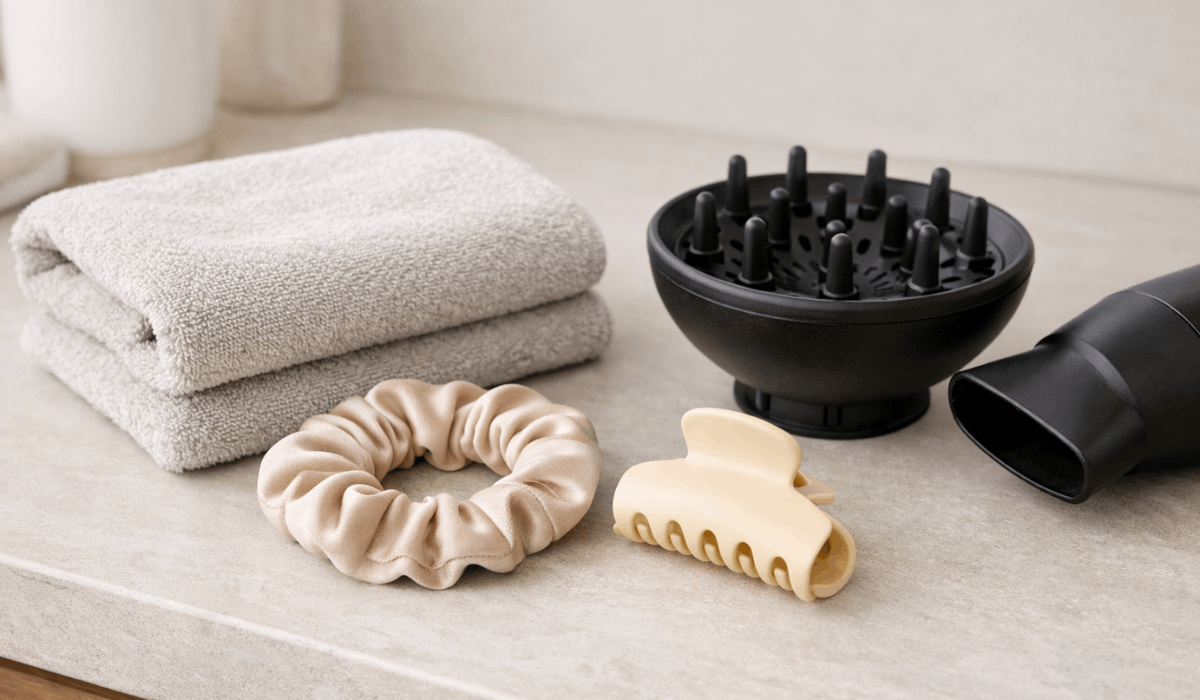
Fabric-covered hair ties and spiral coil ties grip hair without pinching. They hold a ponytail or bun in place with low tension, which means less stress at the root and fewer snapped ends.
Standard thin elastics with metal clasps do the opposite. The metal catches on hair when you pull the elastic out, and the tight grip compresses strands hard enough to leave a visible dent. That dent is a weak point where breakage happens later.
A few hair accessories to watch out for:
- Metal clips with exposed edges catch and tear individual strands during removal
- Bobby pins used daily in the same spot weaken hair at that exact point over time
- Tight claw clips on wet hair compress fragile strands past their breaking point
Nighttime Hair Protection
Sleep creates friction. Eight hours of your head turning on a cotton pillowcase generates enough surface friction to rough up the cuticle layer. A silk or satin pillowcase reduces that friction, and so does a loose braid or a soft scrunchie holding hair in a low ponytail.
That said, I think silk pillowcases get too much credit compared to what a properly maintained brush does daily. A silk pillowcase handles 8 hours of passive friction, but the brush handles active mechanical force twice a day, every day. The tool swap has a bigger payoff per dollar.
Drying Tools That Protect Wet Hair from Breakage
Wet hair loses a portion of its tensile strength compared to dry hair. The cuticle layer swells, making each strand more elastic and easier to stretch past the point of snapping. Drying tools need to account for this.
Microfiber Towels and Blotting Technique
A microfiber towel has smaller, softer fibers than a regular cotton towel. The reduced surface roughness creates less friction against wet hair. Blotting, where you press the towel around sections of hair and squeeze gently, removes water without the twisting and rubbing that cotton towels encourage.
Wrapping wet hair in a tight towel turban puts tension on strands that are already at their weakest. A looser wrap or a clip-secured microfiber towel works better because it holds hair without pulling.
Diffuser Attachments and Low-Heat Dryers
A diffuser attachment spreads airflow across a wider area instead of concentrating a blast of hot air on one spot. This is especially useful for curly and wavy hair, where direct heat can disrupt the natural pattern and cause frizz that leads to more aggressive brushing later.
Low heat settings on a dryer do the same thing as adjustable flat irons: they let you dry hair without exceeding the stress threshold. Combining a diffuser with a low heat setting and partial air-drying is one of the gentlest ways to get from wet to styled.
Matching Tools to Hair Texture
A brush that works for fine, straight hair can destroy curly or coily hair. Texture determines how much resistance each strand has and how tools interact with natural bends and patterns.
Quick guide for texture-specific tool choices:
- Fine hair needs lightweight brushes with soft bristles that won’t snap thin strands
- Thick hair benefits from wider-spaced bristles that move through dense sections without snagging
- Curly hair does best with flexible wide-tooth combs that follow natural bends instead of straightening them out
- Coily hair requires extra-wide teeth that prevent tight coil patterns from catching and pulling
Mixing tools for different areas of the head is normal, especially if texture varies between the crown and the nape. Using one brush for all sections forces the wrong tool on at least part of your hair.
Cleaning and Replacing Hair Tools
A dirty brush adds friction. Hair, oil, product residue, and dust build up between bristles and create a rough surface that drags across clean hair. The American Academy of Dermatology recommends cleaning brushes and combs regularly to keep them in working condition.
Clean tools weekly by removing trapped hair, washing bristles with mild soap, and letting them dry fully. Moisture left in the brush pad can weaken the bristle base and create a breeding ground for bacteria.
Replace brushes and combs when bristles bend, tips crack, or teeth develop rough edges. A tool that felt smooth six months ago may now have micro-damage that catches hair on every pass.
According to Healthline’s hair care guide, replacing tools at the first sign of wear prevents the kind of slow, invisible damage that accumulates over months.
Questions People Ask About Reducing Hair Breakage
Q: How often should I replace my hairbrush? Check bristles monthly for bending, splitting, or rough tips. A well-made brush lasts about 6 to 12 months of daily use. Once bristles lose their flexibility or develop sharp edges, the brush creates more friction than it prevents.
Q: Can a wide-tooth comb work on straight hair? Absolutely. Wide-tooth combs reduce tension on all hair types during detangling. Straight hair still tangles, especially when wet, and forcing knots apart with a fine-tooth comb causes the same kind of snapping regardless of texture.
Q: Does brushing wet hair always cause breakage? Not if the right tool is used. A flexible detangling brush designed for wet hair distributes tension differently than a stiff paddle brush. The tool matters more than the timing.
Q: Are boar bristle brushes better for reducing breakage? Boar bristle brushes work well for fine to medium hair because the natural bristles are softer than nylon. But they can pull on thick or curly hair, so the match depends on texture and density.
Q: Do satin scrunchies reduce hair breakage compared to regular elastics? Satin scrunchies grip hair with less compression and friction than thin elastics. They reduce the dent-and-snap pattern that regular ties create, especially during long wear like overnight or full workdays.
Conclusion
The tools that touch your hair every day have more control over breakage than any weekly treatment. Swapping a worn brush, a rough towel, or a tight elastic costs very little.
These small changes compound into visible results over weeks, not months. Start with the tool you use the most and work outward from there.