Flat, greasy roots on day two make daily washers feel trapped. The shampoo cycle becomes a habit that feeds itself, and breaking it feels impossible.
Keeping hair fresh between washes sounds simple enough. But the standard advice online misses the reason hair gets oily so fast in the first place.
That greasy feeling after 24 hours has more to do with what touches the scalp than what comes out of it. Brushes, pillowcases, and even your own hands play a bigger role than scalp oil alone.
This changes the strategy completely. A few small shifts in how hair is handled during the day and night can push wash days apart without piling on products.
Why Hair Gets Greasy So Fast After Washing
The scalp produces sebum constantly. That part is biology. But how quickly that oil spreads to roots and becomes visible depends on hair texture, daily habits, and a few overlooked factors.
Fine or straight hair shows oil faster than thick or curly hair because the oil slides down a smooth shaft without resistance.
Someone with fine hair who washes every morning might notice greasy roots by dinner, while a person with coarser texture goes three days without thinking about it. The hair type sets the baseline, but habits either shorten or extend it.
Overwashing Creates the Cycle
Stripping the scalp daily with shampoo sends a signal to produce more sebum. The scalp responds to dryness by ramping up oil output. Washing every day trains the scalp to overproduce, which means hair looks oily even faster the next day.
I would push a daily washer to try spacing washes 48 hours apart for two weeks. The first few days feel rough. Roots look heavy. But sebum production starts to slow once the scalp adjusts, and most people notice a visible difference around day 10.
Sweat and Product Residue Speed Things Up
Heat and movement mix sweat with existing oil at the roots. Styling products layered on top of that mixture create a film that makes hair look dirty even when the scalp itself is clean. Hairspray, mousse, and texturizing sprays all leave residue that traps oil closer to the root.
Brushing Habits That Keep Hair Looking Clean Longer
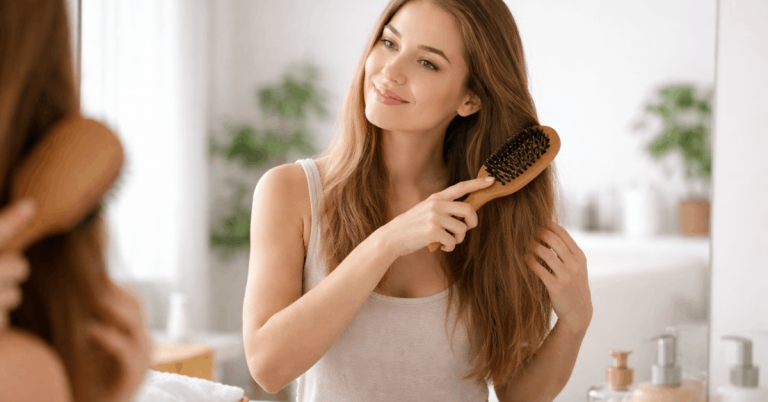
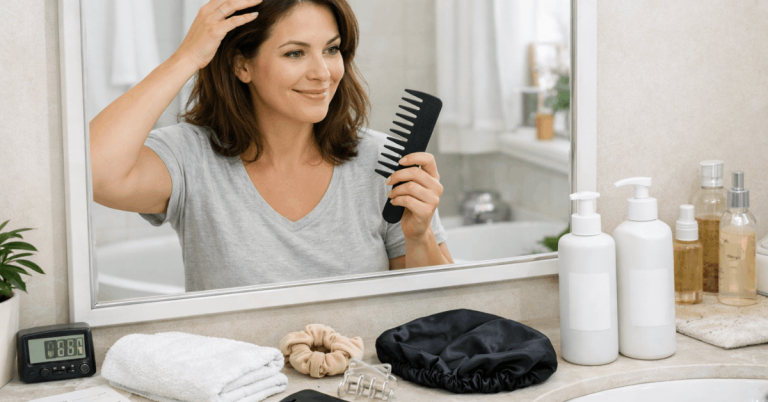
The brush is the most underrated tool for extending time between washes. A good brushing habit does more than detangle. It moves oil away from the scalp and distributes it through the lengths, which keeps roots looking matte while conditioning the ends.
The Right Brush Makes a Real Difference
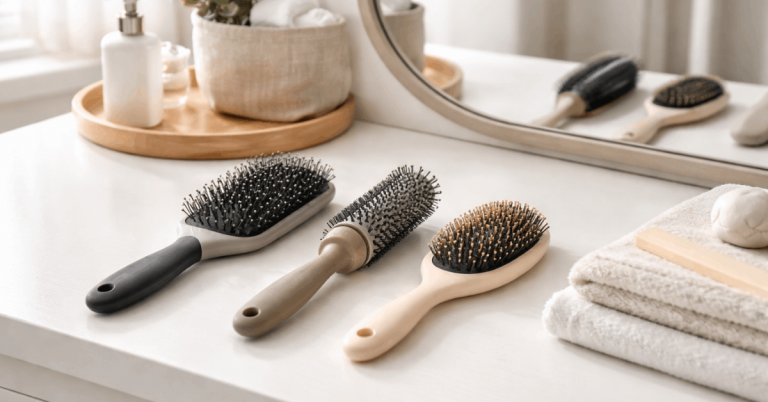
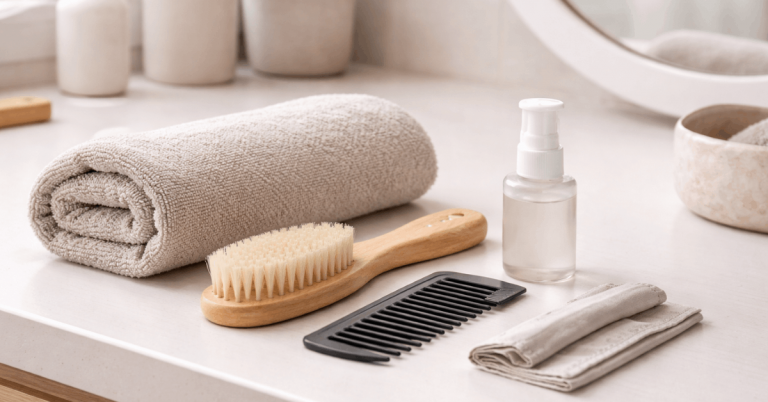
A natural-bristle brush or a mixed-bristle brush picks up oil at the roots and carries it downward. Plastic bristles don’t do this as well. The natural fibers grip sebum and redistribute it so it serves as a conditioner for the mid-lengths and ends instead of sitting on the scalp looking greasy.
One or two passes through the hair at night is enough. Overbrushing pushes oil through too quickly and can stimulate the scalp to produce even more.
Brush the Lengths, Skip the Roots
Light contact at the roots during brushing is fine. But heavy, repeated brushing right at the scalp spreads oil faster than it would travel naturally. The goal is to brush mostly through the mid-lengths and ends, picking up whatever oil has already migrated down from the scalp.
A clean brush matters too. Dirty bristles transfer old oil and product residue back into freshly washed hair. Cleaning brushes once a week with warm water and a drop of shampoo removes that buildup.
Dry Shampoo: Probably Overrated for What It Does
Every article about keeping hair fresh between washes leads with dry shampoo. I think dry shampoo is one of the most overused products in hair care, and I would argue that proper oil distribution through brushing does a better job for day-two hair.
Dry shampoo absorbs surface oil, yes. But it also adds a layer of powder or starch to the scalp that builds up over time, clogs follicles, and makes hair look chalky if applied too heavily.
That said, dry shampoo has its place for quick fixes. The product works best when used correctly and sparingly.
How to Apply Dry Shampoo Without Making It Worse
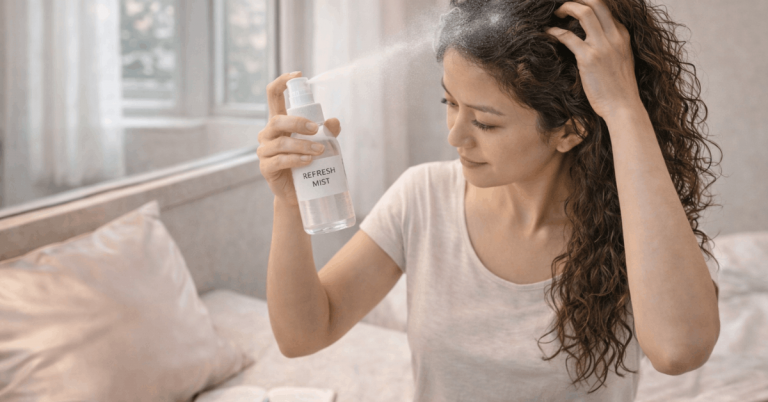
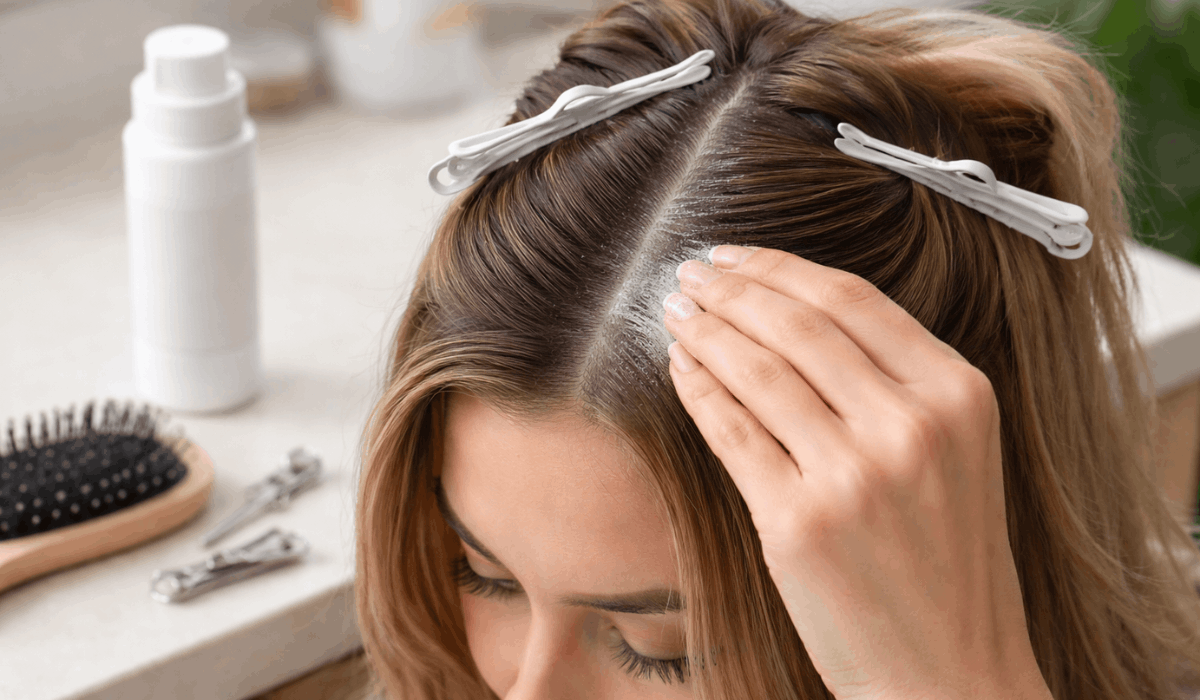
The biggest mistake people make is spraying too close and too much. The right technique matters more than the brand:
- Hold the can or bottle 15 to 20 cm away from the scalp
- Target only the part line, crown, and hairline where oil shows first
- Let it sit for at least 30 seconds before touching it
- Massage gently or brush through to remove visible residue
- Apply the night before instead of the morning for better absorption
Applying dry shampoo the night before a big day gives the powder time to absorb oil overnight. The hair looks cleaner in the morning than it would with a rushed morning application.
Also read: Best Everyday Hair Tools for Home Use
Oil-Absorbing Alternatives That Skip the Buildup
For people who react badly to dry shampoo or dislike the texture, oil-blotting sheets designed for the face work on roots too.
Press one along the part line and hairline to lift surface oil without adding anything to the hair. A tiny amount of loose translucent powder applied with a clean brush does the same thing.
These alternatives are better for short-term touch-ups when leaving the house or heading into a meeting. They absorb oil without the residue buildup that dry shampoo creates.
Styling Tricks That Hide Greasy Roots
The right hairstyle on a non-wash day makes oily roots look intentional. Flat, sleek styles make grease obvious. Anything that adds volume at the roots pulls attention away from shine.
| Style | Oil-Hiding Ability | Effort Level | Best For |
|---|---|---|---|
| Loose high bun | High | Low | Day 2 or 3 hair |
| Half-up, half-down | Medium | Low | Day 2 hair |
| Soft waves with a curling iron | High | Medium | Events on non-wash days |
| Changed part direction | Medium | None | Quick morning fix |
Changing the part direction is the easiest trick on this list: hair that has been pressed flat on one side lifts when flipped to the other, and the roots at the new part line are less oily because they were hidden.
Low-Heat Root Volume
A quick blast of low heat at the roots with a blow dryer lifts flat, oily-looking hair in seconds. Keep the dryer on a low or medium setting, aim it at the roots while lifting sections with fingers, and stop after 10 to 15 seconds per section.
No product needed. The heat evaporates some surface moisture and oil, and the lift lasts for hours.
Skip heavy creams, waxes, and serums on non-wash days. These products add weight and shine right where it is least welcome.
Daily Habits That Extend Freshness Between Washes
Greasy hair is partly a contact problem. Every time something touches the scalp, it either deposits oil or moves existing oil around. Reducing that contact slows down how fast hair looks dirty.
Hands Off the Hair
This one sounds obvious but changes everything. Running fingers through hair transfers oil from skin to strands. Resting a chin on a hand pushes face oil into the hairline. Tucking hair behind ears over and over moves sebum to the most visible spots.
The fix is awareness. Catch the habit, and it takes roughly a week of conscious effort to break it.
Clean Pillowcases and Accessories
A pillowcase absorbs oil and product residue every night, then deposits it back onto clean hair the next time. Changing pillowcases every three to four days keeps this transfer under control. Satin or silk pillowcases reduce friction and absorb less oil than cotton, which means hair picks up less grime while sleeping.
The same logic applies to hats, headbands, scrunchies, and hair clips. These accessories press against the scalp and hairline, and dirty ones accelerate the greasy look. Washing them weekly takes five minutes and makes a noticeable difference.
Nighttime Routine for Fresher Morning Hair
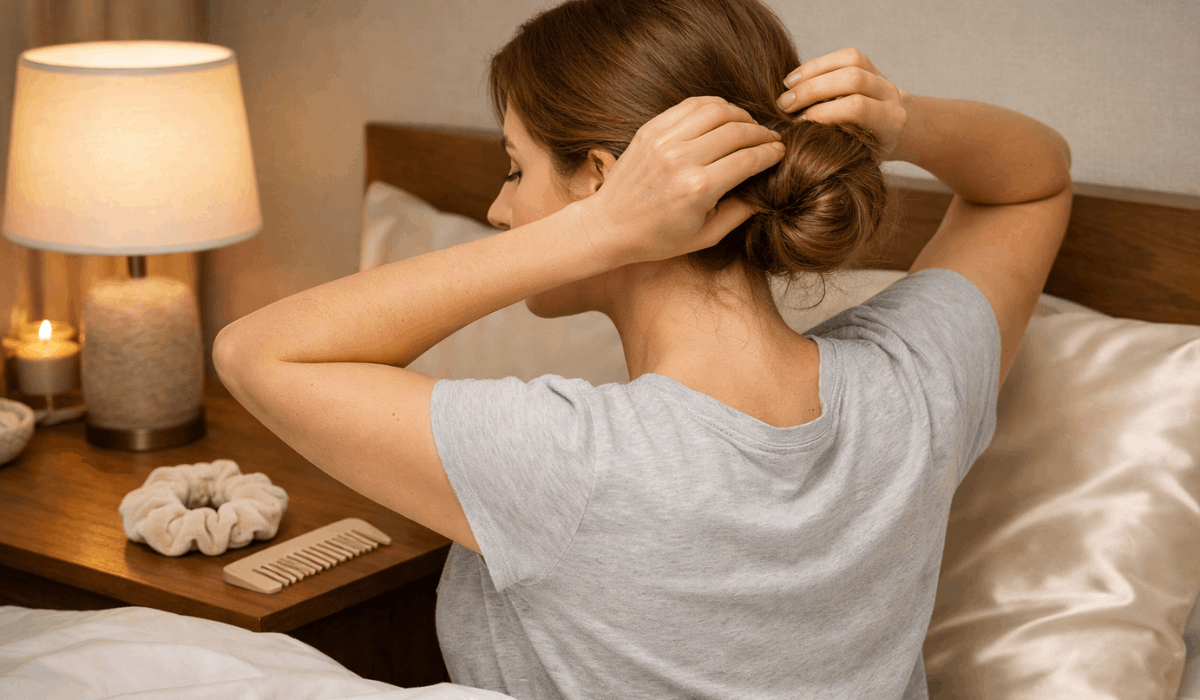
What happens between bedtime and the alarm clock determines whether day-two hair is workable or a wash day. A simple nighttime routine takes two minutes and saves a 20-minute morning wash.
- Detangle gently before bed so hair doesn’t mat overnight
- Loosely braid or twist hair to prevent oil from spreading across all strands
- Sleep on a satin pillowcase to reduce friction and oil absorption
- Keep hair elevated with a loose bun on top of the head to prevent root flattening
Loose styles work. Tight ponytails or buns press hair against the scalp and create creases that trap oil. The goal is to keep hair off the face and pillow without tension.
Knowing When Hair Needs a Real Wash
Stretching wash days has a limit. Pushing too far past the point where the scalp feels itchy or the roots feel sticky causes more problems than it solves. Excess sebum can clog follicles, and layered product buildup irritates the scalp.
A few clear signals mean it’s time to wash:
- Persistent itching that doesn’t stop after brushing
- Roots that feel heavy, sticky, or clumped together
- Dry shampoo or powder stops making a visible difference
- The scalp smells different than usual
Everyone’s limit is different. Hair type, activity level, climate, and product use all affect how many days between washes work.
Two days might be the sweet spot for fine, straight hair. Four or five days can work for thick, curly textures. There is no universal rule, and forcing a number that doesn’t fit the hair type leads to either a greasy scalp or an irritated one.
The American Academy of Dermatology recommends adjusting wash frequency based on hair type and oil production rather than following a fixed schedule.
And for those curious about how specific products rank for oil absorption, Good Housekeeping’s dry shampoo testing results break down performance across different formulas.
Questions People Ask About Keeping Hair Fresh Between Washes
Q: Can dry shampoo replace regular washing?
No. Dry shampoo absorbs surface oil but does nothing for scalp buildup, product residue, or dead skin cells. Using it for more than two consecutive days without washing creates a layer of residue that makes hair look duller than the oil itself.
Q: Does hair type affect how long between washes?
Absolutely. Fine, straight hair shows oil within 24 hours because sebum slides down the smooth shaft quickly. Coarser or curlier textures can go three to five days because the natural curl pattern slows oil migration.
Q: Is it bad to wash hair every day?
Daily washing strips natural oils and signals the scalp to produce more sebum. This creates a cycle where hair gets greasier faster. Spacing washes 48 hours apart lets the scalp recalibrate, though the first week of transition feels uncomfortable.
Q: Does sleeping on satin pillowcases help with oily hair?
Satin and silk absorb less oil and moisture than cotton, which means less gets deposited back onto the hair overnight. Pairing a satin pillowcase with a loose braid or top bun keeps roots lifted and reduces how much oil spreads while sleeping.
Q: Should I brush oily hair or leave it alone?
Brushing with a natural-bristle brush once or twice a day moves oil away from the roots and distributes it through the lengths. Skipping brushing altogether lets oil pool at the scalp, which makes roots look greasier faster.
Conclusion
Stretching wash days starts with fixing daily habits, not buying more products. Oil distribution through brushing does more for day-two freshness than any spray or powder.
Clean accessories and pillowcases eliminate a hidden source of grease that no styling trick can fix. The scalp adjusts to less washing over time, but only if the routine around it supports the transition.