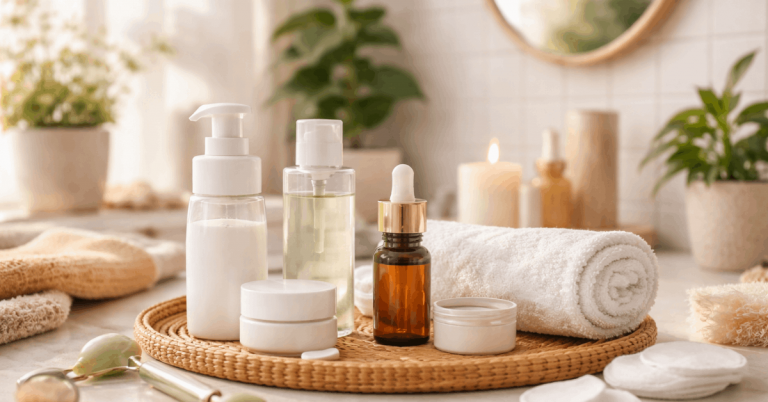
Every skincare article starts the same way: identify your skin type, buy a cleanser, add a serum, and boom. Routine built. But that routine gets abandoned within three weeks.
The problem is never the products. It is the mental overhead of a 7-step system that feels like homework on a tired Tuesday night.
A skincare routine that works in 2026 has to survive your worst days, not just your best ones. That means fewer steps, less guilt, and zero tolerance for complexity.
I think the conventional “know your skin type first” advice, repeated on the CeraVe and Cetaphil websites and every beauty blog, sends beginners down the wrong path.
Starting with skin type locks people into buying specialized products before they even build a habit. A basic cleanser, moisturizer, and SPF 30 work across all five types as a foundation.
Do I Really Need to Know My Skin Type to Build a Skincare Routine?
Skin type matters eventually. But it does not need to be your first step, and treating it as a prerequisite is where a lot of people stall. The reason is simple: skin type is a refinement tool, not a starting gate.
The Clean Face Wait One Hour Test
The standard method is to wash your face, wait 60 minutes, and check for oiliness, tightness, or flaking. Oily T-zone and dry cheeks usually means combination skin. Shiny all over points toward oily. Tight and flaky suggests dry skin. Redness or stinging after products often signals sensitive skin.
This test works. I would recommend it once you have been using basic products for about 30 days, because freshly stripped skin reacts differently than skin that has been consistently moisturized. The results are more accurate after your skin barrier stabilizes.
When Skin Type Starts to Matter
Skin type becomes relevant when you start adding targeted products like chemical exfoliants, retinol, or treatment serums. At that point, oily skin benefits from gel-based cleansers and lightweight moisturizers, while dry skin responds better to cream cleansers and thicker moisturizers.

Sensitive skin needs fragrance-free and alcohol-free formulas. But none of that matters if you quit the routine before reaching that stage. Habit first, customization second.
The Three Products That Make a Skincare Routine Work
Three products. That is the entire foundation. Every dermatologist-recommended skincare routine starts here, and most people never need to go beyond five products total. The trick is doing these three consistently rather than doing ten products sporadically.
Cleanser Basics for Beginners
A gentle cleanser removes dirt, oil, and leftover sunscreen. Use it twice daily: morning and night. Gel formulas suit oilier skin while cream formulas work better for drier types.
One mistake that trips up beginners: using “deep cleansing” or “pore purifying” washes as a daily cleanser. These strip your skin barrier and create the dryness or excess oil production you were trying to fix. Look for the word “gentle” on the bottle and skip anything that makes your face feel squeaky.
Rinse with lukewarm water. Hot water pulls moisture from the skin surface.

How to Pick a Moisturizer That Works
Apply moisturizer right after cleansing while your skin is still slightly damp. This traps water against the skin and improves absorption.
Lightweight gels or lotions work for oily and combination skin. Thicker creams are better for dry or sensitive types. Products labeled “non-comedogenic” are formulated to avoid clogging pores, which matters if you are breakout-prone.
Use moisturizer both morning and night. Skipping the morning application because you will add sunscreen anyway is a common mistake. Sunscreen sits on top of skin. Moisturizer works into it.
SPF 30 Sunscreen Every Single Morning
Broad-spectrum SPF 30 (or higher) is the single product with the strongest anti-aging data behind it. Apply it as the last step in your morning routine, after moisturizer. The American Academy of Dermatology recommends about a nickel-sized amount for the face alone.
Reapply every 2 hours when outdoors. On indoor days, one morning application is generally sufficient unless you sit near windows for extended periods.
Here is the part that trips people up: sunscreen feels like an extra chore. But once it becomes automatic (right after moisturizer, before you leave the bathroom), the habit locks in. Link it to brushing your teeth so the sequence runs on autopilot.
Also read: How to Reduce Skin Irritation From Daily Products
Serums, Exfoliants, and Skincare Extras Worth Adding
Once the three basics feel effortless (give it about 30 days), you can start layering in extras. The word “layering” sounds intense, but it means adding one product at a time and waiting 4 to 6 weeks before judging results.
Introduce a new serum or exfoliant while your skin is still reacting to the last one, and you will never know what is causing the breakout.
Chemical Exfoliation vs Physical Scrubs
Chemical exfoliants (AHAs like glycolic acid and BHAs like salicylic acid) dissolve dead skin cells without physical friction. They are generally less irritating than scrubs and work at a deeper level.
Physical scrubs can cause micro-tears if the particles are too rough. I would skip apricot scrubs entirely and stick to chemical options from The Ordinary, which sells AHA and BHA products starting at $7 to $13.
Start exfoliating once per week. Bump up to twice weekly if your skin tolerates it after a month. Never exfoliate on the same day you use retinol or other active treatments.
Which Serums to Add First
Serums are concentrated treatments that go on after cleansing and before moisturizer. The order matters because serums have smaller molecules designed to penetrate skin before a moisturizer seals everything in.
Three serums cover the broadest range of concerns:
- Vitamin C brightens skin tone and supports collagen production. Best used in the morning.
- Niacinamide reduces oil production and helps with redness. Works morning or night.
- Hyaluronic acid pulls moisture into the skin. Apply to damp skin for best results.
Pick one. Start there. Adding all three at once defeats the purpose of tracking what works.
Common Skincare Mistakes That Kill Consistency
Product hopping and information overload destroy more skincare routines than bad products ever will. The mistakes below show up constantly, and they are all avoidable.
Switching Products Before They Work
4 to 6 weeks is the standard window for a skincare product to show results. That means the retinol that broke you out in week two may clear up by week five. Swapping products every couple of weeks keeps your skin in a permanent adjustment phase and makes it impossible to identify what works.
The exception: if a product causes burning, swelling, or a rash, stop using it immediately. Mild purging (small breakouts when starting an active ingredient) is normal. A painful reaction is not.
Layering Too Many Active Ingredients
Retinol and glycolic acid on the same night is a recipe for a damaged skin barrier. Active ingredients compete for absorption and can cause chemical burns when combined carelessly.
A simple rule: one active per routine session. Retinol at night. Vitamin C in the morning. Exfoliant on alternating nights. Space them out and your skin does the rest.
Skincare Routine Adjustments for Seasons and Travel
Skin responds to weather, humidity, sleep changes, and stress. A rigid routine that ignores these shifts will feel wrong twice a year and prompt you to start over from scratch. Small swaps prevent that cycle.
| Factor | Winter Adjustment | Summer Adjustment |
|---|---|---|
| Moisturizer | Switch to a thicker cream formula | Use a lighter gel or lotion |
| Sunscreen | Same SPF 30+, reapply if outdoors | Reapply every 2 hours, use water-resistant formula |
| Exfoliation | Reduce to once weekly if skin is dry | Can maintain twice weekly |
| Cleanser | Cream-based to avoid stripping oils | Gel-based to manage excess oil |
The one thing that should never change regardless of season: SPF every morning.
For travel or exhausting days, strip the routine down to cleanser and moisturizer at night, sunscreen in the morning. Skipping optional steps on a rough day is fine. Skipping the entire routine because you cannot do it “perfectly” is the mistake.
Lifestyle Habits That Affect Your Skin
No product can fully compensate for sleep deprivation, dehydration, or a diet loaded with processed sugar. These lifestyle factors influence skin condition more than the difference between a $12 and a $60 moisturizer:
- Sleep 7 to 8 hours nightly. Skin repairs itself during deep sleep cycles.
- Drink enough water through the day. Dehydrated skin looks dull regardless of products applied.
- Wash pillowcases weekly. Bacteria, oil, and dead skin accumulate and transfer to your face overnight.
- Clean your phone screen regularly. The glass touches your cheek and jawline every time you take a call.
The unique insight nobody mentions in skincare articles: your skincare routine does not exist in isolation. A 3-step routine paired with 7 hours of sleep and clean pillowcases will outperform a 10-step routine on 5 hours of sleep every time.
The body does its heaviest skin repair work between 10 PM and 2 AM during deep sleep phases, and no serum can replicate that process.
Questions People Ask About Building a Skincare Routine
Q: How long does it take to see results from a new skincare routine? Give any routine at least 4 to 6 weeks before judging results. Skin cell turnover takes roughly 28 days in your 20s and slows as you age. Patience is the most underrated skincare tool.
Q: Can I use the same skincare routine morning and night? Almost, but not exactly. Morning routines end with sunscreen, which you should skip at night. Retinol and stronger actives belong in evening routines because UV exposure can break them down and irritate skin.
Q: Do expensive skincare products work better than drugstore brands? Price does not predict performance. CeraVe, Cetaphil, and The Ordinary are drugstore-priced brands that dermatologists frequently recommend. A $9 moisturizer with the right ingredients can match a $65 one. Check the ingredient list, not the price tag.
Q: Should I stop my skincare routine if I break out? Mild breakouts (purging) are normal when starting actives like retinol or chemical exfoliants. They usually clear within 4 to 6 weeks. But if skin burns, swells, or develops a rash, stop that product immediately and go back to cleanser, moisturizer, and sunscreen only.
Q: Do I need a separate eye cream? Eye creams can be useful for targeted concerns like puffiness or fine lines. But a good facial moisturizer applied gently around the eye area does most of the same work. Eye cream is a refinement, not a necessity for beginners.
Conclusion
A skincare routine that lasts is one built around three products and a consistent time slot. Adding extras works best when the basics feel automatic and effortless.
Sleep, water intake, and clean pillowcases carry more weight than any serum on the market. Start small, adjust slowly, and let your skin tell you what it needs next.