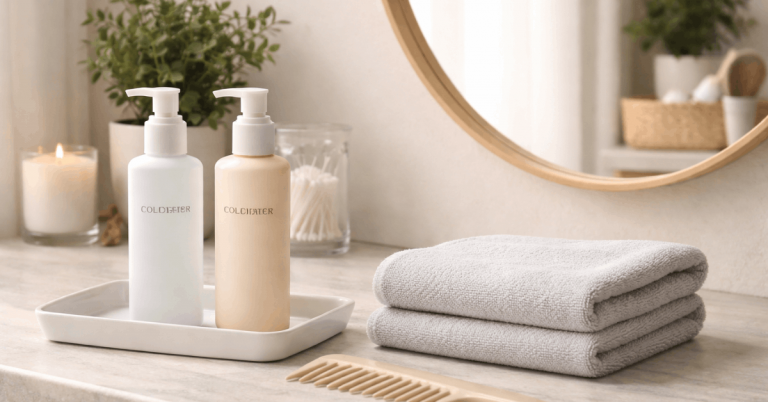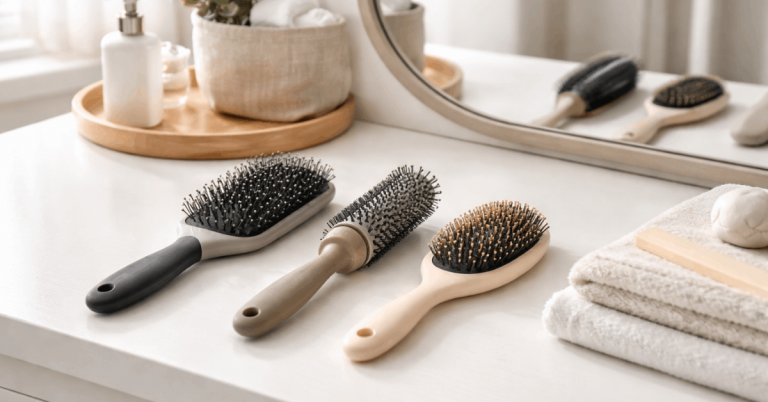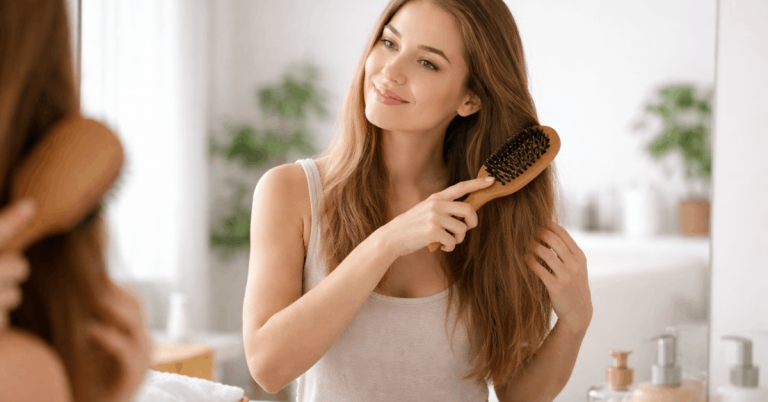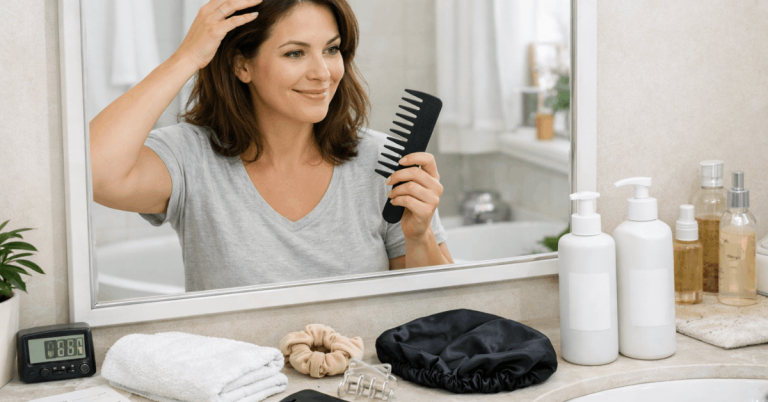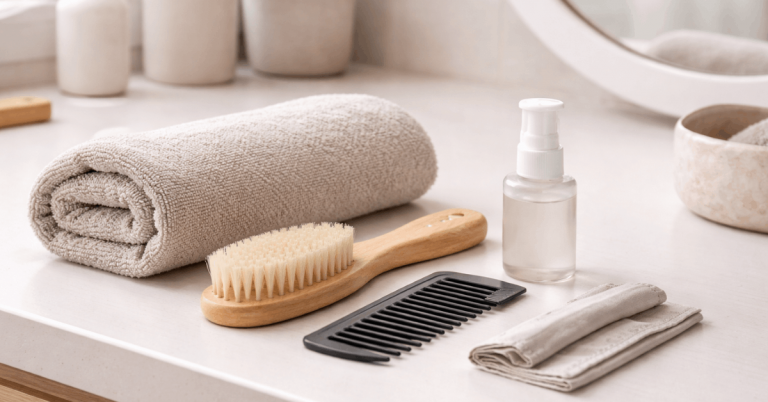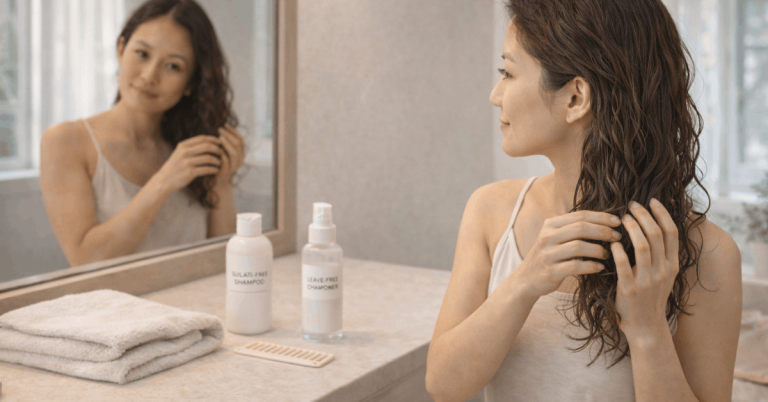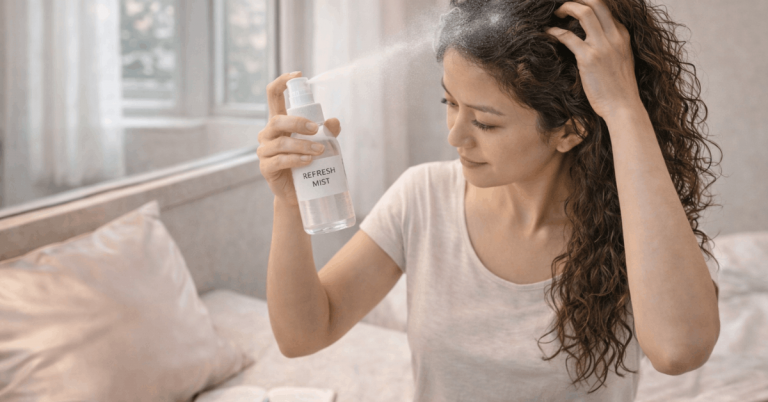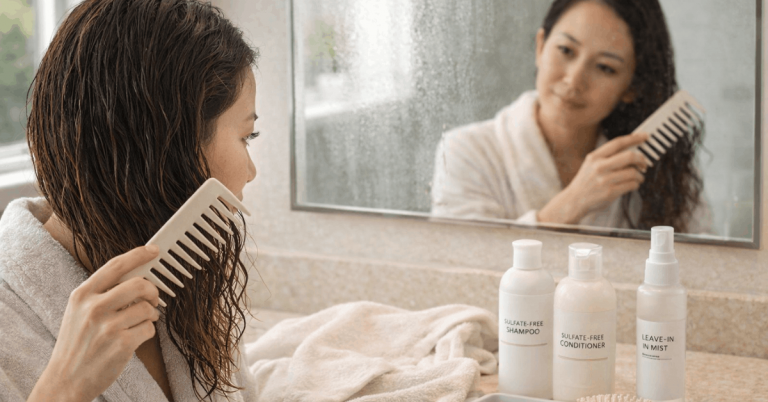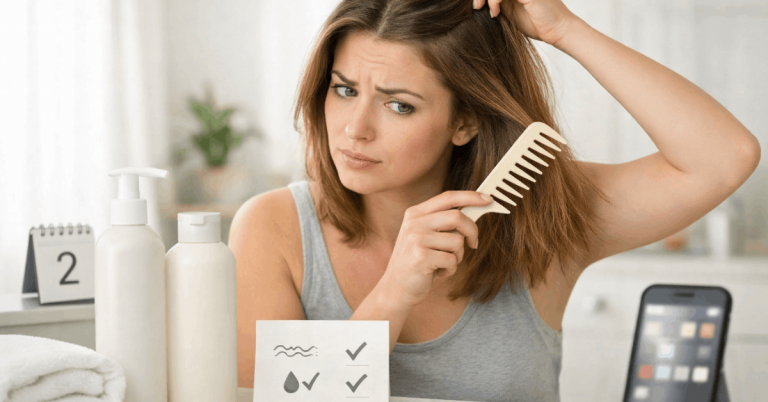
Somewhere around bottle number seven, the “self-care” shelf starts feeling like a chore. Shampoo, co-wash, leave-in, heat spray, scalp serum, bond builder, gloss treatment. Each one promised to fix something the last one missed.
A minimalist hair care routine flips that logic. Fewer products, fewer steps, and clearer thinking about what hair needs to stay strong, soft, and clean.
The goal of maintaining healthy hair gets buried under marketing noise. Every brand wants another slot on that shelf. This article strips the routine down to what matters and cuts the rest.
And I think the standard “wash only 2-3 times a week” advice, repeated on every hair blog since 2019, deserves a serious challenge. More on that below.
Do Fewer Hair Products Mean Healthier Hair?
The minimalist approach to hair care gets misunderstood fast. Cutting products down does not mean neglecting hair. It means removing overlap, reducing irritant exposure, and getting clear on what each product does.
Every formula sitting on a scalp or strand carries ingredients that interact with each other. Layering a sulfate-free shampoo, a silicone conditioner, a protein treatment, and a leave-in cream creates buildup that no single product caused alone. The mix did.
How Product Overload Creates Buildup
A common pattern: someone buys a clarifying shampoo because their hair feels “weighed down.” But the weight came from stacking three styling products that were never designed to coexist.
The clarifying shampoo strips everything, the scalp overproduces oil to compensate, and another product gets added to “fix” the oiliness.
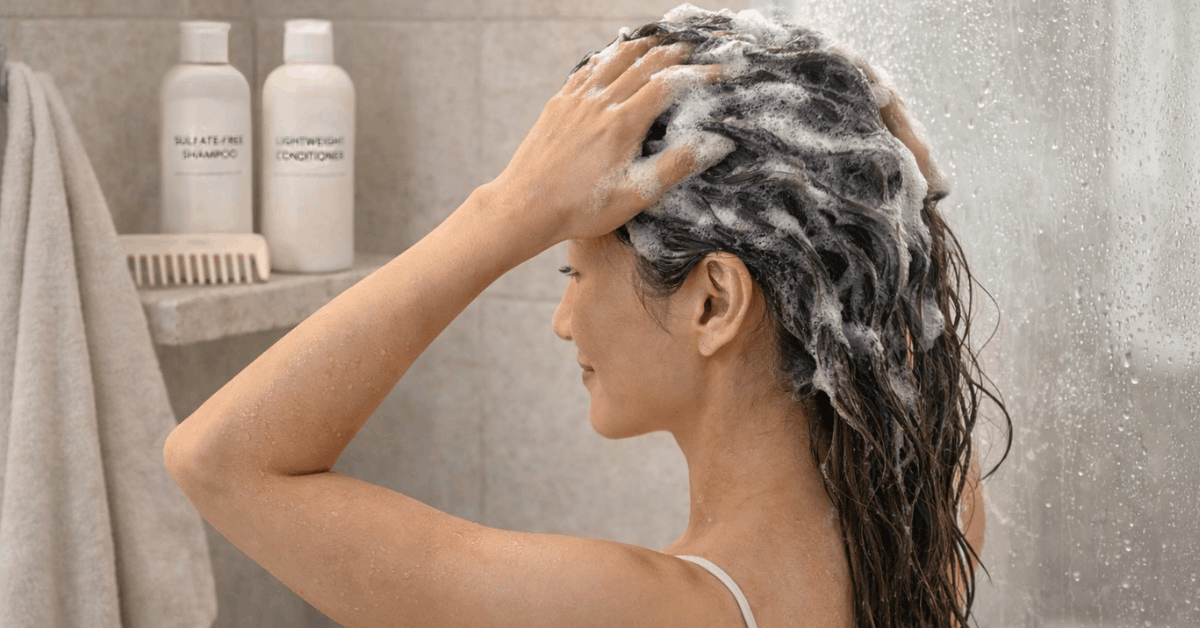
That cycle is expensive, frustrating, and completely avoidable. A single well-chosen conditioner paired with a gentle cleanser handles detangling, light repair, and everyday softness without the layering trap.
Minimalism vs. Clean Beauty vs. Low-Maintenance Hair Care
These three terms float around interchangeably, but they point in different directions:
- Minimalist hair care removes excess steps and duplicate products from the routine
- Clean beauty focuses on ingredient safety, avoiding sulfates, parabens, and synthetic dyes
- Low-maintenance routines reduce daily time and effort, sometimes at the cost of long-term hair health
Combining all three can work well. But a “clean” product line with 9 SKUs is not minimalist, even if every ingredient is plant-derived. The number of products matters as much as what’s inside them.

The Four Pillars That Actually Keep Hair Healthy
Strip away the marketing and hair care reduces to four actions: cleanse, condition, protect, and style. Everything else is either a specialty treatment (used occasionally) or a duplicate hiding behind a different label.
Cleansing: The Wash Frequency Debate
I would push back hard on the universal “wash 2-3 times a week” advice that dominates every hair care article online. That guidance works for thick, coily, or dry hair types.
But for fine hair, oily scalps, or anyone who exercises daily, spacing washes out that far leads to sebum buildup, itchy roots, and limp strands that no dry shampoo can rescue.
A sulfate-free shampoo used 4-5 times per week on fine or oily hair keeps follicles clear without stripping natural moisture. The formula matters more than the frequency. Harsh surfactants at 2 washes per week do more damage than a gentle cleanser used daily.
Pick a shampoo matched to hair type and local water hardness. Hard water areas need chelating or clarifying washes once or twice monthly to remove mineral deposits that dull color and weaken strands.
Conditioning Without the Waxy Layer
Conditioner replaces slip, reduces friction, and prevents the split ends that come from dry, tangled hair catching on itself. But technique matters:
- Apply mid-lengths to ends first, then sweep a thin layer toward the crown
- Leave it on for the full dwell time printed on the label so cationic agents bond properly
- Rinse until hair feels smooth but not squeaky, then blot dry instead of rubbing
One conditioner. That’s it. The idea that you need a “daily conditioner” and a separate “deep conditioner” and a “leave-in” running simultaneously is a product multiplication strategy, not a hair care strategy.
Also read: How to Keep Hair Soft Without Heavy Products
Heat and UV Protection
Damage from heat tools and sun exposure is cumulative. It does not announce itself the day it happens. Frizz, breakage, and color fading show up weeks or months later, and by then the cuticle damage is permanent.
A single heat protectant spray applied before any blow-dry or flat iron session reduces thermal damage across the board. For sun protection, a hat works better than any UV mist, especially during midday hours. A silk or satin pillowcase cuts overnight friction that roughens the cuticle and causes morning frizz.
Matching a Minimalist Routine to Hair Type
One routine does not fit all textures. The products stay minimal, but the priorities shift depending on what the hair needs.
| Hair Type | Primary Focus | Common Mistake |
|---|---|---|
| Curly/Coily | Moisture sealing, protective styles, low manipulation | Over-washing and stripping natural oils |
| Straight/Fine | Lightweight conditioner, scalp balance, volumizing | Heavy oils near the scalp that flatten roots |
| Colored/Treated | UV protection, bond-building treatments, toner upkeep | Skipping heat protectant because hair “feels fine” |
| Frizz-Prone | Humectants in low humidity, anti-friction fabrics, low heat finishing | Overusing silicone serums that attract dust and buildup |
The pattern across all types: less product applied more consistently beats heavy treatments used sporadically.
Curly and Coily Hair: Seal, Don’t Stack
Curly and coily textures lose moisture faster because the hair shaft shape prevents sebum from traveling down the strand evenly. The fix is a light, non-comedogenic oil applied to damp hair after conditioning, not a five-product cocktail.
Protective styles like loose braids and low buns distribute tension across the head rather than concentrating it at one point. Rotate styles regularly. Wearing the same tight ponytail daily causes traction damage at the hairline that takes months to reverse.
Fine and Straight Hair: Volume Starts at the Scalp
Fine hair gets overwhelmed by products designed for thicker textures. Even a small amount of heavy leave-in conditioner at the roots kills volume and creates the “greasy by noon” look.
The approach: wash at the scalp, condition at the ends, and keep oils away from the top 2 inches. Switching the hair part every few weeks distributes weight more evenly and helps roots stand without teasing or volumizing powders.
Weekly Rhythm That Sticks Without a Calendar App
Complicated schedules fail. A rhythm based on simple rules, rather than specific days, adapts to travel, weather changes, and shifting workout schedules.
The baseline rhythm for maintaining healthy hair looks like this:
- Wash 2-5 times weekly depending on hair type, scalp oiliness, and activity level (not a one-size-fits-all number)
- Condition every wash, focusing on mid-lengths and ends
- Heat protectant on any day a blow dryer or hot tool touches the hair
- Clarifying wash once or twice a month to strip mineral deposits and product residue
- Sleep on silk or satin and secure hair in a loose, low-tension hold
The mistake people make: treating this like a rigid schedule instead of adjusting the frequency based on how the scalp and hair feel each week. Seasons matter. A summer routine with daily exercise needs more washes than a cool, sedentary winter week.
Quick Treatments That Replace a Shelf of Products
A clarifying wash once or twice monthly removes hard-water minerals and old styling residue that regular shampoo leaves behind. Follow it immediately with a hydrating conditioner because clarifying formulas strip everything.
A deep conditioning hair mask every two to four weeks adds suppleness without the greasiness of daily oil application. That covers the job of three separate products: leave-in conditioner, oil treatment, and repair mask.
Scalp Health Comes First
Healthy strands grow from a healthy scalp. Keep nails away from the scalp during washing to prevent micro-scratches that can become irritation points. Rinse thoroughly after workouts because dried sweat salts create itchiness on sensitive skin.
Soothing ingredients like aloe and oat derivatives calm reactive scalps between washes. Exfoliation should stay gentle and infrequent. Aggressive scrubbing disrupts the scalp’s acid mantle and triggers the overproduction cycle that makes everything worse.
Five Minimalist Hairstyles That Protect While Looking Good
Low-effort styles that protect hair and still look polished help the routine stick long-term:
- Simple low bun for workdays that need clean lines and zero heat
- Loose braid to minimize tangles during commutes or overnight
- Air-dried waves shaped with clips, released after full drying for natural texture
- Single-pass straight finish at the lowest effective heat setting, locked with a cool shot
- Claw-clip updo that avoids tight elastics and spreads tension safely across the scalp
Rotate between these. Wearing the same pulled-back style every day stresses the same follicles repeatedly, and that stress compounds over months.
Questions People Ask About Minimalist Hair Care
Q: Can a minimalist routine work for colored or chemically treated hair?
Absolutely, but the priorities shift toward UV protection and bond-building treatments like Olaplex No. 3 used every two to three weeks. Colored hair fades faster without UV filters, so a hat or UV mist on high-exposure days saves more color than any color-depositing conditioner.
Q: How do I know if I’m washing my hair too much or too little?
Check two things: scalp feel and strand behavior. An itchy, flaky scalp with limp roots means more washing is needed. Dry, brittle ends with a tight-feeling scalp means less. Adjust by one wash per week and reassess after two to three weeks.
Q: Should I throw out all my hair products and start over?
No. A hard reset creates panic buying. Pull everything out, identify which products overlap in function, keep the one that performs best in each category, and donate or discard the rest. The elimination takes about 15 minutes.
Q: Does water quality really affect hair health?
Hard water deposits calcium and magnesium on the hair shaft, which causes dullness, dryness, and color fading. A chelating shampoo or a showerhead filter can make a noticeable difference within a few washes, especially in regions with high mineral content.
Q: Are expensive hair products worth it for a minimalist routine?
Price does not equal performance in hair care. A $12 sulfate-free shampoo with a clean ingredient list often outperforms a $40 salon brand loaded with fragrance. Read the label, not the price tag.
Conclusion
A minimalist hair care routine works because consistency beats complexity for every hair type. Fewer products mean less buildup, fewer reactions, and a clearer picture of what helps.
The four pillars of cleanse, condition, protect, and style cover everything most hair needs daily. Start there, adjust the frequency by feel, and let the half-empty bottles go.