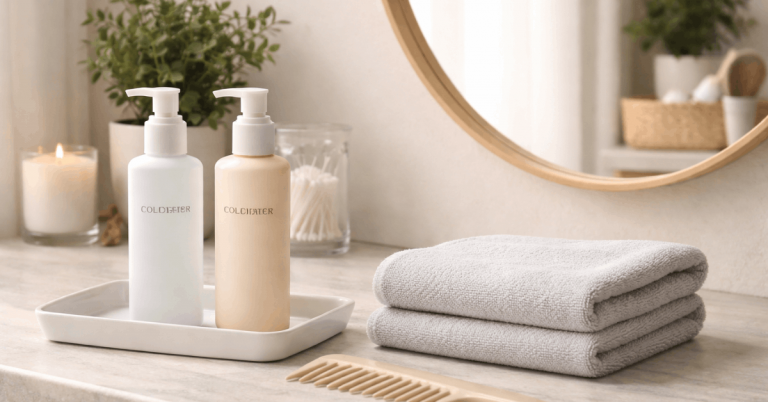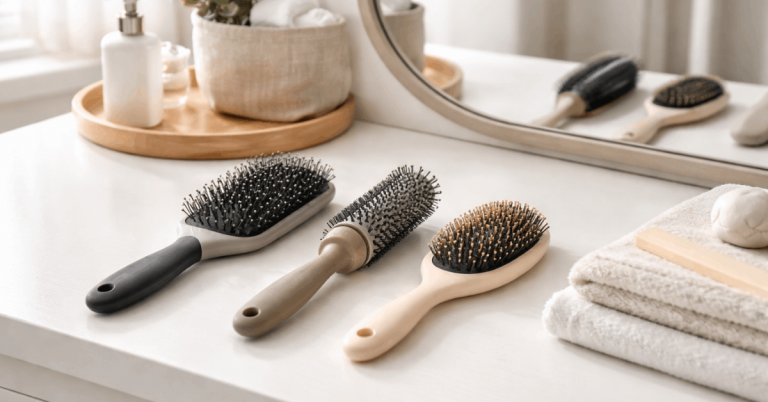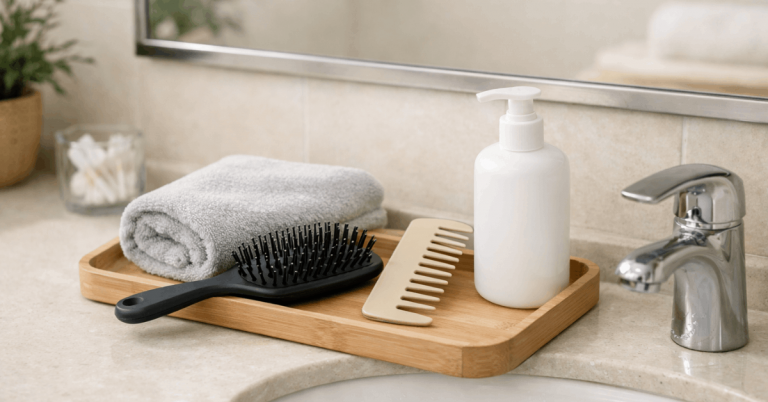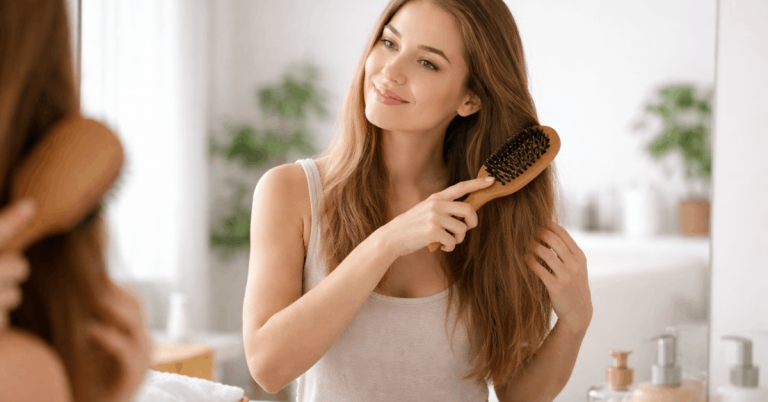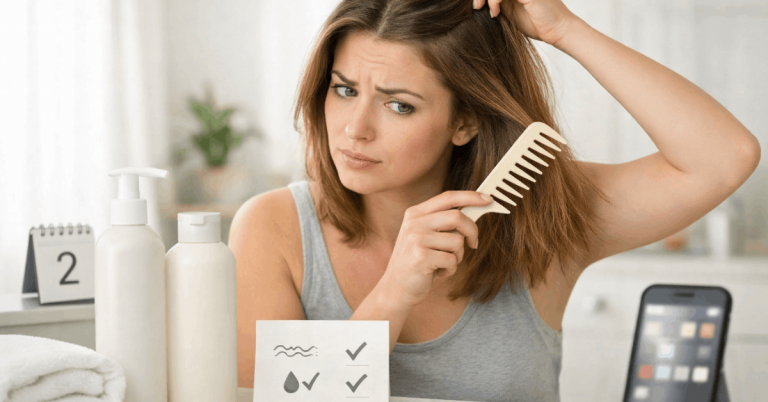
Soft hair feels like a product problem. It isn’t. And that distinction is costing you money every time you reach for another serum or treatment mask at the drugstore.
Every hair care article online reads like a shopping list disguised as advice. The real fix for rough, frizzy strands has almost nothing to do with what you buy.
Keeping hair soft without heavy products comes down to three boring things: how you wash, how you dry, and what temperature water hits your scalp. None of that sells bottles.
I wrote this for anyone whose bathroom shelf has six half-used conditioners and hair that still feels like straw. That shelf is the problem, and this is the fix.
Scalp-First Cleansing Changes Everything
The way shampoo gets applied matters more than the brand on the bottle. A single shift in technique can cut frizz and roughness without adding a single new product to your routine.
Stop Shampooing Your Ends
Scalp-first cleansing means applying shampoo only to the scalp, then letting the diluted suds glide through the lengths during rinsing. This removes sweat, oil, and product film at the root without stripping mid-length and end moisture.
The ends of your hair are the oldest, driest part of each strand. Scrubbing shampoo directly into them is like power-washing a sunburn. Let gravity do the work instead.
Sulfate-Free Shampoo Matters: But Not for the Reason Influencers Say
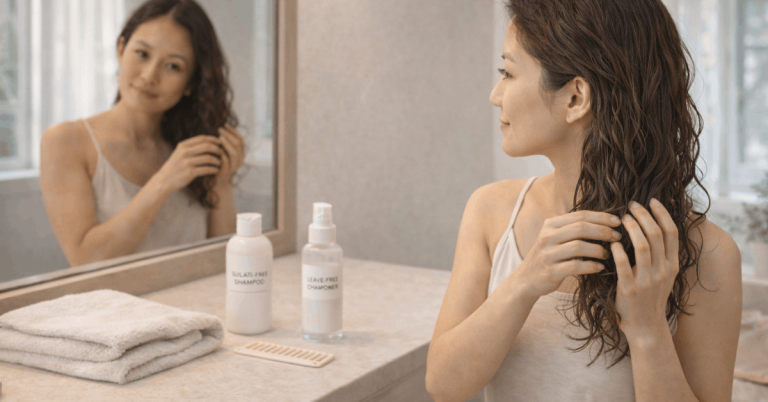
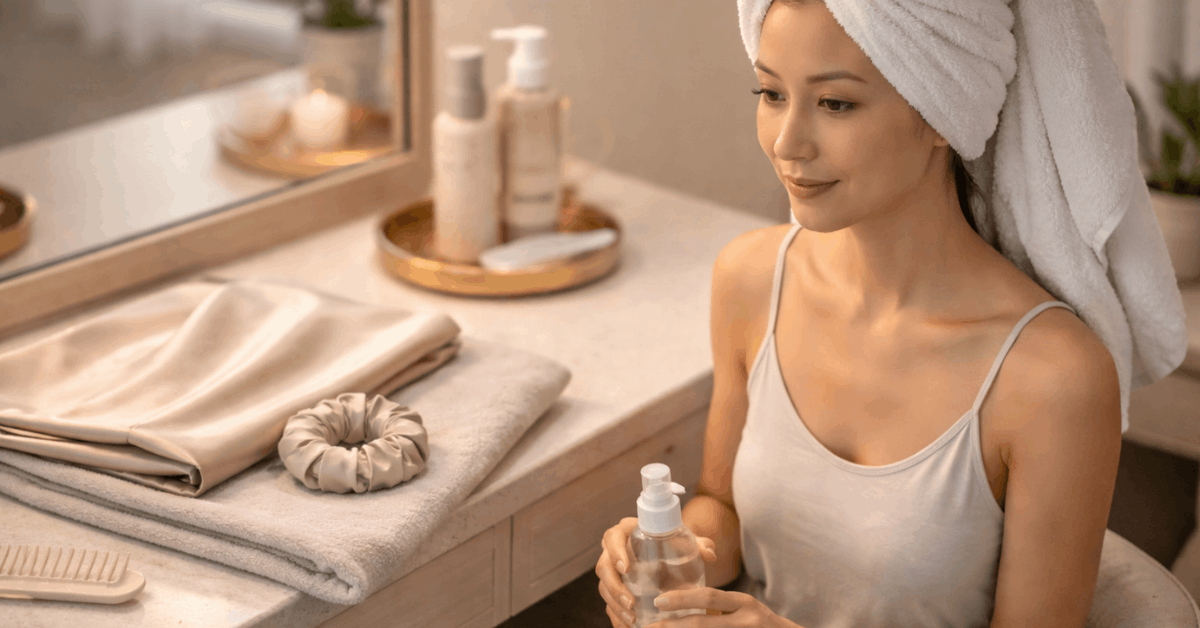
A sulfate-free shampoo uses milder surfactants that clean the scalp without obliterating the protective lipid layer on each strand. The benefit isn’t some magical ingredient. It’s the absence of a harsh one.
For oily scalps, wash as often as needed to control residue. Just keep shampoo contact on the ends brief and follow with a light conditioner below ear level. Dry scalps and tightly coiled patterns can stretch washes longer, but a periodic gentle clarifying wash prevents styling residue buildup that mimics roughness.
Conditioner Placement Based on Hair Type
The instruction to “condition after every wash” is correct. But where you put conditioner matters more than which bottle you grab.
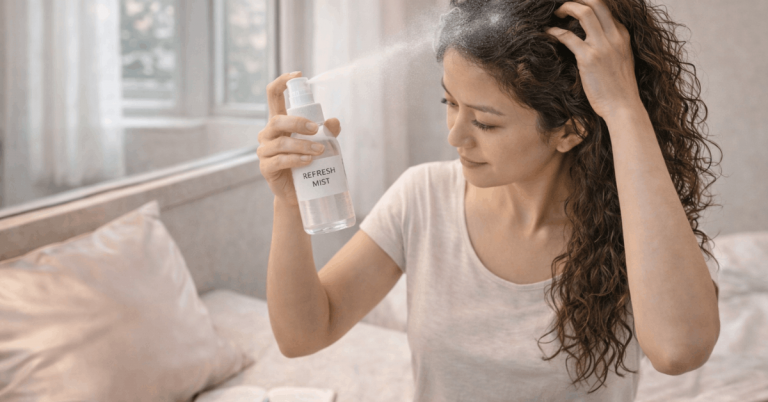
Fine hair that tangles easily does best with a lightweight leave-in conditioner mist or a thin lotion, kept away from the scalp to maintain volume. Dense curls need richer formulas distributed root to tip, especially when strands are porous.
Comb through conditioner in the shower while it’s still coating the hair. This is the single best time to detangle, and it reduces breakage better than any post-shower cream.
Water Temperature and Hair Softness
I would skip every fancy serum on the market before I’d skip one cold-water rinse after conditioning. That single temperature shift does more for softness than most leave-in products sold at Sephora in 2026. Here’s the science behind it.
Lukewarm for Washing, Cold for Finishing
Lukewarm water opens the cuticle enough for cleaning without over-swelling the fiber. Hot water goes too far: it lifts cuticle scales aggressively, causing moisture loss and a rougher surface texture.
After conditioning, switch to a cold-water rinse. Cold water encourages the cuticle to lie flatter, which creates a smoother feel and more shine. Zero product weight added. The effect is physical, not chemical.
Think about it this way: most people spend $15-$30 on shine serums that do what a 30-second cold rinse does for free.
Why Hot Showers Undo Your Entire Routine
The comfort of a hot shower works against soft hair at every step. Hot water strips oils during cleansing, then prevents the cuticle from sealing after conditioning. Two problems from the same habit.
If cold water feels unbearable, try rinsing just the hair under cooler water while keeping the body stream warm. A detachable showerhead makes this simple. The goal is cold contact on the strands during the final rinse, not full-body suffering.
Drying and Detangling Without Damage
This is the section where soft hair lives or dies. Friction and heat during drying cause more roughness than almost any product deficiency. Getting these two steps right eliminates the need for heavy repair treatments.
Microfiber Towel Drying vs. Regular Towels
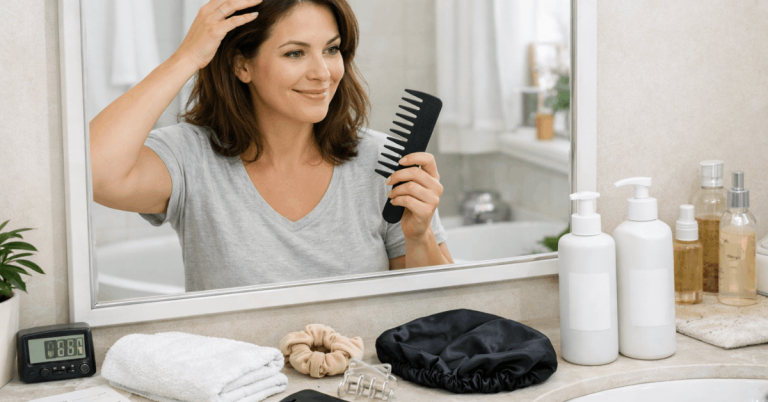
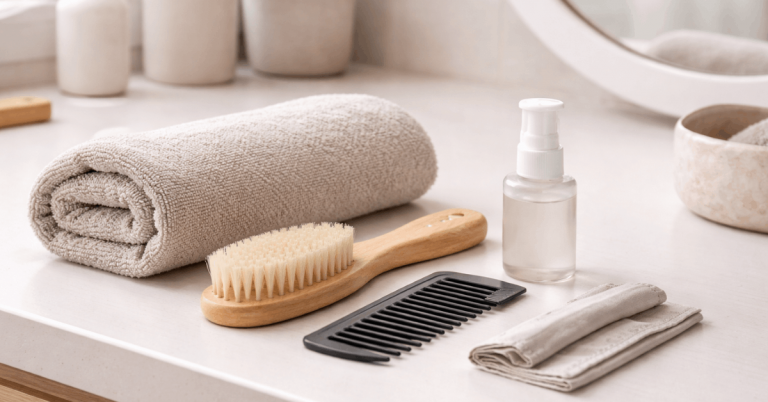
A standard terry cloth towel has a rough texture that lifts cuticle scales and creates frizz. Rubbing makes it worse. Microfiber towel drying or blotting with a soft cotton T-shirt reduces friction enough to keep the cuticle smooth.
The technique matters too: wrap and blot. Don’t rub. Leave the wrap on long enough to absorb excess water, then release and let air circulation finish the job. This single swap eliminates one of the biggest sources of mechanical damage.
Low-Friction Detangling That Preserves Softness
Consistent, gentle detangling preserves softness better than any heavy cream. That comes directly from dermatology guidance, and I think it’s the most underrated statement in hair care: technique beats product, every single time.
The method is simple but specific:
- Start at the ends and work upward in short strokes using a wide-tooth comb
- Add a small amount of rinse-out conditioner during shower detangling if knots resist
- Section thick or curly hair and handle each piece separately to avoid pulling
- Finish with hands to guide curl pattern or alignment on straighter textures
For straight and fine hair, allow partial air-drying before combing. Wet fibers swell and weaken, so combing soaking-wet fine hair causes more breakage than waiting five minutes.
Also read: How to Choose Beauty Tools That Last
Heat Styling Limits and Protectant Use
Every pass of a flat iron or blow dryer at high temperature increases brittleness. The fix isn’t avoiding heat tools forever. The fix is reducing total heat exposure per session.
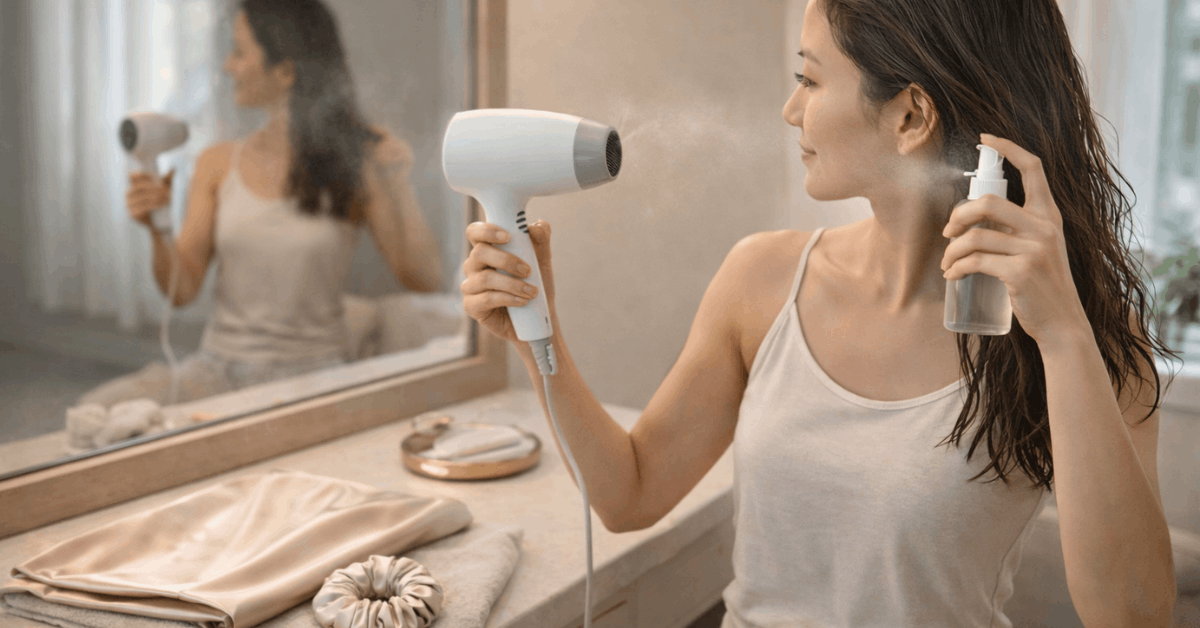
Allow partial air-drying first, then finish on low or medium heat. Keep the tool moving to prevent hotspots. Apply a light heat protectant spray rated for the temperature of the tool being used, and stick to fewer passes.
| Method | Friction Level | Softness Outcome | Product Needed |
|---|---|---|---|
| Terry cloth towel rubbing | High | Increased frizz and roughness | None, but causes damage |
| Microfiber towel blotting | Low | Smoother cuticle, less frizz | None |
| Air drying with cold rinse | Minimal | Best cuticle alignment | None |
| High-heat blow dry (no protectant) | Moderate heat stress | Brittleness over time | Heat protectant required |
The takeaway: methods that add zero product often produce better softness than methods that rely on heavy coatings.
Diet, Sun, and Sleep: The Off-Shower Softness Factors
Soft hair doesn’t start in the bathroom. Daily habits between washes either protect what you’ve built or quietly tear it apart.
Food and Hydration for Hair Fiber Quality
Hair fiber production needs protein, iron, and omega-3 fats. Supplements are unnecessary for anyone eating a balanced diet. But if a clinician identifies a deficiency, correcting it through medical guidance can reduce shedding and improve strand quality.
Adequate water intake supports scalp comfort and reduces the itch that triggers scratching. Scratching causes mechanical damage at the root that no conditioner repairs.
UV and Pool Water Protection
Ultraviolet radiation weakens cuticles and fades color. A hat or lightweight UV shield mist works during prolonged outdoor exposure without coating strands heavily.
Saltwater and chlorinated pool water amplify dryness. The simple fix: wet your hair with clean water before swimming, then rinse promptly after. Pre-wetting reduces how much salt or chlorine the hair absorbs. No heavy product required.
Silk Pillowcase Benefits for Hair Softness
A silk pillowcase creates less friction against hair during sleep than cotton. The result: fewer overnight tangles, better moisture retention, and less morning frizz. According to the American Academy of Dermatology, reducing friction on hair during sleep helps prevent breakage.
Pair a silk pillowcase with a loose braid or soft scrunchie for longer hair. Tight ponytails or elastics at the hairline cause traction stress that counteracts everything else.
Weekly Light Treatments That Don’t Weigh Hair Down
I think the weekly deep conditioning mask advice that dominates hair care content is overcorrecting for most people, especially anyone with fine or medium density hair.
A 10-15 minute lightweight mask applied mid-length to ends, used once a week or less, maintains softness without the greasy buildup that heavier masks leave behind.
Masks labeled “lightweight” or “daily conditioner” work for fine and medium textures. Dense, coily textures can handle richer formulas. The mistake is using a mask designed for coily, thick hair on fine strands and wondering why they go flat.
A few other habits that keep softness light:
- Apply hair oil on damp ends only, using fast-absorbing oils or esters that don’t sit on the surface
- Trim every six to eight weeks to remove split ends that make hair feel rough regardless of product use, per guidance from Cleveland Clinic’s hair care tips
- Schedule an occasional clarifying wash when styling residue builds up, then follow immediately with a light conditioner
Questions People Ask About Keeping Hair Soft Without Heavy Products
Q: Can I keep hair soft if I wash it every day?
Daily washing is fine for oily scalps as long as the shampoo hits the scalp only and a light conditioner goes on the ends. The problem is never wash frequency. It’s technique and product placement.
Q: Do I need a hair mask every week for soft hair?
Not if your hair is fine or medium density. A lightweight mask once every two weeks, applied 10-15 minutes on mid-lengths and ends, often does more than a heavy weekly treatment that flattens your roots.
Q: Does cold water rinse really make hair softer?
A cold rinse after conditioning helps the cuticle lie flatter, which creates smoother texture and more shine. The effect is physical and immediate. It won’t transform damaged hair, but it prevents softness from being lost during every wash.
Q: What oil is best for soft hair without greasy buildup?
Fast-absorbing oils or esters applied only to damp ends give slip without residue. The amount matters more than the brand: a coin-sized drop spread across both palms before touching hair prevents overloading.
Q: Is a silk pillowcase really worth buying for hair softness?
Silk reduces friction compared to cotton, which means fewer tangles and less frizz each morning. It’s one of the few purchases that works passively, doing its job while you sleep without requiring any technique.
Conclusion
Soft hair sticks around when the routine stays simple, repeatable, and light on product. Friction during drying and water temperature during washing shape your results more than any bottle.
Technique and consistency beat expensive treatments for long-term softness every time. Start with a cold rinse tomorrow morning and see how much one free habit changes things.