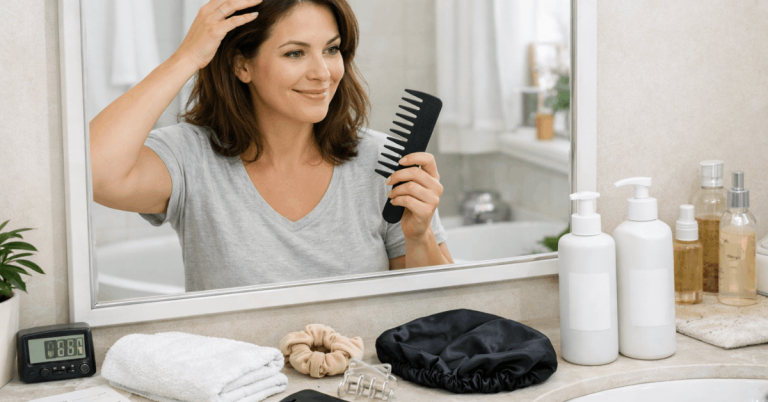
Dropping every bottle, spray, and cream from your routine sounds liberating. Then day four hits, and your hair looks like it lost a fight with a pillow.
That greasy, flat, weird-textured phase scares people back to their old products within a week. But it has a biological explanation that changes everything about how you approach product-free hair care.
Going without styling products is a real commitment, and your scalp needs time to recalibrate its oil production. The transition period is where success or failure lives.
This is the part nobody sticks around long enough to figure out. So let’s talk about how to improve hair appearance without styling products and what the adjustment actually looks like.
Why Hair Looks Worse Before It Looks Better Without Products
The first thing to understand about ditching styling products is that your scalp has been compensating for them. Gels, creams, and sprays strip or coat hair in ways that alter your natural sebum production, and your oil glands have been working overtime to keep up.
The Sebum Recalibration Period
Once you stop layering synthetic ingredients on your scalp daily, the oil glands don’t get the memo right away. They keep producing at the same elevated rate, which is why the first 10 to 14 days often feel oilier and flatter than expected.
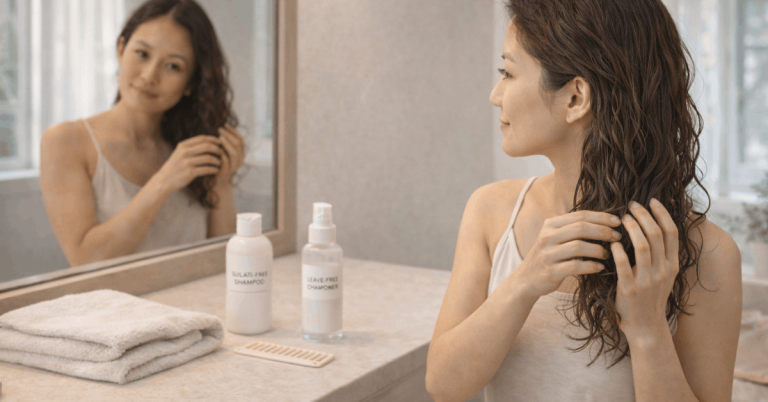
This is where I think the common advice to “just push through it” falls short. Pushing through without a strategy leads to frustration. A smarter approach: wash with a sulfate-free shampoo every other day during this window instead of going cold turkey on washing, too.

Product Buildup and What It Does to Your Scalp
Residue from gels, hairsprays, and styling creams clogs pores on the scalp over time. That buildup affects oil balance and can make hair look dull even right after washing.
Removing these layers lets the scalp restore its natural state. Balanced sebum production returns once you stop layering synthetic ingredients daily, and hair texture improves gradually. Check the Environmental Working Group’s Skin Deep database to look up specific ingredients in whatever products you’ve been using.
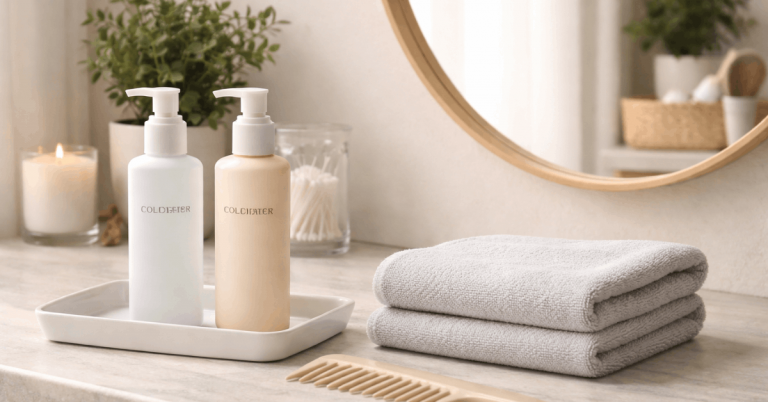
The Right Way to Wash Hair Without Styling Products
A clean scalp is the foundation of good-looking hair when products are off the table. But “clean” doesn’t mean scrubbing daily with whatever shampoo is in the shower.
Sulfate-Free Shampoo and Conditioner Choices
Pick a shampoo that matches your hair type. Dry hair needs moisturizing formulas. Oily hair does better with lightweight, balancing options.
Sulfate-free matters here because sulfates strip natural oils aggressively. That triggers the same overproduction cycle you’re trying to break. Skip daily washes unless your scalp is excessively oily during the transition phase.
The Cold Water Rinse Trick
Ending every wash with cool water closes the hair cuticle. Closed cuticles catch light better, which creates natural shine without any product.
Hot water does the opposite. It opens cuticles, strips oils, and leaves strands feeling rough. This single habit change: finishing with a 30-second cold rinse, makes a visible difference within the first week.
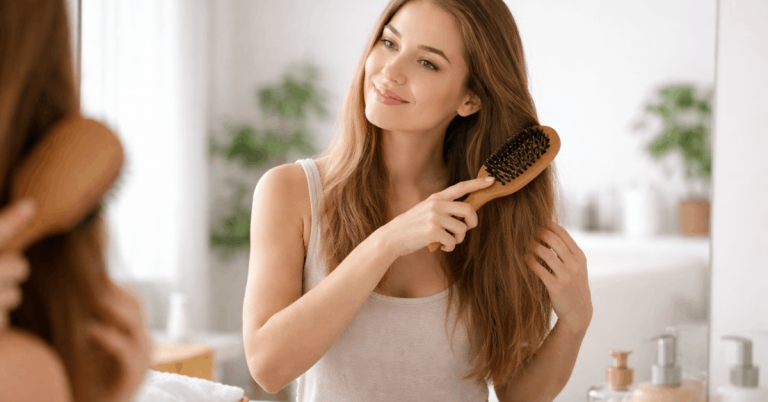
Brushing Techniques That Build Shine Naturally
Brushing seems basic, but the tool and technique matter more than people realize when you’re not relying on serums or sprays to do the smoothing work for you.
I think the old “100 brush strokes a day” advice does more harm than good, especially for people transitioning off products.
Over-brushing stimulates the sebaceous glands, which ramps up oil production right when you’re trying to let it calm down. Two gentle sessions per day, morning and night, is enough to distribute oils without overdoing it.
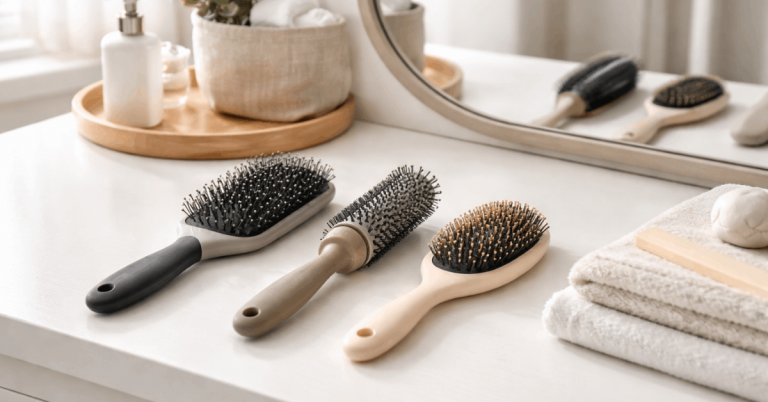
Matching the Brush to the Hair Type
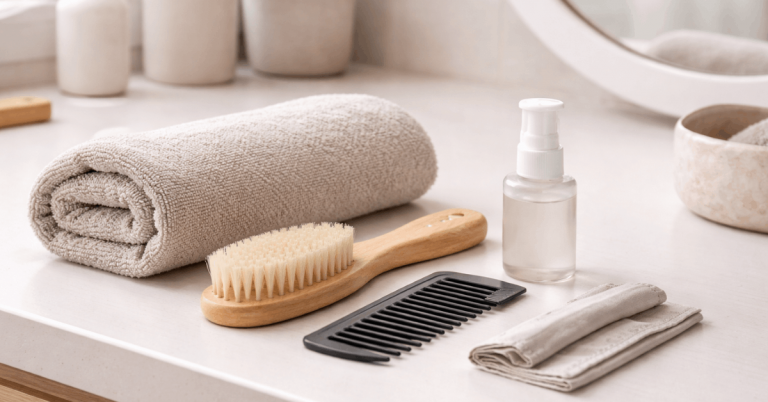
A boar bristle brush distributes natural oils along the hair shaft better than any other option. But it only works well on dry, straight to wavy hair.
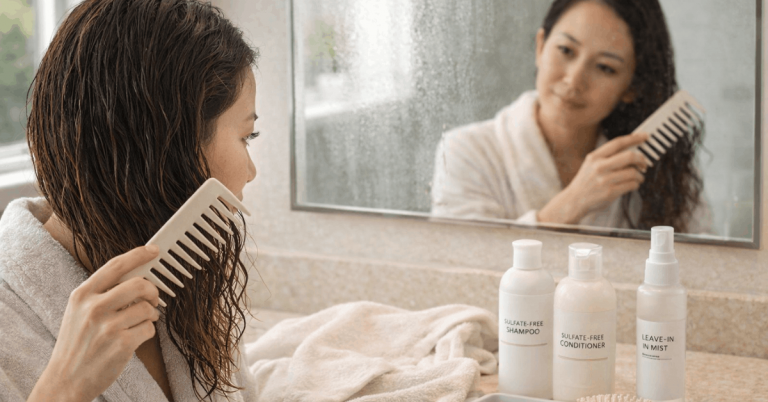
Wide-tooth combs are the better choice for wet hair or curly textures. The wrong brush creates breakage and frizz, which defeats the purpose of going product-free.
How to Brush Without Causing Damage
Start at the ends and work upward. Yanking a brush from root to tip tears through tangles and pulls strands out.
Gentle, purposeful strokes reduce scalp buildup and keep hair neat. The goal is distributing oils, not ripping through knots.
Building Volume and Texture Without Sprays or Creams
Flat hair without volumizing spray feels like a personal betrayal. But several heat-free methods create lift and texture without a single product.
| Method | Best For | Time Needed | Lasts |
|---|---|---|---|
| Flip drying (upside down) | Root volume | 10-15 min | All day |
| Overnight loose braids | Waves and texture | 5 min to set | 1-2 days |
| Twist and pin sections | Defined curls | 10 min to set | 1 day |
The flip-drying method works fastest: after washing, flip your head upside down and let hair air-dry in that position. Roots lift away from the scalp and stay that way once dry. Pair this with a microfiber towel instead of terry cloth to cut frizz.
Overnight braids are the low-effort winner. Create two or three loose braids on damp hair, sleep on them, and unbraid in the morning. Finger-comb gently. The waves hold without any spray.
Also read: Best Hair Tools for Low-Maintenance Routines
Daily Habits That Improve Hair Appearance Long-Term
The stuff you do outside the bathroom matters as much as what happens in it. Hair responds to nutrition, hydration, and friction patterns on a timeline of weeks, not days.
Food That Feeds Hair Growth
Protein, zinc, and omega-3 fats are the big three for hair strength. Eggs, leafy greens, and nuts deliver these without supplements.
A diet change won’t produce visible results for 4 to 6 weeks because hair grows from the follicle outward. But strands that grow in during a nutrient-rich period come in stronger and shinier than those that grew during a junk-food stretch.
The Pillowcase Swap
Cotton pillowcases create friction against hair all night. That friction causes frizz, tangles, and split ends over time.
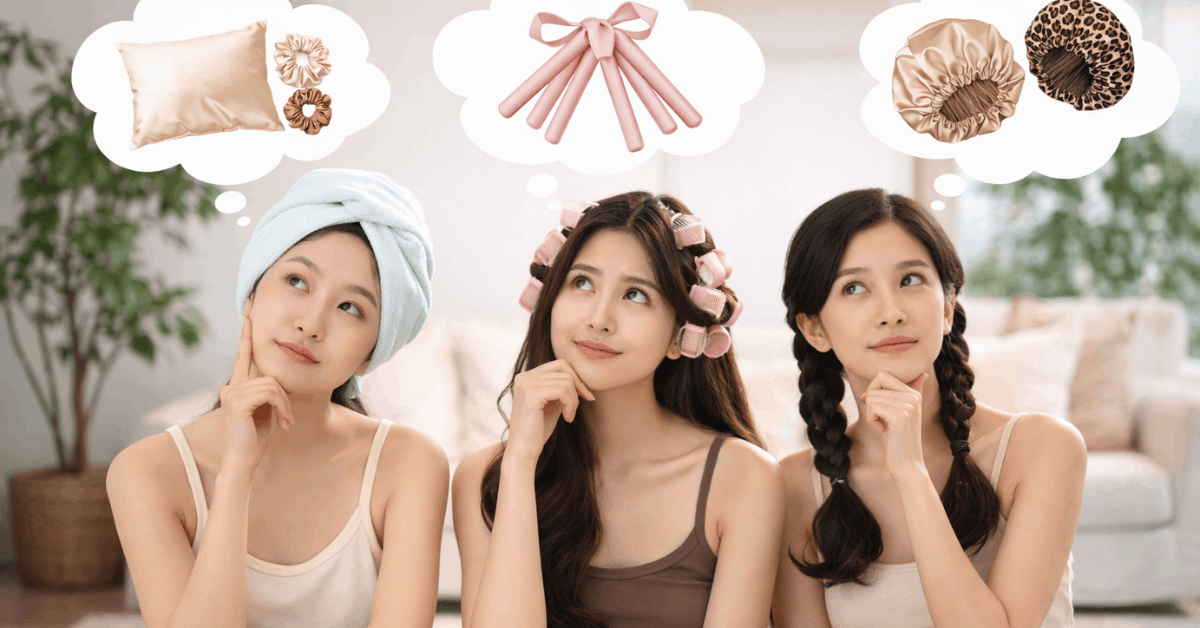
Switching to a satin or silk pillowcase lets hair glide instead of catching. The American Academy of Dermatology recommends this swap as one of the simplest ways to reduce daily hair damage. The difference shows up within the first week, especially for people who toss and turn.
Accessories That Don’t Wreck Your Hair
Tight rubber bands and metal clips pull, bend, and break strands. That damage accumulates fast.
Soft scrunchies and spiral hair ties hold without pressure. Wearing hair down more often also reduces stress on the roots. A few small changes to reduce friction add up to significantly less breakage per month.
Consider these low-damage alternatives for everyday styling:
- Silk scrunchies that grip without pulling or creasing hair
- Spiral coil ties that distribute pressure evenly across the ponytail
- Claw clips made from acetate instead of metal for loose holds
- Satin-lined caps or bonnets for protecting hair during sleep or workouts
Natural Hair Treatments That Replace Store-Bought Products
Sometimes hair needs a boost. These options work without synthetic ingredients and are easy to prepare at home.
Light Oil Application for Dry Ends
Argan oil or jojoba oil: one to two drops on the ends only. These oils mimic the structure of natural sebum and absorb without leaving a greasy film.
Don’t apply to the roots or mid-shaft. That creates weight and flat spots. Once or twice per week is plenty.
Apple Cider Vinegar Rinse
Mix one tablespoon of apple cider vinegar with one cup of water. Use it as a final rinse after shampooing.
The acidity smooths the cuticle and removes any lingering buildup. Hair feels lighter and looks shinier. Limit this to once per week because overuse can dry out the scalp.
DIY Protein Mask
Blend one egg, a tablespoon of honey, and two tablespoons of plain yogurt. Apply to damp hair for 20 minutes, then rinse with cool water.
This protein-rich mask strengthens strands and adds softness. Use it monthly. Skip it if you have a sensitive scalp, since egg protein can cause irritation for some people.
Protecting Hair Shape Without Heat Tools
Flat irons and blow dryers produce immediate results. They also cause cumulative heat damage that makes hair progressively weaker and duller over the months.
Overnight Wrapping and Braiding
Loose braids preserve shape and reduce tangles during sleep. Wrapping hair in a silk scarf controls frizz and keeps everything in place.
These methods add definition with zero damage. The only rule: keep it comfortable, not tight. Tension on the hair follicle leads to traction damage.
Air-Drying Without Frizz
Air-drying works best when done in sections. Separate hair into two or three parts and let each dry naturally.
Skip towel rubbing entirely. Press hair gently with a microfiber towel to absorb water, then leave it alone. Brush only after hair is completely dry to maintain shape and prevent breakage.
Hair Trimming and Water Quality: Two Overlooked Factors
Regular trims every 6 to 8 weeks remove split ends before they travel up the shaft. Even a quarter-inch cut keeps ends looking clean and prevents that stringy, thinning look.
Hard water is the hidden saboteur nobody talks about enough. Mineral deposits from hard water coat the hair shaft, making it feel rough and look dull even after a good wash. A shower filter that removes chlorine and heavy minerals can change hair texture noticeably within two to three weeks. Rinsing with distilled water occasionally helps too.
Questions People Ask About Improving Hair Without Styling Products
Q: How long does it take for hair to look good without styling products? The transition takes about 2 to 4 weeks for most hair types. During that time, sebum production recalibrates and buildup clears. Consistency with washing, brushing, and natural treatments speeds up the process.
Q: Can curly hair look good without any products at all? Curly hair benefits the most from the overnight braid method and light oil applications. A wide-tooth comb on damp hair prevents frizz better than fingers alone. Some curly textures may still need a leave-in conditioner as the one exception.
Q: Does diet really change how hair looks? Protein, zinc, and omega-3s feed the follicle where new hair grows. Results take 4 to 6 weeks to become visible because hair grows from the inside out. A consistent nutrient-rich diet produces stronger, shinier strands over time.
Q: Is hard water making my hair look bad? Mineral buildup from hard water coats the hair shaft and blocks moisture absorption. A shower filter rated for chlorine and mineral removal costs around $20 to $40 and lasts several months. The difference in texture and shine shows up surprisingly fast.
Q: Should I stop washing my hair every day if I quit products? Every-other-day washing works best during the transition because daily washing strips the oils your scalp is learning to regulate. Once sebum levels stabilize after a few weeks, adjust based on how your scalp and hair respond.
Conclusion
The product-free approach takes patience, but the results feel different than anything a bottle can produce. Healthy hair built on good habits looks better at month three than styled hair does at hour three.
Skip the expensive serums and start with what your hair already knows how to do. The best version of your hair is the one that doesn’t need a label on it.