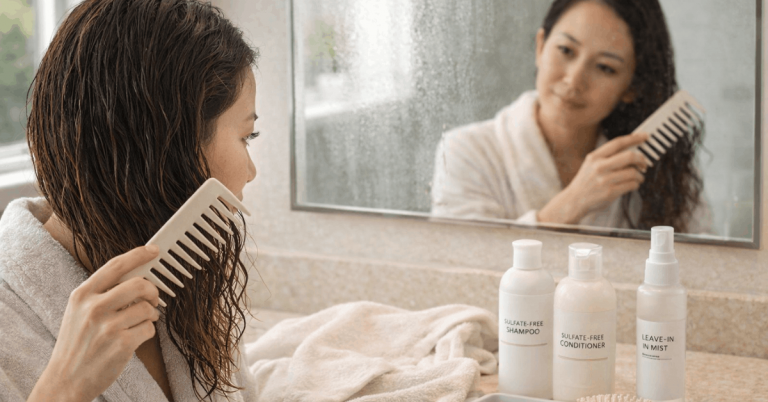
Long hair past your shoulders starts lying to you. It looks fine on top but hides dry, splitting ends underneath. The damage builds quietly for weeks.
Every hair care essentials for long hair guide says the same thing: condition more, brush less, use a silk pillowcase. That advice is fine. It’s also incomplete.
The missing piece is knowing your hair’s specific needs. Porosity, protein balance, and water temperature matter more than which brand of conditioner sits in your shower.
This is the routine I’d build from scratch if I were growing out hair in 2026 and wanted to stop babysitting damage every single week.
Why Long Hair Breaks Even When Your Routine Feels Right
Breakage is frustrating because it often happens to people who are already trying. They condition, they detangle gently, they avoid heat. And their ends still fray. The problem is almost never laziness. It’s misdirected effort.
Long hair has a basic physics problem. The sebum your scalp produces can coat about 4 to 6 inches of hair before it runs out of steam. Past that length, your ends are on their own. That’s why someone with shoulder-length hair can skip conditioner and feel fine, while someone with waist-length hair cannot.
How Sebum Distribution Changes Everything
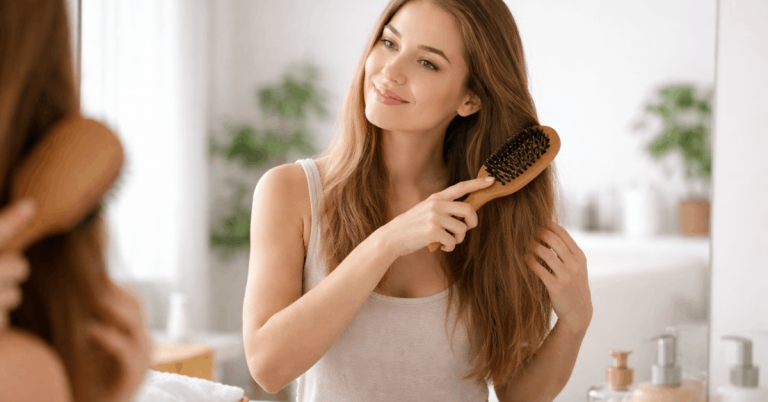
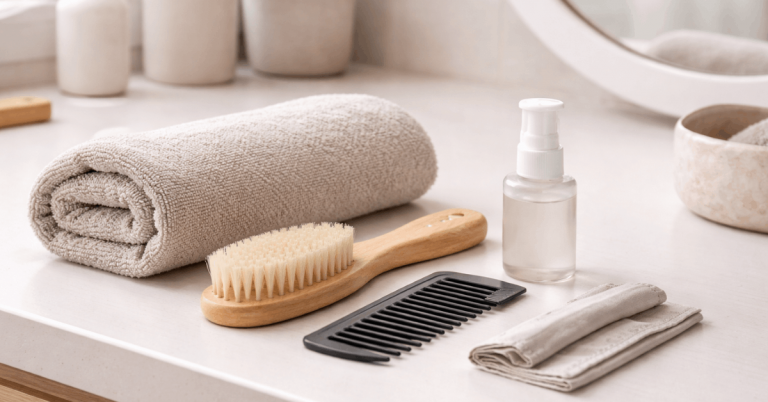
Boar bristle brushes exist to solve this exact problem. They pick up oil near the roots and physically drag it toward the ends. A paddle brush or a wide-tooth comb won’t do this.
If your hair reaches past your chest, one nightly session with a boar bristle brush moves sebum further than two days of waiting for gravity to do the work. This single habit can cut down how often you reach for leave-in conditioner.
The Porosity Question Every Article Skips
Hair porosity determines how your strands absorb and hold moisture. High-porosity hair soaks up product fast but loses it fast. Low-porosity hair resists moisture and sits under a layer of buildup if you overload it.
I think the common advice to use shea butter or coconut oil for deep conditioning is wrong for at least half the people reading this.
Coconut oil is a penetrating oil, and on low-porosity hair, it sits on top of the strand, creates waxy buildup, and makes hair feel heavier and duller over time. A lighter oil like argan or jojoba absorbs without the residue problem.

A quick porosity test: drop a clean strand into a glass of water. If it sinks fast, your porosity is high. If it floats for minutes, it’s low. This 30-second test should dictate your entire product selection, and yet almost no long hair care guide mentions it.
Daily Habits That Protect Long Hair Length
The difference between hair that grows past your waist and hair that stalls at your shoulders usually comes down to what happens between wash days. Damage is cumulative and invisible until it becomes a split end or a thin, see-through hemline.
Brushing Long Hair the Right Way
The rules are simple but specific:
- Start detangling at the ends and work upward in small sections, never roots-first
- A wide-tooth comb is the only safe option for wet hair; brushes pull and snap fragile strands
- Dry hair gets a boar bristle brush session once daily for oil distribution
- Never rip through a tangle; hold the section above the knot and work it loose slowly
Aggressive brushing when hair is wet causes the most preventable breakage. Wet strands stretch up to 30% beyond their dry length. That elasticity means they snap instead of bending.
Night Protection for Long Hair
Your pillowcase creates friction for 7 to 8 hours straight. Cotton fabric is rough on hair cuticles.
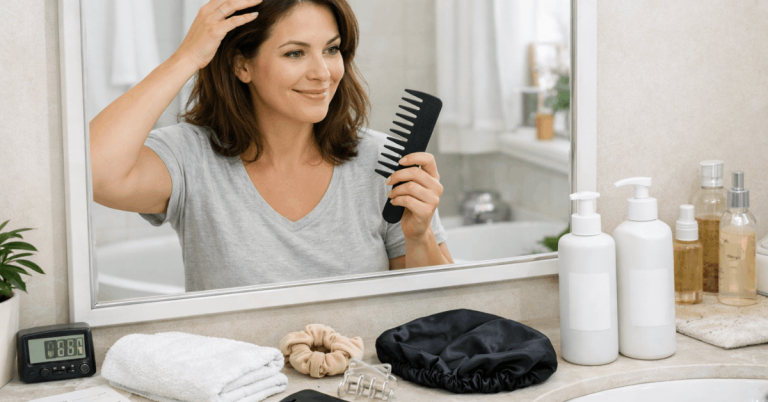
Switching to a silk or satin pillowcase reduces this friction. A silk hair wrap works too. Loose braids or a low bun prevent tangling, but avoid tight elastics that crease and weaken the hair shaft. Fabric scrunchies are a better choice.
One thing I would add that rarely gets mentioned: apply a lightweight oil to your ends before bed, not in the morning. The oil has hours to absorb while you sleep, and you wake up with softer ends instead of greasy-looking hair.
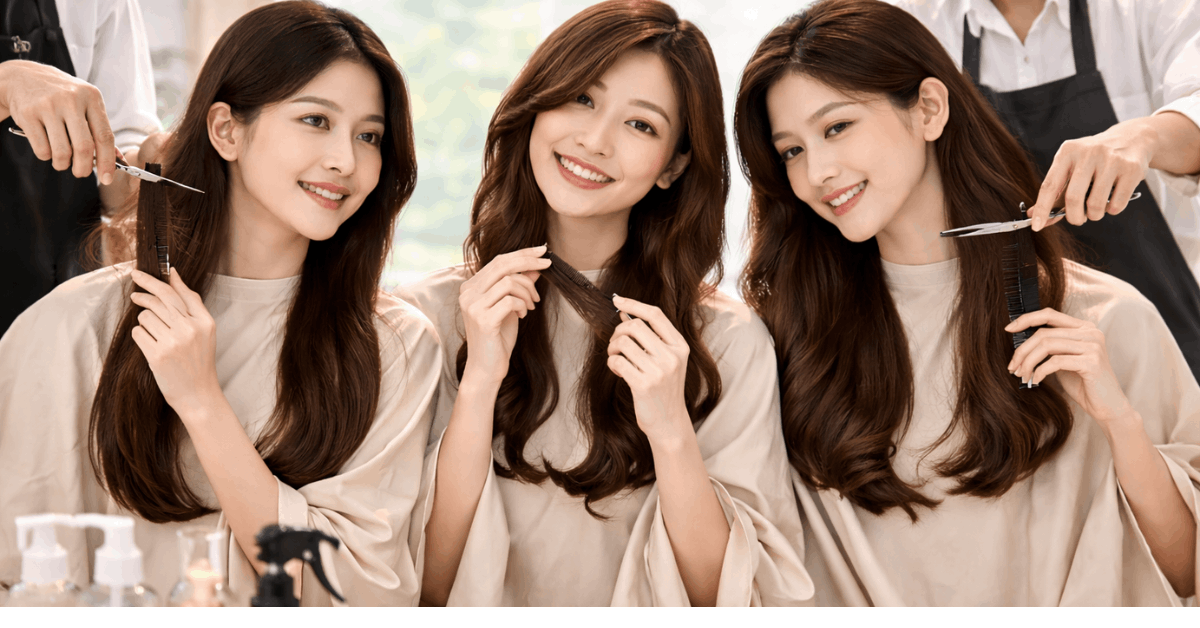
Best Washing Routine for Long Hair in 2026
Washing sounds basic. Shampoo, condition, rinse, done. But the washing step is where most long-haired people unknowingly cause the most damage, because the details matter more than the products.
Sulfate-Free Shampoo and Why It Matters for Length
Sulfates are the foaming agents in most drugstore shampoos. They strip oil aggressively. For short hair that produces enough sebum to compensate, this is fine. For long hair where the ends are already oil-starved, sulfates just make things worse.
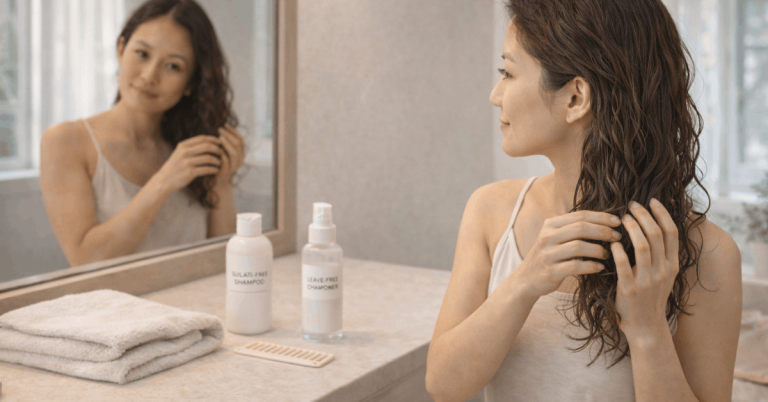
A sulfate-free shampoo with ingredients like aloe or glycerin cleanses without stripping. It won’t foam as much, which makes people think it’s not working. It is.
The foam is cosmetic, not functional. The American Academy of Dermatology recommends sulfate-free options for people with dry or color-treated hair, and long hair falls into that same category.
How Often Should Long Hair Be Washed
Two to three times per week works for the majority of hair types. Washing daily strips too much oil and forces your scalp to overproduce sebum to compensate, which creates a greasy-roots-dry-ends cycle that’s hard to break.
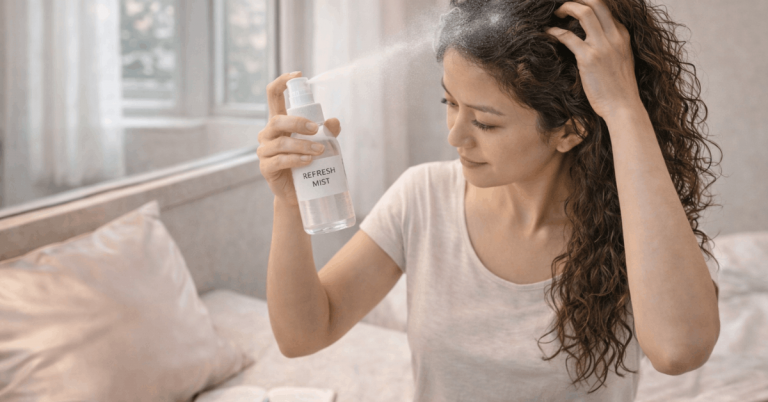
Between washes, dry shampoo absorbs excess oil at the roots. But limit dry shampoo to twice per week at the absolute maximum. Overuse clogs hair follicles and can cause scalp irritation or even temporary thinning at the hairline.
One more wash detail that gets overlooked: rinse with cool water at the end. Cool water flattens the hair cuticle, which locks in moisture and gives hair a smoother, shinier finish. Warm water opens the cuticle and lets moisture escape.
Hair Tools and Treatments Worth the Money
Knowing what to buy saves time and prevents damage. Not every product on a “long hair essentials” list belongs in your routine. The expensive tools often matter less than the cheap ones used correctly.
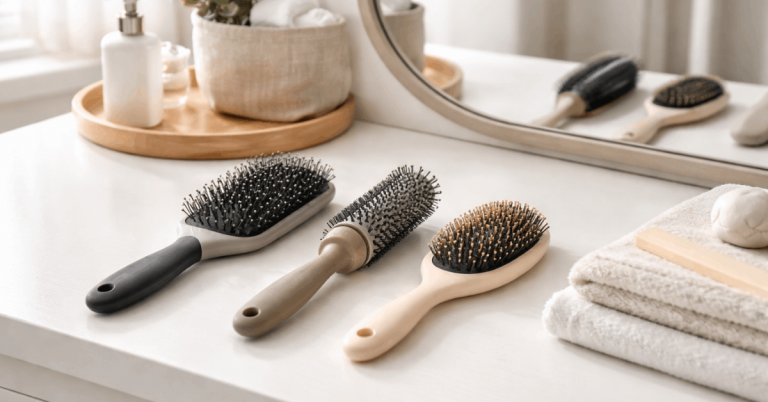
Brushes and Combs for Long Hair
| Tool | Best For | Avoid If |
|---|---|---|
| Wide-tooth comb | Wet hair detangling | Hair is bone dry and needs oil distribution |
| Boar bristle brush | Distributing natural oils on dry hair | Hair is wet or tangled |
| Paddle brush with flexible bristles | Gentle smoothing on dry hair | Hair is fine and prone to static |
| Detangling brush (Wet Brush style) | Wet or damp hair with heavy tangles | Hair is dry and smooth |
The takeaway: no single brush does everything, and using the wrong one at the wrong time is where most breakage starts.
Also read: How to Improve Hair Appearance Without Styling Products
Deep Conditioning vs. Protein Treatments
These two treatments solve opposite problems, and mixing them up makes things worse.
- Deep conditioning masks add moisture. They’re for dry, rough, straw-like hair. Look for ingredients like argan oil, jojoba oil, or glycerin.
- Protein treatments rebuild damaged internal structure. They’re for hair that feels limp, stretchy, or gummy when wet.
- Use deep conditioning once a week. Limit protein treatments to once every two weeks at most.
- Too much protein makes hair stiff and brittle. Too much moisture makes it mushy and shapeless.
The balance between moisture and protein is called the protein-moisture balance, and it’s the single most overlooked concept in long hair care.
Once your hair has the right balance, it holds a style better, breaks less, and feels different in your hands. Getting this balance wrong is the reason so many people cycle between “my hair is too dry” and “my hair feels weird and stiff.”
Heat Styling Without Destroying Your Hair
Heat tools are not the enemy. Uncontrolled heat is.
Keep flat irons and curling irons below 350°F. Fine or thin hair should stay closer to 300°F. A heat protectant spray applied before any heat tool creates a barrier that reduces direct contact damage.
Let hair air-dry at least 50% before using a blow dryer. This cuts heat exposure time in half. Ceramic or tourmaline plates on flat irons distribute heat more evenly than metal plates, which create hot spots that burn through strands.
Foods and Supplements That Support Long Hair Growth
Products work on the outside. Nutrition works on the inside. Both matter, but the internal side takes longer and gets abandoned too quickly.
Nutrients That Matter for Hair Length
Biotin supports keratin production. Zinc helps with hair tissue repair. Iron carries oxygen to hair follicles. A deficiency in any of these can slow growth or increase shedding.
The best food sources are eggs, fatty fish like salmon, leafy greens, and nuts. These provide the building blocks hair needs without requiring a supplement.
Supplements with biotin, collagen, or keratin may help if dietary intake is low. But they’re not a shortcut. A supplement cannot fix damage caused by heat, poor brushing, or product buildup.
The NIH Office of Dietary Supplements has dosage guidelines and interaction warnings worth checking before starting anything new. Talk to a doctor first, especially if you take other medications.
Trimming Schedule and Split-End Prevention
Skipping trims to “save length” is a trap. Split ends travel upward along the hair shaft. A tiny split at the tip becomes a mid-shaft break within weeks if left alone.
Cutting half an inch every 8 to 12 weeks prevents this. Watch for warning signs: white dots at the tips, fraying, or sections that tangle more than usual.
Regular trimming means your eventual haircut is small and planned. Skipping trims means your eventual haircut is large and reactive. Prevention costs less than repair, both in inches and in frustration.
Questions People Ask About Hair Care Essentials for Long Hair
Q: Can I use the same conditioner as a leave-in treatment? Regular rinse-out conditioner is formulated to be washed away. Leave-in conditioners have lighter formulas designed to stay on hair without weighing it down. Using rinse-out conditioner as a leave-in can cause buildup, especially on fine or low-porosity hair.
Q: How do I know if my hair needs protein or moisture? Take a wet strand and gently stretch it. If it stretches far and doesn’t bounce back, it needs protein. If it snaps quickly without stretching, it needs moisture. Healthy hair stretches slightly and returns to its original length.
Q: Does sleeping with wet hair cause damage? Wet hair is weaker and more elastic than dry hair. Sleeping on it creates friction that leads to breakage and can also cause scalp irritation. Air-dry or blow-dry on low heat before bed.
Q: Are expensive hair tools worth the price? A $12 wide-tooth comb does the same job as a $40 one. But for heat tools, quality matters. Cheaper flat irons often have uneven heat distribution, which forces you to pass over the same section multiple times and causes more damage per use.
Q: How long does it take to see results from a new hair routine? Hair grows about half an inch per month. A new routine needs at least 8 to 12 weeks before the results become visible at the ends. Scalp-level improvements like reduced oiliness or flaking can show within 2 to 3 weeks.
Conclusion
Long hair rewards patience and punishes shortcuts. A consistent weekly routine matters more than any single product purchase.
The protein-moisture balance and your hair’s porosity are the two details that separate good routines from great ones. Start with those, and the rest of your hair care falls into place.