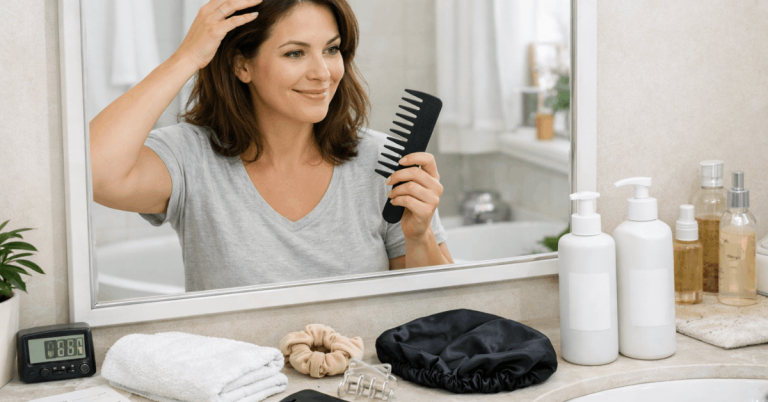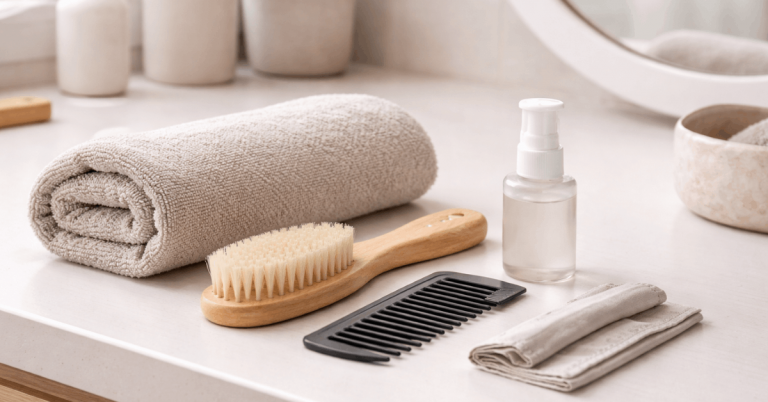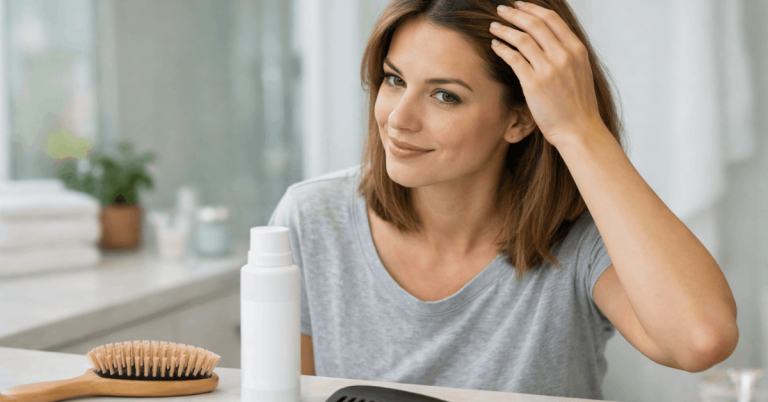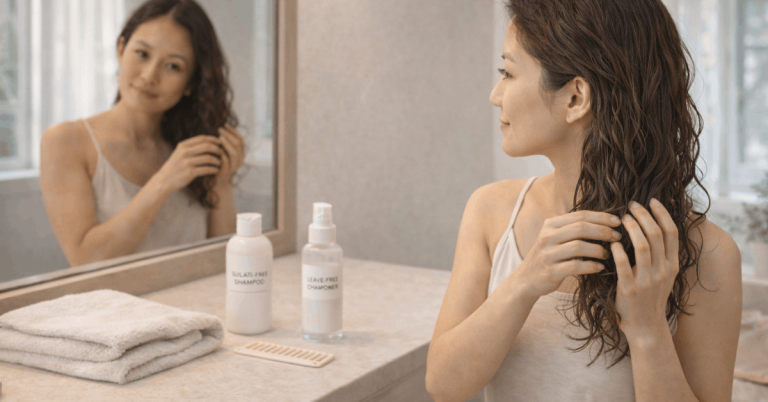
Brushes, combs, dryers, and clips can make hair easier to manage or add stress each day. A useful tool should suit your hair texture, routine, and comfort.
This guide covers pieces for washing, detangling, styling, and travel. It also shows why gentle handling often matters more than another purchase.
Choose Tools Based on Your Hair, Not the Packaging
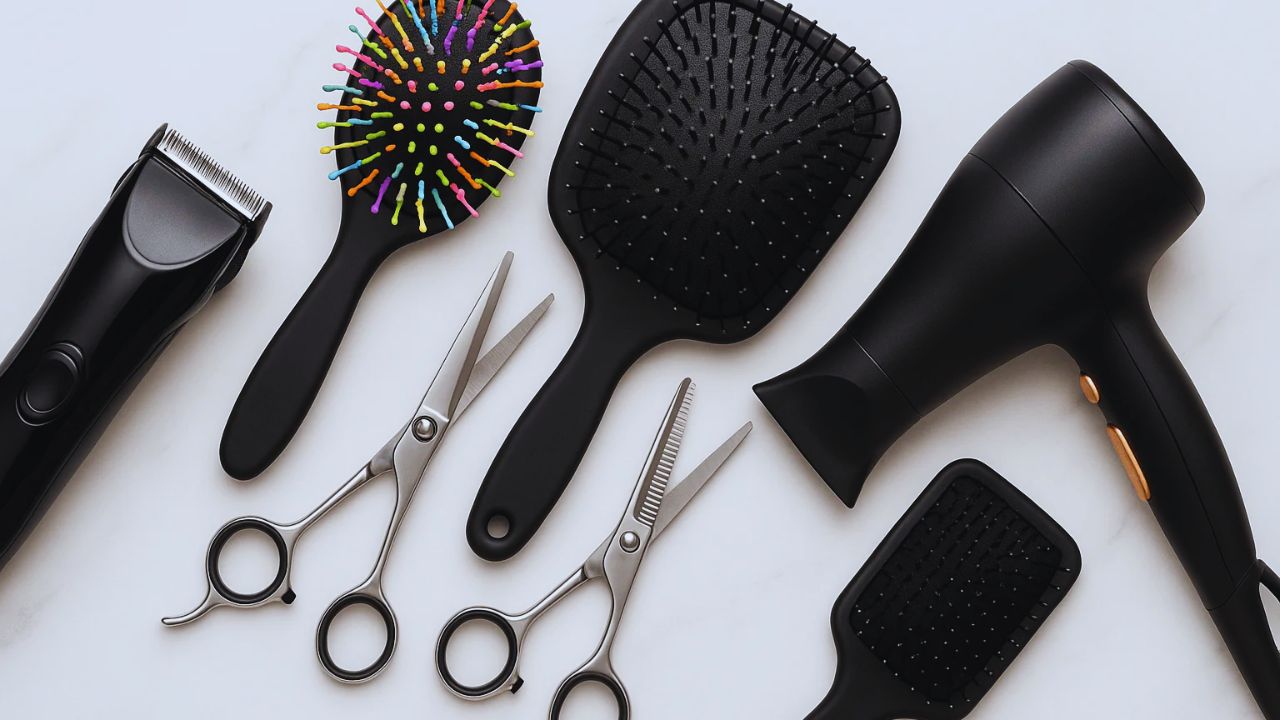
Packaging rarely tells you whether a tool will suit fine strands, dense curls, bleach-damaged lengths, or a sensitive scalp.
Start with the moment hair gives you trouble: after washing, during a blow-dry, or when you pull it back. That makes shopping more practical and your routine less wasteful.
Notice How Your Hair Behaves When Wet
Wet hair stretches easily, so use a tool that moves through knots without forcing them apart.
Fine or lightened hair may need flexible bristles; thicker or curlier hair often benefits from wider spaces and smaller sections. Notice whether hair catches, snaps, or feels rough after washing.
These signs show where friction starts and which tool change may help.
A Comfortable Handle Matters More Than It Seems
A brush that slips, a comb with sharp seams, or a clip that causes a headache will not be used carefully for long.
Look for a grip that feels steady without making your wrist work hard. If it scratches the scalp or requires force, it is not a good daily match. Good design supports calmer styling and reduces unnecessary force.
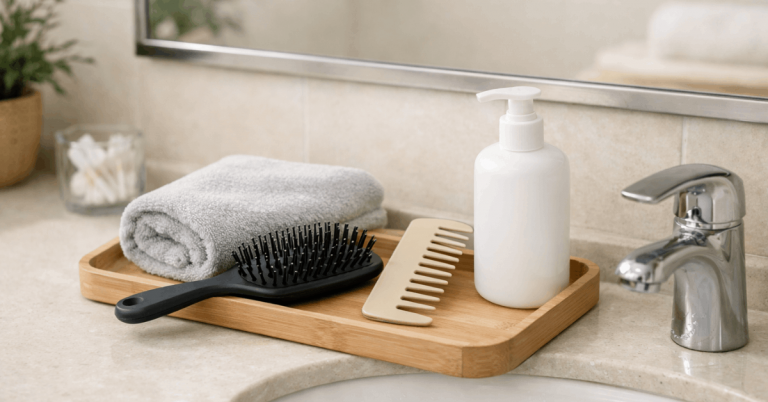
A simple kit can cover most routines without crowding the bathroom. Start with these useful basics before adding specialty devices:
- Flexible detangling brush for knots and wash days.
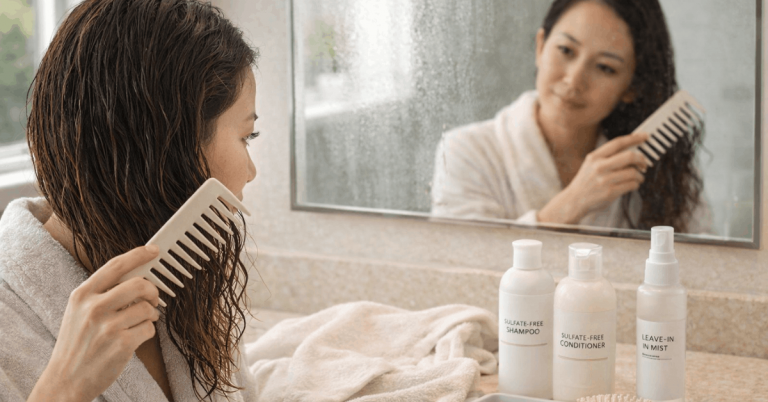
- Wide-tooth comb for conditioner and damp sections.
- Adjustable heat tool for occasional styling.
Give Brushes and Combs Separate Jobs
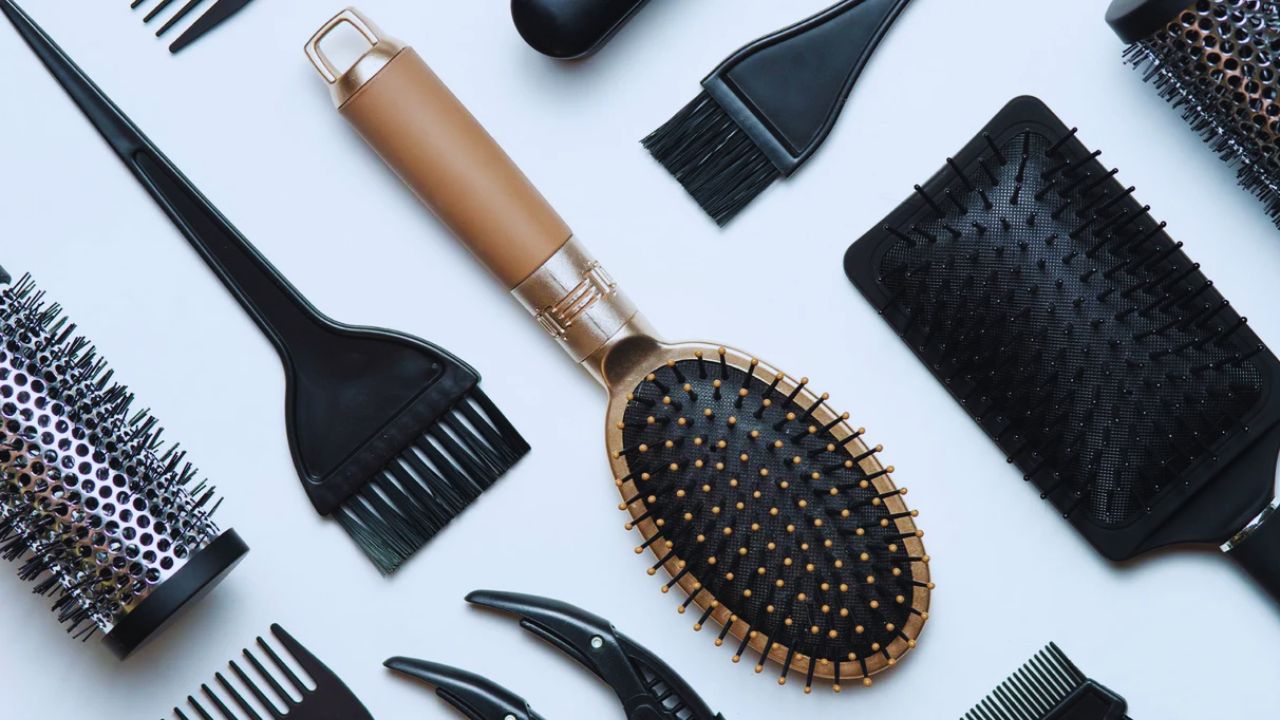
One brush cannot do every task well. A tool that smooths dry hair may be wrong for wet knots, while a fine comb can create neat parts but pull through dense lengths.
Keeping roles clear uses less pressure and gives cleaner results.
Detangle First, Then Smooth the Surface
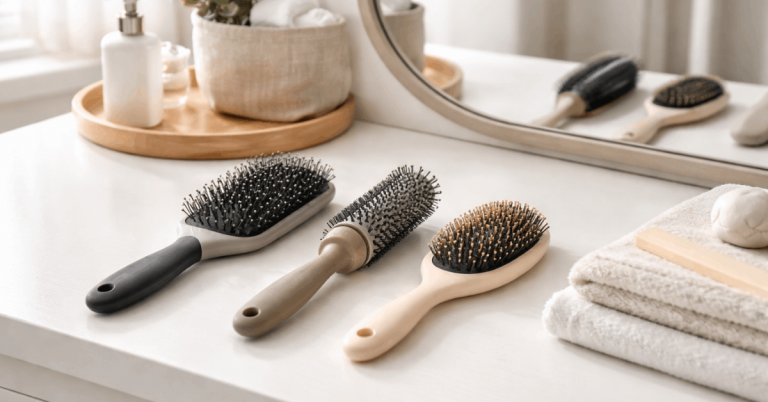
Use a wide-tooth comb or flexible brush for knots before reaching for a paddle or boar-bristle brush. Start at the ends, clear one section, and move upward only when it is loose.
A boar-bristle brush can then smooth dry, straight, or wavy hair and move natural oils down the length. This order limits root-to-end dragging and helps keep fragile tips intact.
Keep Fine-Tooth Combs for Detail Work
Fine-tooth combs are useful for a clean part, sleek edges, bangs, or small sections before heat styling.
They are not made to detangle thick, wet, or fragile hair, even when you need a fast fix. Use them after a gentler tool has removed larger knots.
That preserves precise styling without creating extra breakage.
Also Read: Hair Care Myths That Don’t Actually Help
Treat Heat as a Controlled Styling Step
Heat can be part of a realistic routine when you need to dry hair quickly or create a smoother finish.
The safer approach is controlling temperature, timing, and the number of passes. This matters most for color-treated hair and already dry ends.
Pick a Dryer That Lets You Adjust the Airflow
A dryer with several heat and speed settings gives more control than one setting that blasts every section.
Use a concentrator nozzle to direct air along the length, or a diffuser when curls lose shape under strong airflow.
Keep the dryer moving and avoid holding it close to one spot. These habits reduce hot spots and make drying time easier to manage.
Flat Irons and Wands Need Patience, Not Maximum Heat
Choose an adjustable tool, use heat protectant, and make sure hair is completely dry before styling. Work in thin sections so you do not pass over the same piece repeatedly.
Clean cooled plates and barrels according to the manufacturer’s directions, because residue can make them drag. Fewer passes mean less direct exposure and a smoother finish.
Use Scalp and Styling Accessories With a Light Touch
Small accessories can simplify a routine, but they should never leave a sore scalp or strained hairline.
This includes massagers, clips, elastics, rollers, and anything that holds hair in one place. The right choice adds control and comfort, not daily tension.
Keep Scalp Tools Gentle and Occasional
A soft silicone massager may help distribute shampoo through dense hair and loosen visible buildup.
Use light circles, and stop if you feel burning, tenderness, or increased flaking.
It is not necessary at every wash, and it will not solve persistent scalp concerns alone. Its value is better cleansing control, not guaranteed growth.
Rotate Clips, Ties, and Part Lines
Tight ponytails, hard elastics, and the same part every day can strain one area.
Choose smooth scrunchies, coated clips, or fabric-covered ties, and move the anchor point regularly.
A style that causes pain, bumps, or pulling should be loosened right away. These small shifts protect the hairline and reduce constant strain.
Clean, Store, and Replace Tools Before They Cause Problems
Hair, oil, styling product, and dust collect quickly on brushes and heated devices.
Cleaning tools helps them glide better and keeps your getting-ready space usable. A brief habit protects tool performance and makes daily care more hygienic.
Make a Short Weekly Reset Part of Your Routine
Remove trapped hair from brushes and combs, wash washable pieces with mild soap, and let them dry fully.
Wipe cool heat tools according to their care instructions, especially after spray, mousse, or serum.
Check cords, plugs, bristles, and plates for wear. This prevents sticky buildup and avoidable snags.
Pack Only the Tools You Will Reach For
Travel is a good test of whether a tool is useful. A foldable brush, small comb, soft tie, and compact mirror cover most touch-ups without filling your bag.
For cordless tools, check battery guidance and pack a protective cover. A lighter kit supports simple travel care and reduces lost accessories.
Build a Kit That Fits an Ordinary Week
You do not need a drawer full of devices to care for hair well. Replace the item that causes the most pulling, heat, or delay first, then give the new tool time to prove itself.
Keep pieces that help you detangle slowly, style with control, and get ready without discomfort. Over time, a smaller reliable kit will serve you better than a crowded collection that never fits your routine.