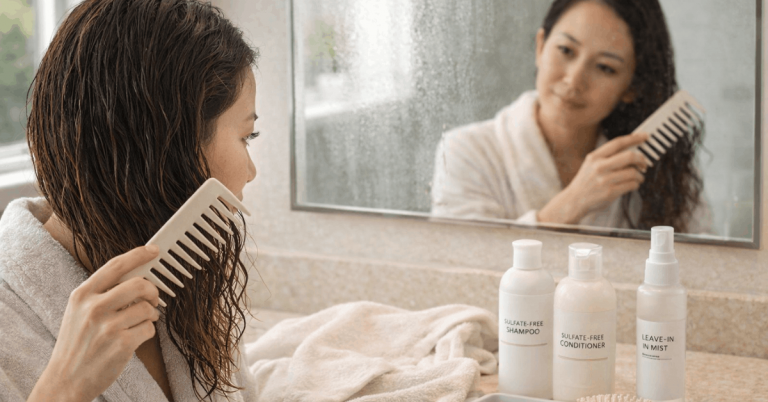
Switching shampoos every two weeks feels productive. It keeps your bathroom shelf interesting. But your hair has no idea what to do with all that inconsistency, and it shows.
Good hair care tips rarely sound exciting. They sound boring, repetitive, and too simple to work. That gap between expectation and reality trips up a lot of people who care about their hair.
The person reading this probably knows their curl pattern already. Maybe a 2B, maybe a 3C. Knowing the type and still struggling to manage frizz, dryness, or breakage is a frustrating place to be.
This article breaks down what a consistent routine looks like for straight, wavy, curly, and coily hair. More importantly, it covers the part about hair texture that almost every other guide glosses over.
Your Curl Pattern Is Only Half the Story
Every hair care article starts the same way: figure out if you’re Type 1, 2, 3, or 4. That’s solid advice. But stopping there creates a blind spot that leads to expensive product mistakes.
Hair Texture vs. Hair Type
Curl pattern tells you how your strands curve. Texture tells you how thick each individual strand is: fine, medium, or coarse. These two traits work together, and ignoring one makes the other less useful.
A quick test: hold a single strand next to sewing thread. Thinner than the thread means fine. Similar width means medium. Thicker and stiff means coarse. That 30-second comparison gives you more useful product direction than a quiz about your curl type alone.
I think texture should come first when choosing products because a Type 3A curl with fine strands needs completely different formulations than a Type 3A curl with coarse strands. One collapses under heavy creams. The other drinks them up. No article that only sorts by curl number can address that split.
The Product-Hopping Problem
Swapping products every week or two feels like troubleshooting. It is the opposite. Hair responds to consistent inputs over roughly 4 weeks. Anything shorter than that and the results belong to random chance.
A new conditioner that feels heavy on day three might perform differently by day twenty once your hair adjusts. The constant switching resets the clock and makes it impossible to tell what works. Stick with a product for at least a full month before judging it.
This is the gap I keep seeing in other guides. They recommend 15 products but never mention the timeline needed to evaluate a single one. The routine matters more than the product list.
Also read: Simple Habits That Improve Hair Texture Over Time
Hair Care Tips That Apply to Every Hair Type
Some habits work regardless of whether your strands curl, wave, or lie flat. These are the basics that protect cuticles, limit breakage, and keep styles predictable.
Lukewarm Water for Washing
Hot showers strip protective oils and lift cuticles. That raised cuticle surface scatters light instead of reflecting it, which is why hair looks dull after a steaming rinse. Lukewarm water cleanses without that tradeoff.
The temperature test is simple: if the water feels good on your face, it’s probably too hot for your hair. Drop it to a comfortable-but-not-warm range.
Shampoo the Scalp, Condition the Ends
Oil and dead skin build at the roots. Shampoo belongs there. Dragging cleanser through your mid-lengths strips moisture from sections that rarely get oily on their own.
Conditioner goes in the opposite direction. Load it on mids and ends where friction and styling cause the real damage. Roots usually have enough natural oil to stay soft. Keeping conditioner away from the scalp also preserves volume and lift at the crown.
Heat Protection Is Non-Negotiable
High temperatures weaken keratin bonds permanently. A single flat iron pass on unprotected hair causes more long-term damage than a month of air drying. Heat protectant spray creates a barrier that absorbs and distributes thermal energy before it reaches the strand.
Every heat tool session, even a quick blow dry, should start with protectant on damp hair. Skipping this step once in a while doesn’t feel like a big deal, but the damage is cumulative.
The common mistake here: applying protectant to dry hair right before pressing the iron. The product needs time to coat the strand evenly, which works best on damp hair with a few minutes of drying time first.
Air Drying and Low-Heat Finishing
Constant hot tools shorten style life and magnify frizz over time. Air drying partially and then finishing with brief low-heat passes to set shape keeps the cuticle smoother.
Schedule at least two heat-free days per week. That alone can change the texture of your ends within a month.
Building a Hair Care Routine by Hair Type
A routine cuts guesswork. Keep cleansing aimed at the scalp, conditioning focused on the ends, and heat exposure intentional. Replace products one at a time so you can isolate what’s working.
Straight Hair Routine
Straight hair distributes oil fast, which is why roots look flat by evening. Type 1A is very fine and glassy. Type 1B carries a bit more body. Type 1C is thicker with a slight bend.
Prioritize root lift and light hydration. A gentle cleanser every 1 to 2 days keeps oil from weighing things down. Condition mids and ends only. Lightweight mousse or volumizing tonic at the crown adds structure.
I would skip heavy oils entirely for Type 1A hair because the strands are too fine to support the weight without going limp within an hour. A hair fall control shampoo may be useful when breakage appears around brushes or elastic bands.
The widely repeated advice to “wash your hair less” backfires on straight fine hair. Going 3 to 4 days between washes leaves Type 1A roots looking greasy and flat. The American Academy of Dermatology recommends adjusting wash frequency to hair type and oil production, not following a universal rule.
Wavy Hair Routine
Waves form an S pattern that frizzes in humidity and collapses under heavy products. Type 2A is loose and fine. Type 2B shows stronger definition. Type 2C feels thicker and coarser.
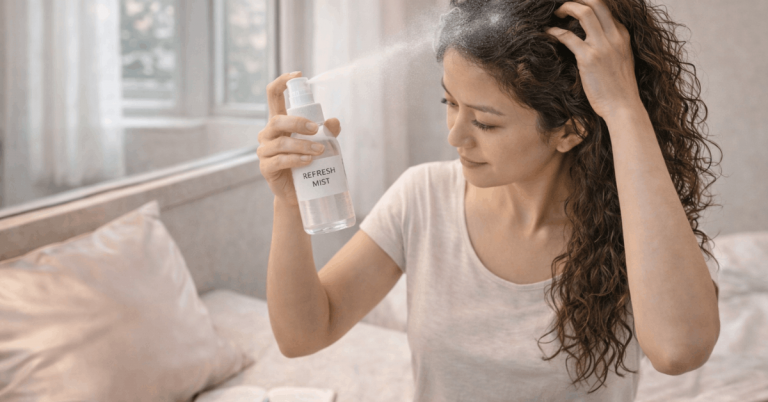
Cleanse roots lightly every 2 to 3 days. Apply a biotin conditioner to support flexible hold across lengths. Scrunch in a wave spray, then diffuse on low or air dry partially before finishing.
The critical point for wavy hair: use small amounts of cream to define ends without flattening mid-lengths. Too much product at the root kills the wave pattern faster than humidity does.
Curly Hair Routine
Curls spring into rings that dry faster at the ends because natural oils travel less efficiently down a curved strand. Type 3A curls are larger and shiny. Type 3B forms defined coils. Type 3C packs dense corkscrews.
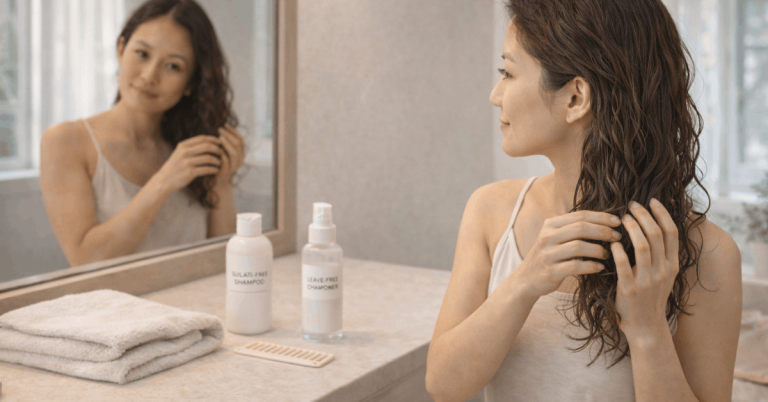
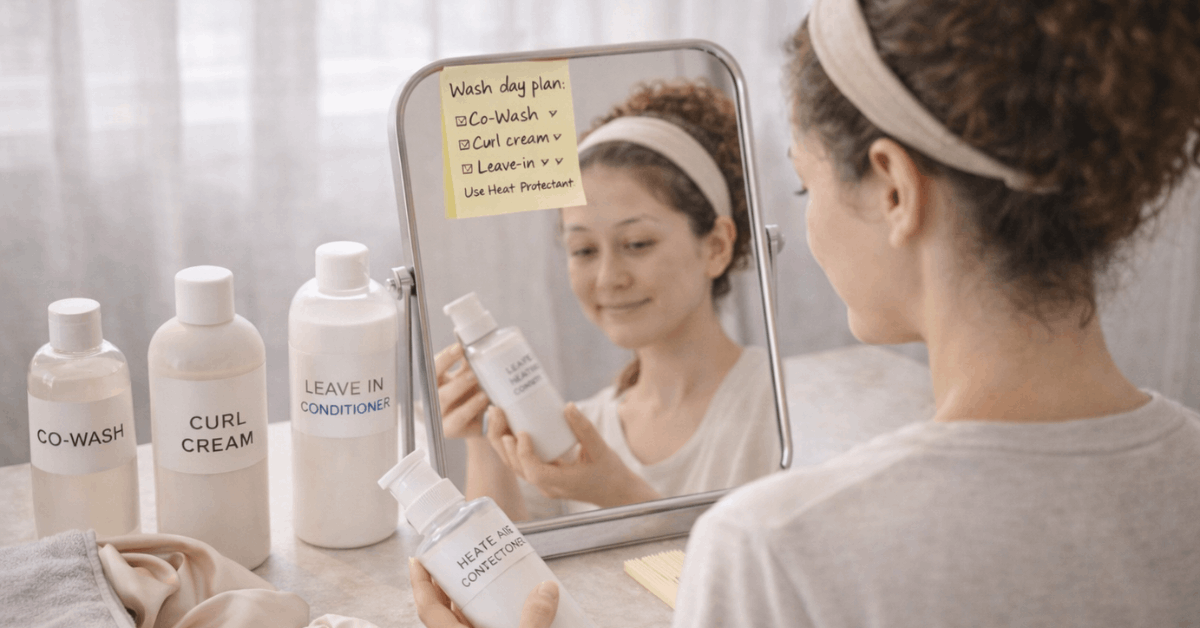
Pick a sulfate-free shampoo or a mild cleanser. Load hydration through a rich rinse-out conditioner. Apply leave-in conditioner, follow with curl cream, and seal ends if needed.
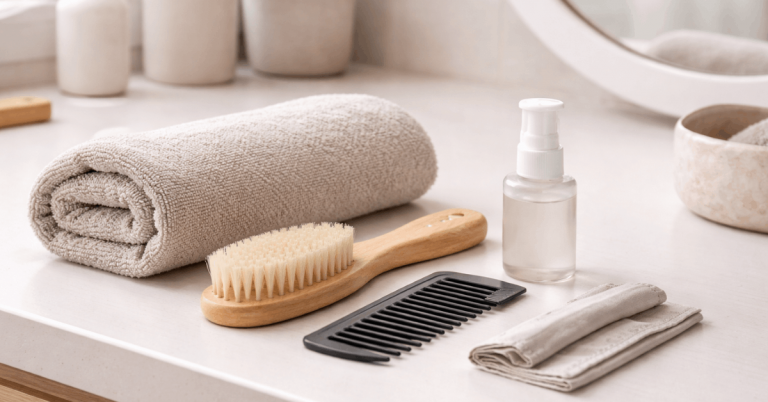
Detangle in the shower with ample slip and a wide-tooth comb. Dry detangling is where breakage happens because there’s no lubrication to ease the comb through knots.
Coily Hair Routine
Coils compress tightly. Type 4A shows tight S coils. Type 4B bends in sharp angles. Type 4C holds very tight patterns with minimal visible definition.
Adopt a co-washing method several times per month if your scalp handles conditioner-only cleansing. Layer thick leave-ins, oils, or hair butters, then stretch styles gently to reduce tangles.
Keep trims and protective styles on a schedule that respects your growth goals. The NaturallyCurly community has breakdowns of protective style rotation by length and density that can be useful.
Quick Routine Comparison
| Hair Type | Cleanse Frequency | Products to Use | Styling Focus |
|---|---|---|---|
| Straight | Every 1 to 2 days | Lightweight shampoo, light conditioner | Root lift, skip heavy oils |
| Wavy | Every 2 to 3 days | Gentle cleanser, biotin conditioner, wave spray | Definition without weight |
| Curly | Weekly or twice weekly | Sulfate-free shampoo, leave-in conditioner, curl cream | Moisture and frizz control |
| Coily | Weekly plus co-wash | Rich conditioner, oils, hair butter | Stretch, protection, low heat |
The pattern is clear: as curl tightness increases, wash frequency drops and product richness goes up.
Sleep and Recovery Habits for Healthier Hair
Nighttime friction causes more damage than most people expect. The hours between laying down and waking up create tangles, lift cuticles, and rough up ends against cotton.
Silk Pillowcase Benefits
Satin or silk reduces overnight friction. Silk pillowcase benefits include fewer tangles, better moisture retention after evening treatments, and less frizz on second-day hair.
The difference between cotton and silk is measurable. Cotton absorbs moisture from hair products and creates drag. Silk allows strands to slide, which preserves whatever styling work happened the night before.
Ponytail Recovery Days
Tight, high ponytails strain edges and create breakage along elastic lines. The repeated tension on the same follicles can lead to traction alopecia over time if the habit continues daily.
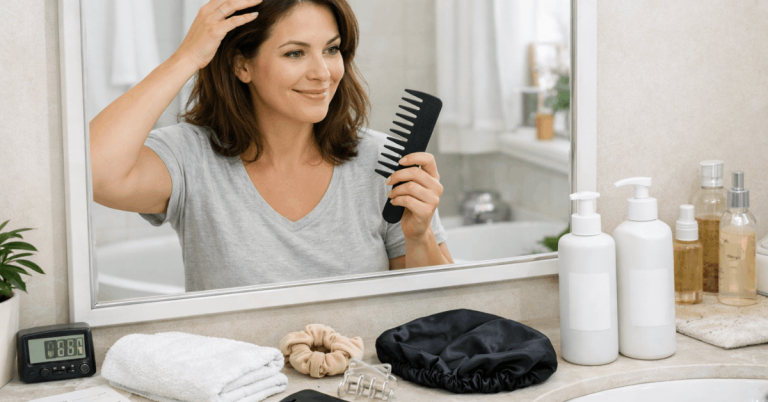
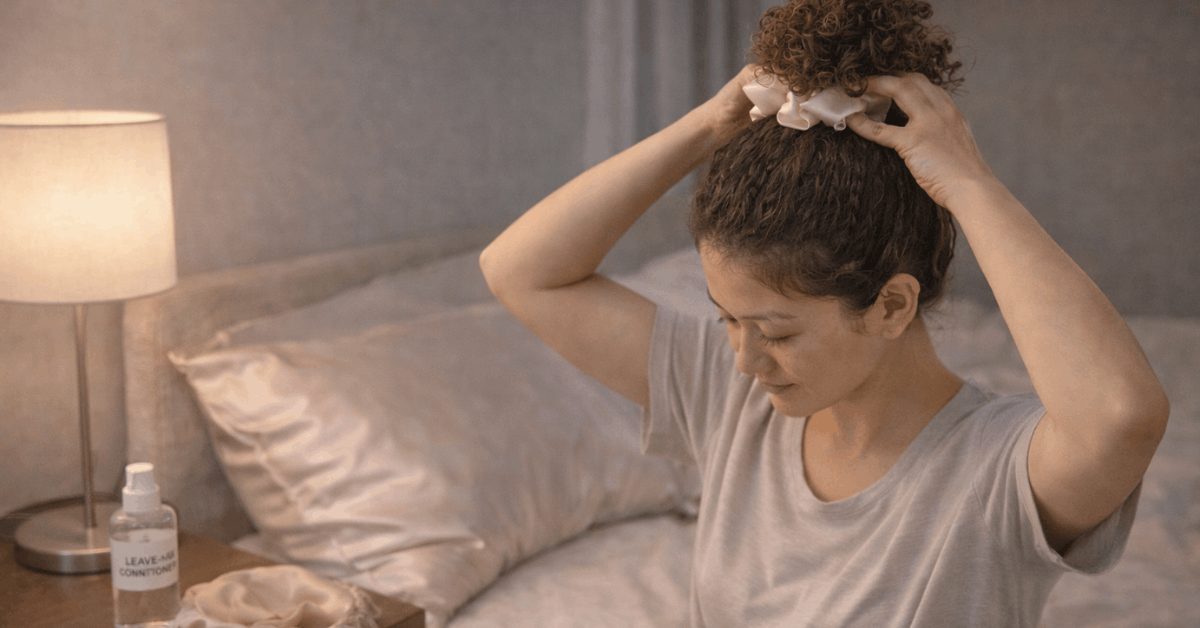
Alternate low or loose styles. Swap elastics for soft scrunchies. Schedule off-days where hair stays completely down. Even rotating the position of a ponytail distributes stress more evenly across the scalp.
Changing the hair part regularly also redistributes root pressure and boosts lift at the crown. Small shifts minimize repeated stress on the same fragile sections. It takes five seconds and makes a noticeable difference in volume patterns.
Questions People Ask About Hair Care Tips
Q: How long does a new hair care routine take to show results?
Expect about 4 weeks of consistent use before drawing conclusions. Hair grows roughly half an inch per month, so true structural changes take time to become visible on the lengths.
Q: Can I use the same products for different seasons?
Climate changes affect humidity and temperature, which shift how your hair responds to products. A light leave-in that works in summer may need a richer replacement in dry winter months.
Q: Does brushing 100 strokes a day make hair healthier?
That old advice causes more friction damage than benefit, especially on curly and coily textures. A few gentle passes to distribute oils on straight hair is enough. Anything beyond that risks snapping strands.
Q: Should I rinse with cold water after conditioning?
Cold water can help close cuticles slightly, which adds shine. But the effect is temporary and minor. Lukewarm water gives similar protection without the discomfort of an ice-cold rinse.
Q: Is it bad to sleep with wet hair?
Wet hair is weaker and more prone to breakage from pillow friction. Air dry at least partially before bed, or use a silk pillowcase to reduce the damage if time runs short.
Conclusion
Consistent habits beat product hauls every time, and a 4-week commitment reveals more than a shelf full of samples. Texture and curl pattern together determine what products your hair can handle.
Sleep habits, heat-free days, and detangling technique carry more weight than brand names. Build one routine, test it honestly, and let your hair show you what it needs.