Spending $40 on a hair mask feels productive. But three weeks later, the same rough, tangled strands stare back at you from the mirror.
The frustrating part? Habits that improve hair texture have almost nothing to do with what’s sitting on your bathroom shelf. They cost zero dollars.
This is a guide for the person who already owns too many half-used bottles. The person who wants smoother, softer hair but keeps throwing money at the wrong problem.
Good hair texture is built through daily repetition, not product rotation. And the order you stack these habits matters more than which ones you pick.
How Washing Habits Change Hair Texture
The shower is where most texture damage starts. Water temperature, shampoo type, and wash frequency control how your hair cuticle behaves for the rest of the day. Getting this part wrong means every product you apply afterward is fighting an uphill battle.
Wash Frequency and Why 2-3 Times Per Week Works
Daily washing strips sebum, your scalp’s built-in conditioner. Sebum coats the hair shaft and keeps strands smooth. Wash it away every morning, and your hair dries out faster than any leave-in can fix.
Two to three washes per week give the scalp time to regulate oil production. If greasiness bothers you during the transition, a mild dry shampoo at the roots buys you an extra day. Give this adjustment a full two weeks before judging it.
Sulfate-Free Shampoo With the Right pH
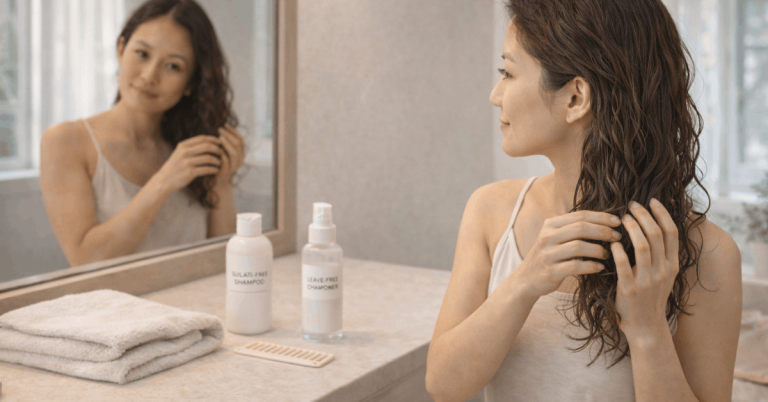
Sulfates are aggressive detergents that strip moisture and leave the cuticle rough. A sulfate-free shampoo with a pH between 4.5 and 5.5 cleans without disrupting the scalp barrier. Look for ingredients like aloe, oat protein, or panthenol on the label.

Skip anything with strong synthetic fragrance or alcohol high on the ingredient list. Those two additions undo whatever the sulfate-free formula is trying to protect.
The Cool Water Rinse Trick
Hot water lifts the hair cuticle open. Open cuticles create a coarse, frizzy surface. Cool or lukewarm water flattens the cuticle back down and locks in whatever moisture your conditioner just added.
End every wash with a 15-second cool rinse. Two weeks of this, and the difference in post-wash softness is noticeable without changing a single product.
Brushing and Detangling Without Damaging Strands
How you handle wet hair causes more breakage than most people realize. A single rough brushing session can snap hundreds of strands, and those broken ends create the rough texture you keep trying to fix with serums.

Wide-Tooth Comb for Wet Hair
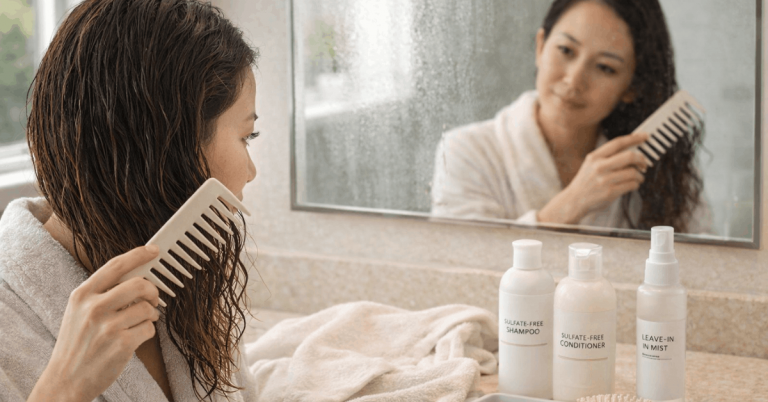
Wet hair stretches up to 30% more than dry hair. That stretch makes it fragile. A wide-tooth comb glides through tangles without snapping strands the way a fine-tooth comb or paddle brush would.
Detangle From the Ends Up
Brushing top-to-bottom drags every tangle into a bigger knot. Start near the ends, work through the tangles in small sections, and then move upward. It takes longer. But the reduction in split ends and breakage is where long-term texture improvement lives.
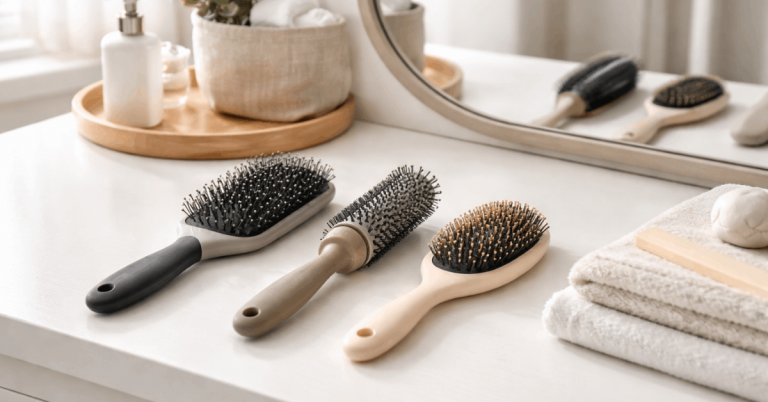
A boar bristle brush works well for dry brushing. It distributes sebum from root to tip and adds a natural shine that no spray can replicate. Swap out rough plastic-bristle brushes entirely.
Heat Styling Habits That Wreck or Protect Texture
I think heat protectant sprays give people a false sense of security, and the data on thermal protection backs that up. A protectant rated for 450°F still can’t save hair exposed to 410°F every single morning for months. The cumulative damage stacks, protectant or not.
The real texture fix is lower heat and fewer sessions per week. A protectant helps at the margins, but it can’t substitute for reduced exposure.
Lower Your Flat Iron Temperature
The raw numbers: 280°F to 320°F is enough for most hair types. Cranking to 400°F+ thins the outer cuticle layer and makes texture permanently rougher over time. Check your tool’s settings and lock them at 300°F as a starting point.
Higher temperatures don’t style faster. They just cook faster. And cooked hair has a stiff, brittle feel that no oil can soften.
Cut Heat Sessions to 2-3 Per Week
Daily heat styling and healthy texture are on opposite ends of the spectrum. Cap it at two to three sessions per week and fill the gaps with heatless curling methods or a leave-in styling cream. Air-drying with a microfiber towel on off-days keeps strands smooth without any tool.
If that schedule feels impossible, add a weekly deep conditioning treatment to offset the thermal load. But reducing sessions is always the higher-impact move.
Leave-In Products and Oil Application
Moisture locks in texture improvements. But the wrong application method can undo the benefit and leave hair flat or greasy. The goal is lightweight hydration that absorbs fast.
How to Apply Leave-In Conditioner
Pick a water-based leave-in conditioner with minimal oil content. Apply it to damp hair after washing, and comb it through to distribute evenly. The leave-in should absorb within a minute or two. If your hair still feels coated after five minutes, the formula is too heavy.
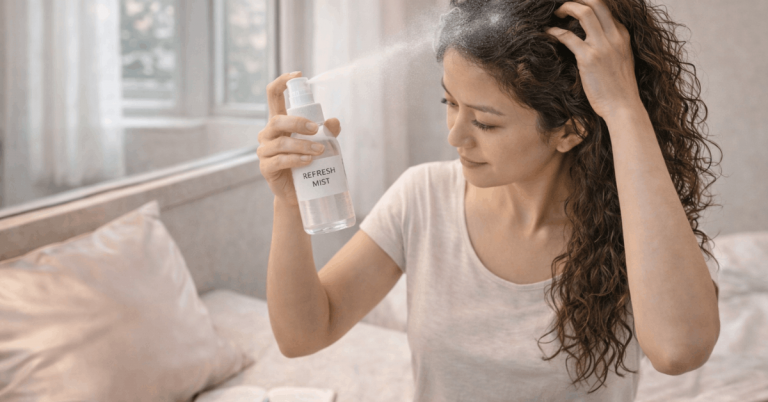
Daily application on damp hair works. So does a light refresh on dry curls between washes. The leave-in reduces friction, cuts static, and makes brushing easier the next morning.
Oil Goes on the Ends Only
A single drop of argan, jojoba, or camellia oil on the bottom third of your hair seals the cuticle and prevents moisture loss. Do not apply oil to your roots or mid-lengths unless you want flat, greasy-looking hair by noon.
The ends are the oldest, most damaged part of every strand. That is where oil does its work. Keep a travel-sized bottle handy for midday touch-ups when dry ends start looking rough.
Tools That Quietly Improve Hair Texture
Small swaps in your daily tools add up faster than product changes. The comparison below shows why:
| Tool Swap | Old Habit | Texture Benefit |
|---|---|---|
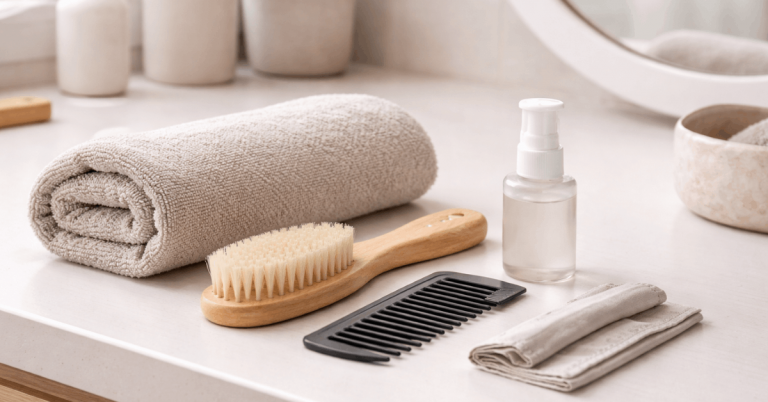
| Microfiber towel | Regular cotton towel | Reduces cuticle roughing and frizz during drying |
| Silk/satin pillowcase | Cotton pillowcase | Less overnight friction, fewer tangles and flyaways |
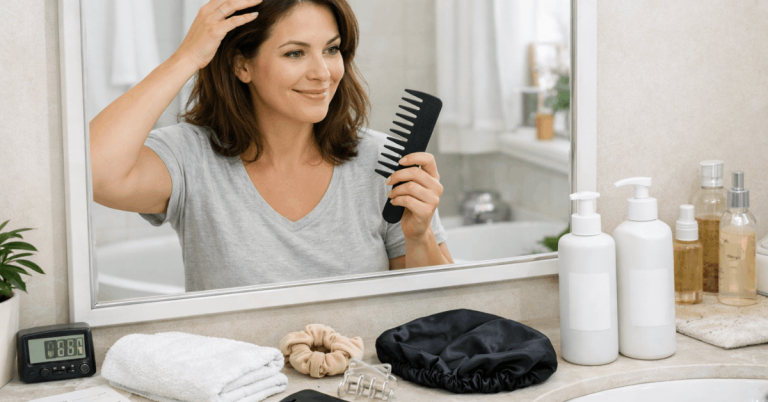
| Silk scrunchies | Rubber bands or metal clips | Prevents crease marks and breakage at the tie point |
| Boar bristle brush | Plastic-bristle brush | Distributes natural oils and smooths the cuticle |
The microfiber towel swap alone can cut frizz noticeably within a week. Pat hair dry instead of rubbing, and let it air-dry from about 70% damp.
The Pillowcase Swap
Cotton pulls moisture from your hair for 7-8 hours straight while you sleep. A silk or satin pillowcase reduces that friction and keeps strands smoother overnight. It is one of the cheapest swaps on this list, and the results show up immediately in fewer morning tangles.
Nutrition and Hydration for Hair Texture
Hair is dead protein. Once a strand leaves the follicle, it can only be maintained, not repaired. That means the texture of new growth depends entirely on what’s happening inside your body at the time the strand forms.
Water Intake and Hair Elasticity
Dehydrated hair snaps. Eight glasses of water per day is the standard recommendation, and there’s a quick test: if your lips feel dry, your scalp probably is too. Add electrolytes if you sweat heavily during exercise.
Hydration directly supports elasticity, which is what gives hair that soft, springy feel instead of a brittle snap when stretched.
Protein and the Nutrients That Matter
Hair is made of keratin, a protein. Low dietary protein intake slows growth and produces weaker, rougher strands. Eggs, tofu, lean meats, and legumes cover this daily.
I think biotin supplements are a waste of money for anyone eating a balanced diet, because biotin deficiency is rare in people who aren’t on specific medications or have absorption disorders.
The 5,000-10,000 mcg doses in most hair supplements are hundreds of times the daily requirement, and the excess gets excreted in urine.
A blood test from a healthcare provider can confirm whether iron, zinc, vitamin D, or biotin levels are low. Supplement only what the test shows as deficient, and give it at least 90 days to see results in new growth.
The American Academy of Dermatology has a solid breakdown of which nutrients matter most for hair health.
Building a Texture Improvement Routine That Sticks
The biggest mistake is changing everything at once. Swap your shampoo, buy a new brush, start taking supplements, and switch your pillowcase all in the same week? If your hair improves, you won’t know which change caused it. If it gets worse, same problem.
Stack one habit at a time. Here’s a practical order:
- Week 1-2: Reduce wash frequency to 2-3 times per week and switch to cool water rinses
- Week 3-4: Replace your towel with microfiber and your pillowcase with silk or satin
- Week 5-6: Lower heat tool temperature to 300°F and cut sessions to 2-3 per week
- Week 7-8: Add a water-based leave-in conditioner and oil on the ends
Also read: Beauty Tools for Quick Morning Routines
Track progress with photos every two weeks. Note how hair feels after each change. If dryness, buildup, or breakage increases at any stage, that specific habit needs adjusting before moving forward.
A few more small wins that compound over time:
- Sleep with completely dry hair to avoid friction damage and pillow kinks
- Stop brushing curly or wavy hair when it’s dry. Brush only when wet and conditioned
- Check expiration dates on products. Old formulas lose their effectiveness and can irritate the scalp
- Limit product layering to two products max per session to avoid buildup
The National Institutes of Health Office of Dietary Supplements has detailed reference data on biotin requirements if you want to check the science yourself.
Questions People Ask About Habits That Improve Hair Texture
Q: How long does it take to see hair texture improvements from changing habits?
Most changes in how hair feels (softness, frizz reduction, fewer tangles) show up within 2-4 weeks. Structural improvements in new growth take closer to 90 days because hair grows about half an inch per month.
Q: Can drinking more water really change hair texture?
Hydration supports elasticity in new growth, which affects how soft and flexible strands feel. It won’t transform already-damaged ends, but it sets a better baseline for every new inch of hair your scalp produces.
Q: Is it bad to brush hair every day?
Daily brushing with the right tool (boar bristle for dry hair, wide-tooth comb for wet) is fine and distributes natural oils. The damage comes from using the wrong brush, brushing too aggressively, or brushing wet hair with a fine-tooth comb.
Q: Do silk pillowcases make a real difference for hair?
Cotton absorbs moisture and creates friction against strands for hours while you sleep. Silk and satin reduce both problems. The difference is most obvious for people with curly or wavy hair who wake up with heavy tangling.
Q: Should I take biotin for better hair texture?
Only if a blood test confirms a deficiency. Biotin is water-soluble, so excess amounts leave the body through urine. Eating eggs, nuts, or legumes regularly covers the daily requirement for most people without supplementation.
Conclusion
Smooth hair texture comes from stacking small daily habits, not from buying another bottle of serum. The order you adopt those habits determines whether changes stick or fall apart within a month.
Start with how you wash and dry, then build outward from there. The best routine is the one boring enough to repeat every single day without thinking about it.