Spending $40 on a moisturizing shampoo only to wake up with greasy roots and straw-crispy ends feels like a personal betrayal. That bottle lied to your face.
The problem is rarely your hair care for dry vs oily hair choice. The problem is treating your entire head like one uniform thing when your scalp and your ends live in completely different climates.
A hair care routine built on dry vs oily hair categories forces a binary choice. But your head probably sits somewhere between both, and that middle ground is where routines fall apart.
I think the biggest gap in hair care content is this: nobody treats the scalp and the lengths as two separate jobs requiring two separate strategies on the same wash day.
How to Tell If Your Hair Is Dry, Oily, or Both
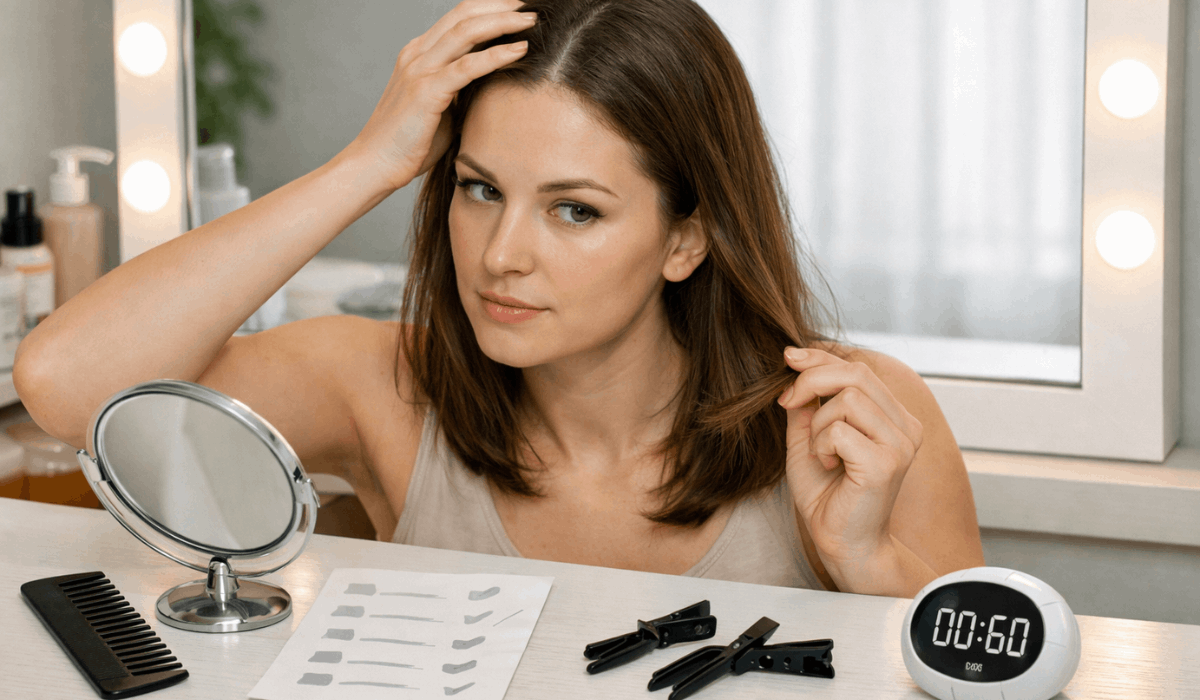
Figuring out your hair type takes about 60 seconds. The trick is checking three zones at three different moments instead of relying on how your hair feels right after a wash.
Check Your Roots First
Touch your scalp the morning after a wash. Slick or shiny roots mean oily. Tight, itchy roots without any oil buildup mean dry. Roots that feel normal for a full day or two point toward balanced.
This root check matters more than any online quiz. Products marketed toward “all hair types” ignore this entirely.
Check Your Ends Second
Run your fingers through the bottom 3 inches of your hair. Rough, snaggy, split ends mean dry. Soft ends paired with greasy roots mean combo. Heavy, coated-feeling ends may signal product buildup, not oil.
Watch Day-Two Behavior
How your hair behaves 24 to 48 hours after washing tells you more than the wash itself. Flat, greasy roots on day two point to oily. Frizzy, brittle lengths even on wash day signal dry. Greasy roots plus dry ends is combo hair, and that pattern affects a huge number of people who never get specific advice for it.
A quick breakdown of the three categories:
- Oily hair shows up at the roots first, usually within 1 to 2 days after washing
- Dry hair shows up at the ends first, with roughness and tangling that starts immediately
- Combo hair does both at once, which is why single-category routines keep failing
Washing Routine for Dry Hair
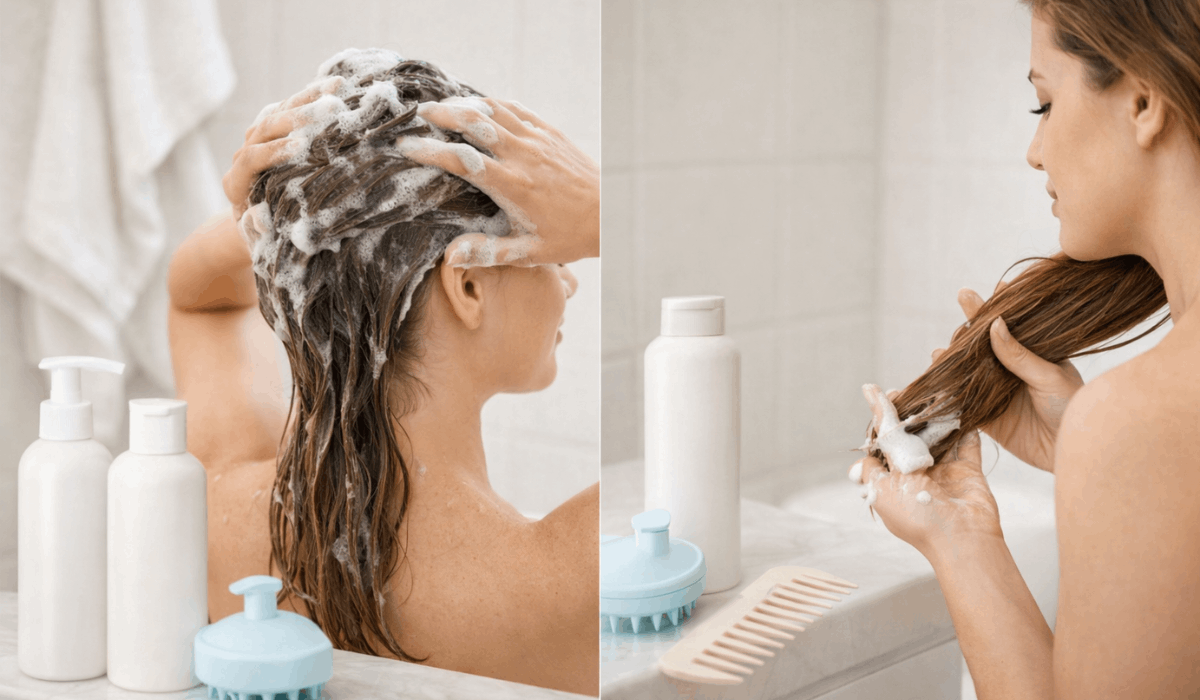
Washing dry hair well means cleaning the scalp without punishing the lengths. The goal is targeted cleaning, not a full scrub from root to tip every time.
Wash Frequency and Water Temperature
Aim for 2 to 4 washes per week and adjust based on sweat and buildup. Lukewarm water works best.
Hot water strips moisture faster than a harsh shampoo, and I would argue that water temperature causes more damage to dry hair than the wrong shampoo does per the American Academy of Dermatology’s hair washing guide.
Also read: Beauty Tools for Beginners Explained
Focus shampoo on the scalp only. Let the rinse carry suds through the lengths. That is enough to clean them without stripping the oils your ends need.
Conditioning and Detangling for Dry Hair
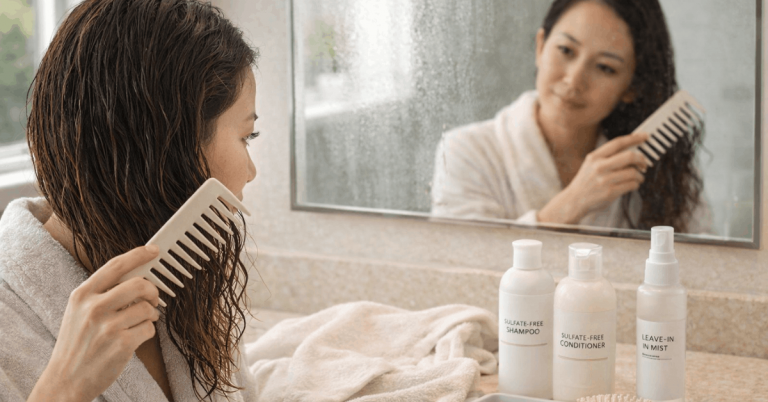
Apply conditioner from mid-length to ends only. Never load it on the scalp. Detangle in the shower with a wide-tooth comb while conditioner is still in, and give it a full 2 to 3 minutes of contact time.
A cooler final rinse can help close the hair cuticle and reduce frizz. Once a week, swap regular conditioner for a deep conditioning mask if hair feels stiff or rough after drying.
Washing Routine for Oily Hair
Oily hair care gets bad advice more than any other category. The most repeated tip online is “train your hair to be less oily by washing less.”
I think that advice causes more buildup and scalp problems than it solves, because sebum production is driven by hormones and genetics, not wash frequency. The raw data backs this up: oily hair often needs washing every 1 to 2 days based on how fast roots get greasy.
Double Shampoo and Scalp Massage
The single best technique for oily scalps is double shampooing: two light washes instead of one harsh one. The first pass breaks down oil and residue. The second pass does the real cleaning. Massage with fingertips for 30 to 60 seconds each time to lift oil from the scalp properly.
Rinse thoroughly around the hairline and crown. These two zones trap shampoo residue more than anywhere else, and leftover product makes oiliness worse within hours.
Conditioner Rules for Oily Hair
Light conditioner on ends only. This is non-negotiable. Any conditioner touching the roots adds weight and grease. Skip heavy oils, creams, and leave-in products near the scalp entirely.
A clarifying shampoo once every 1 to 2 weeks helps reset buildup from styling products and hard water minerals. Clean your brush and comb weekly too. Old oil and product on a dirty brush reapply to clean hair immediately.
Best Brushes and Tools for Each Hair Type
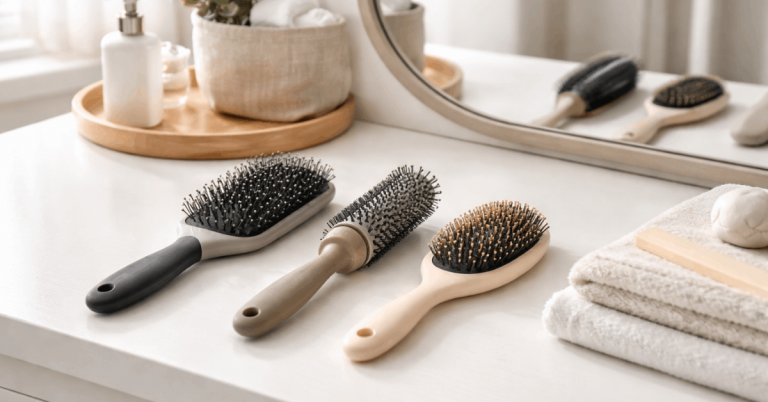
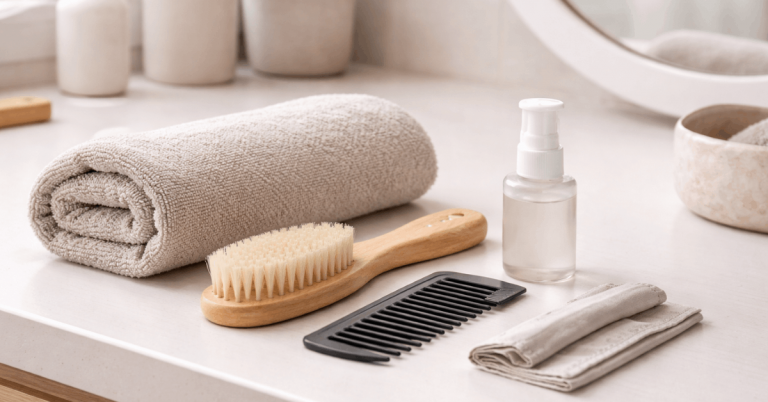
The wrong brush can undo a good wash in minutes. Dry hair and oily hair need different tools because the goals are opposite: reducing friction for dry hair versus controlling oil spread for oily hair.
| Tool | Dry Hair | Oily Hair |
|---|---|---|
| Daily brush | Paddle brush with smooth bristles | Easy-clean paddle brush |
| Detangling tool | Wide-tooth comb or flexible brush | Wide-tooth comb (avoid over-brushing roots) |
| Sleep protection | Satin pillowcase or bonnet | Not required (wash more often) |
| Scalp tool | Not needed unless flaking | Silicone scalp brush for shampoo |
| Between-wash fix | Leave-in conditioner on ends | Dry shampoo on roots (sparingly) |
The biggest takeaway from this table: dry hair tools reduce friction, while oily hair tools reduce oil transfer from scalp to lengths.
A few tool-specific points worth knowing:
- Boar bristle brushes spread oil from roots to ends, which helps dry hair but makes oily hair look greasier faster
- Microfiber towels reduce friction for dry hair better than regular cotton towels, which rough up the cuticle
- Heat protectant spray is essential for dry hair before any hot tool, and helpful for oily hair since heat on flat, oily strands makes grease more visible
- Sectioning clips help dry hair get detangled in small parts without forcing through knots
Products That Help vs. Products That Make It Worse
The product aisle is where most routines go wrong. A $30 argan oil serum may be incredible for dry ends but catastrophic on oily roots. Everything depends on where and how you apply it.
Dry Hair Product Picks
A gentle, sulfate-free shampoo keeps the scalp clean without stripping natural oils. Pair it with a rich conditioner for mid-lengths and ends, plus a weekly hair mask. A light oil or serum on ends only seals moisture and adds some shine.
What makes dry hair worse: harsh clarifying shampoo used too frequently, alcohol-heavy styling sprays, daily hot tools without heat protectant, and excessive protein treatments that leave hair feeling stiff and brittle.
Oily Hair Product Picks
A lightweight, scalp-focused shampoo is the baseline. Add a clarifying shampoo for monthly or biweekly resets. Dry shampoo can refresh roots between washes, but it is not a replacement for washing.
What makes oily hair worse per Healthline’s scalp care guide: heavy butters and oils near the scalp, thick creams applied at the roots, silicone-heavy products that build up without proper clarifying, and layering too many styling products at the root zone.
Overusing dry shampoo without washing it out properly also creates a cycle of buildup that makes the scalp produce even more oil.
When Your Hair Routine Stops Working
A routine that worked for 6 months can stop working after a season change, a medication switch, or a move to a different water hardness. Adjusting early saves more hair than adding more products.
Watch for these signals:
- No improvement after 2 to 4 weeks of consistent use: change one variable at a time
- Itching, burning, or redness after starting new products: stop immediately
- Sudden heavy shedding lasting more than a few weeks: see a dermatologist
- Flaking that does not respond to dandruff shampoo: this may need prescription treatment
Combo hair deserves its own mention here. Oily roots plus dry ends means treating the scalp and the lengths as two separate zones on the same head. Shampoo the scalp, condition the ends, and never let the two zones swap products.
Questions People Ask About Hair Care for Dry vs Oily Hair
Q: Can your hair be oily and dry at the same time?
Absolutely, and it happens more often than people realize. The scalp produces excess oil while the ends stay parched because conditioner and moisture never reach them properly. Treat the two zones separately on every wash day.
Q: How often should you wash oily hair?
Every 1 to 2 days works for most oily hair types. The popular advice to “train your hair” by skipping washes has no strong scientific backing, and it often leads to scalp buildup and irritation instead.
Q: Does hot water make dry hair worse?
Hot water opens the hair cuticle and strips natural oils faster. Lukewarm water for the wash and a cool rinse at the end protects dry hair much better than adjusting shampoo brands alone.
Q: Should you use dry shampoo every day?
Dry shampoo is a quick fix between washes, not a daily replacement. Using it more than 2 days in a row without washing creates buildup that clogs hair follicles and may worsen oiliness over time.
Q: What is the best brush for dry, frizzy hair?
A paddle brush with smooth, flexible bristles works for daily smoothing, and a wide-tooth comb handles wet detangling. Avoid fine-tooth combs on dry, tangled hair because they snap strands instead of separating them.
Conclusion
Dry hair and oily hair need different wash schedules, different conditioner placement, and different tools.
Treating the scalp and the lengths as two separate zones solves problems that single-product routines never fix. Combo hair, where roots run oily and ends run dry, is the category that deserves more attention. Start with the 60-second root and end check, then build your routine around what each zone needs.