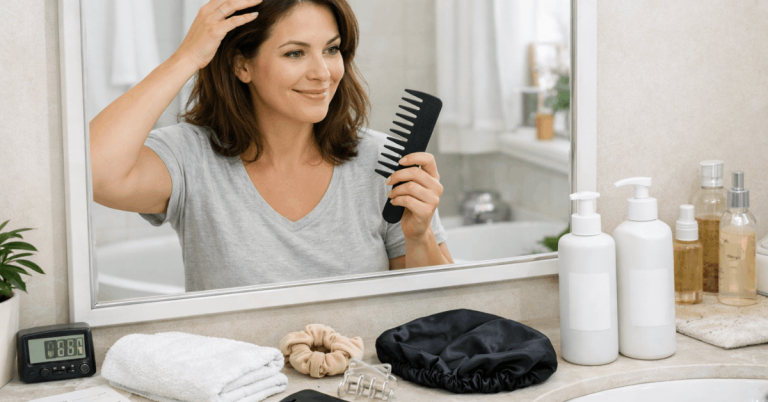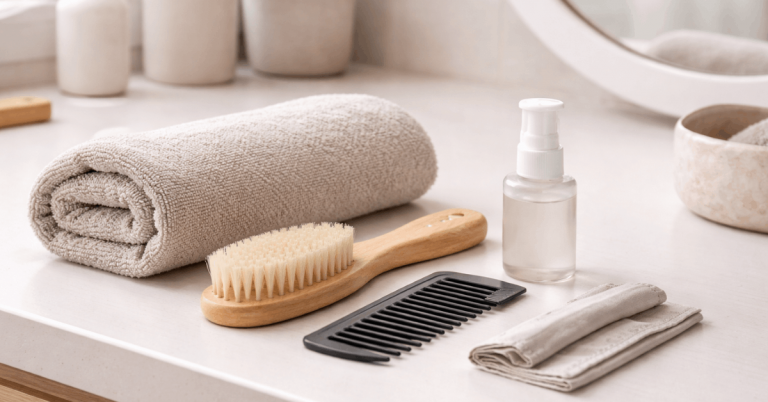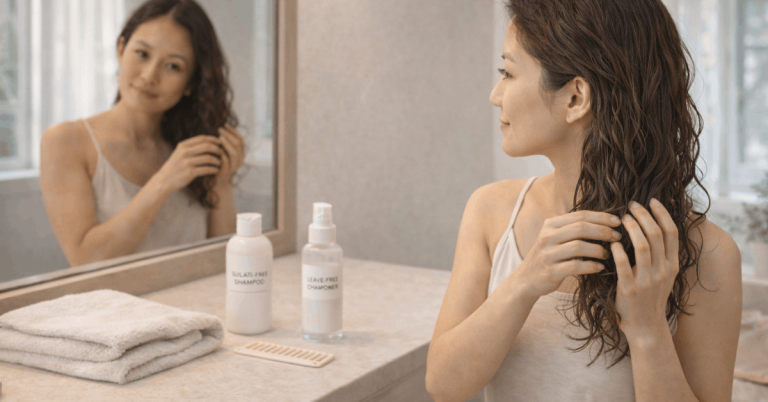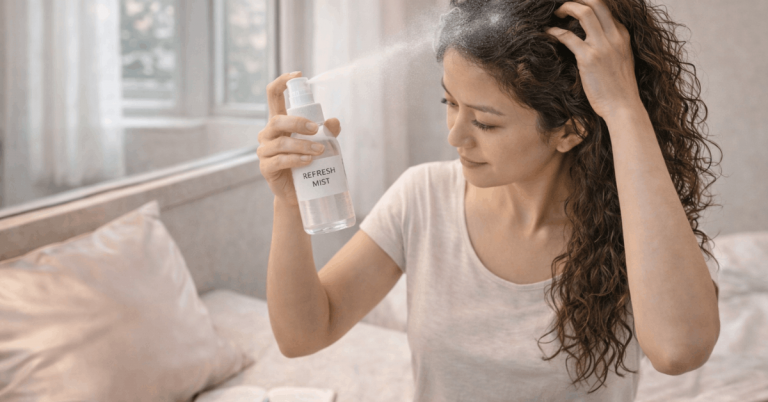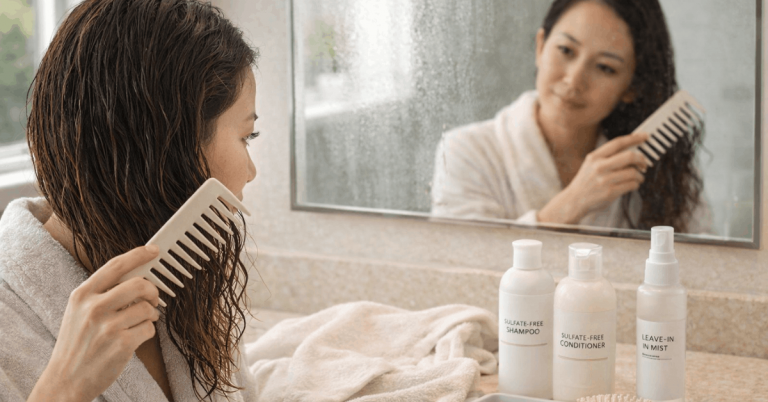
Night care should not feel like a styling session. It should prevent morning frizz, nape knots, dry ends, and flat hair. How to protect hair while sleeping begins with less friction, not more products. Aim for a gentler start, not an elaborate system.
Use it when a good wash day looks tired by breakfast or a brush collects broken hairs. A few habits make hair easier when you are half-awake. Think overnight support and comfortable routines, not a perfect bedtime look.

The Pillow Is Often Where the Problem Starts
Hair moves against fabric as you turn over. That movement can roughen dry, curly, treated, or tangled lengths. You cannot stop every shift, but you can reduce repeated rubbing and hard pulling where hair catches most.
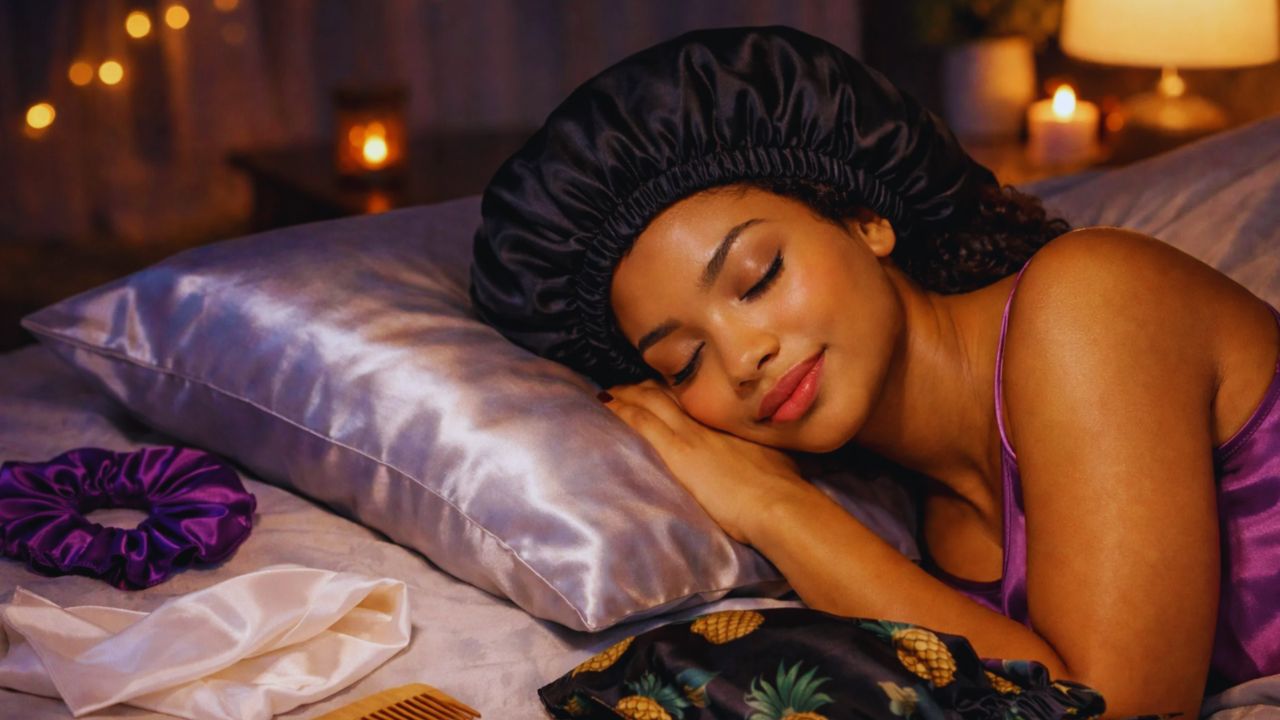
Check the nape, front sections, and ends first. They meet collars, skin, and pillow fabric overnight. A looser style or smoother surface can change that. Start with one recurring problem and one simple adjustment. That keeps the change manageable and easy to judge.
Let the Pillowcase Work With Your Hair
A smoother pillowcase may help with frizz, flat curls, or knots at the back of your head. Choose for comfort and washing needs, not claims. Focus on fabric feel and easy care.
For example, Slip White Queen Zippered Pillowcase is a silk option with official care information. It may suit someone who dislikes bonnets. Consider your budget and laundry habits before buying. Look at size and closure as well as fabric.
Choose a Tie That Does Not Fight Back
A tight elastic can leave dents and pull at the hairline. A loose scrunchie or fabric-covered tie may hold hair without gripping one narrow spot. Watch overnight tension and scalp comfort.
Kitsch Black Satin Sleep Scrunchies are one option if ordinary ties leave creases. Fit matters more than the label. It should feel secure but loose and easy to remove in the morning. Try it for several nights.
Pick a Sleep Style With Some Give
The best bedtime style depends on length, texture, and whether you preserve a blowout, curls, or a wash-and-go. Long straight hair may prefer a loose braid. Curls may prefer a pineapple or scarf. Prioritize curl shape and root comfort.
Avoid styles that pull from one point for hours. A high bun may press awkwardly against a pillow. Hair should be contained, not stretched and protected, not pinned down.
Loose Lengths Need a Low-Pressure Plan
Fine or flat hair may not need a tie. Brush lightly, release knots, and let it rest on a smooth surface. If ends tangle, try a loose low braid. Use light handling and low pressure.
For thick or long hair, split it before bed when one section mats. Two loose braids can be easier to undo than one tight braid. Watch results for several nights. That gives real feedback and a fair comparison.
Also Read: Beauty Tools That Are Actually Worth Buying
Curls and Coils Need More Room, Not More Force
Curly and coily hair often benefits from lengths off the pillow and no dry brushing at night. A loose pineapple, scarf, or bonnet can preserve clumps and reduce reshaping. Use gentle coverage and enough room.
If curls feel dry, use a little leave-in on the ends. If coated, adding more may make mornings worse. Let hair feel and product buildup guide you instead of applying the same thing nightly.
Do Not Let Damp Hair Meet the Pillow
Damp hair may style easily, but it stretches and tangles faster. Going to bed before it dries can leave a damp scalp, odd bends, or stubborn knots. Protect your shape and your time.
Late showers happen after workouts, travel, or long days. Press out water with a microfiber towel or T-shirt, then dry roots on a cool setting. Avoid tight ties. Aim for less trapped moisture and less morning friction.
When a Late Wash Cannot Be Avoided
If you must sleep before hair is dry, keep it loose. A soft braid or twist is gentler than an elastic pressing damp hair into one shape. Keep the scalp mostly dry. Choose a softer hold and a breathable option.
Do not use layers of oil or cream for dampness. They can transfer to bedding and weigh hair down. Use only enough leave-in for slip at the ends. Aim for manageable texture and a clean-feeling scalp, not a flawless finish.
Let Products Support, Not Suffocate, Your Ends
A light leave-in, serum, or a few drops of oil can help dry ends after cold air, heat, or swimming. Trouble starts when several products are added for minor roughness. Track product amount and hair response.
Heavy creams may suit some textures, but can flatten fine hair or stain bedding. Place products on lengths, not roots. That stops overnight moisture from becoming next-day buildup.
A Small Bedside Check Can Prevent a Bigger Knot
Before sleeping, take one minute to fix what usually slows you down. It is easy to remember. Focus on loose ends and comfortable placement:
- Release knots at the nape.
- Check that the tie is not pulling.
- Keep hair clear of damp skin or neck cream.
- Set your pillowcase, scarf, or bonnet in place.
Then leave it alone. Rebrushing, retwisting, and extra product create friction. Bedtime should end with hair feeling settled and light and ready for sleep, not perfectly styled.
Notice When the Same Trouble Keeps Returning
A little frizz or a few tangles is normal. Sudden breakage, painful matting, ongoing itch, or patchy shedding needs attention. Review tight styles, new products, heat, and scalp changes. Look for repeated symptoms and clear triggers.
A stylist or dermatologist can help when basics do not improve a persistent issue. Seek advice sooner if the scalp feels sore, inflamed, or hair breaks in one area. That can prevent more damage and more wasted effort.
Keep It Easy Enough to Do When You Are Tired
Useful night care is what you can do after a long day. Keep a soft tie, bonnet, or pillowcase nearby, and choose one comfortable style. Build around small habits and your real evenings.
For a week, change one thing: protect ends, avoid damp hair, or loosen your night tie. Watch the morning result before adding more. How to protect hair while sleeping becomes practical with fewer knots and less rushing.