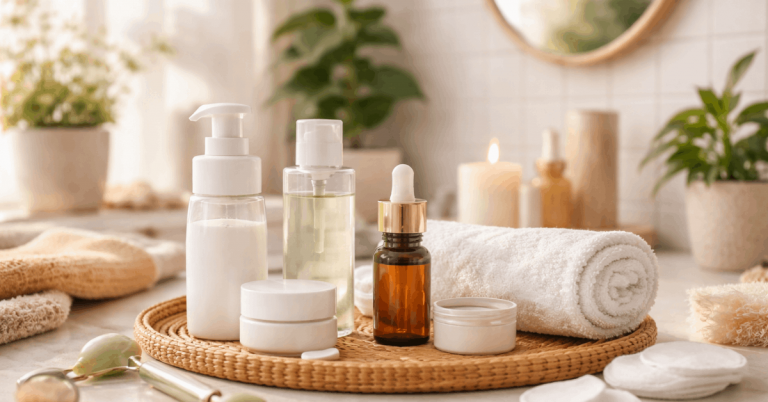
Skincare works when it fits your day. A simple routine reduces decisions and helps you notice changes. You do not need a crowded shelf to support cleansing, moisture, and protection.
The most useful routine is the one you can repeat without becoming a project. This article breaks down everything you need to know to keep your skincare minimal, effective, and practical.
Build a Three-Step Base First
Before adding serums or devices, create a base that feels easy on ordinary days. Keep three essentials visible and let consistency do the work.
- Cleanse away residue.
- Moisturize for comfort.
- Protect with sunscreen.
Give Each Essential One Job
A cleanser removes sweat, sunscreen, makeup, and buildup without aggressive scrubbing. Moisturizer keeps skin comfortable after washing, even when the forehead becomes shiny later.
Sunscreen is the final morning layer before daylight and should feel wearable. Clear roles prevent product overlap, rushed layering, and extra shopping.

Choose Texture Before You Chase Ingredients
A lightweight gel may suit humidity, while a cream can feel better when indoor air is dry. Use more moisturizer on dry areas than the T-zone before buying separate products for every part of your face.
Notice whether skin feels tight, greasy, itchy, or calm after a full day. This creates better feedback, less waste, and choices based on comfort instead of hype.
Add Extras Only When They Solve a Problem
A serum, exfoliant, or mask should have a clear reason to exist in your routine. Keep the baseline stable while testing one extra step at a time.
Pick One Treatment for One Concern
Choose a treatment only when you can name a clear concern: breakouts, rough texture, or dryness. Start slowly and follow directions rather than increasing use because results are not instant.
Avoid several strong actives while learning what skin tolerates. This gives clearer results, less irritation, and a routine you understand.
Treat Devices as Optional, Not Essential
Facial brushes, rollers, and home devices can be enjoyable, but they do not replace gentle cleansing or moisturizer. Use them only when you can clean them properly and fit them into a routine you already maintain.
Stop if a tool leaves skin sore, red, or more reactive than usual. The goal is comfortable support, clean contact, and fewer mandatory steps.
Give Morning and Evening Different Jobs
Morning care prepares skin for the day, while evening care removes what accumulated. Keeping the order familiar and the product count low makes both routines easier to finish.
Also Read: Beauty Tools That Actually Improve Daily Care

Keep Mornings Focused on Protection
Use a light cleanse or rinse if that suits your skin, then moisturize when needed. Finish with broad-spectrum sunscreen before makeup, commuting, or time near windows.
Skip layers that feel sticky, pill under makeup, or delay leaving home. A short morning routine supports daily protection, comfortable wear, and a calmer start.
Let Evenings Remove Rather Than Overcorrect
At night, remove sunscreen, makeup, sweat, and grime with a gentle cleanser and lukewarm water. A cleansing balm can help break down makeup or sunscreen before a second gentle wash, but it is not required for everyone.
Follow with moisturizer, then add one targeted treatment only when your skin is used to it. This keeps night care, residue removal, and recovery simple after a long day.
Reduce Friction, Not Just Product Count
A shorter routine can still irritate when you scrub, rub, or use tools carelessly. Focus on gentle handling and clean surfaces as much as the formulas you choose.
Use Hands and Towels More Carefully
Wash hands before skincare, then use fingertips instead of rough cloths or hard brushes. Pat skin dry with a clean towel instead of rubbing cheeks, eyes, or hairline.
Keep face towels and pillowcases clean enough that old makeup, sweat, and hair products are not returned to washed skin. These habits reduce avoidable friction, unwanted residue, and small irritations.
Make Storage Part of the Routine
Keep core products where you can reach them without searching through half-used jars and expired samples. Store tools and cloths dry, away from hair spray, powder, or damp bathroom corners.
Once a month, discard products that look, smell, or perform differently from when opened. A clearer shelf means fewer mistakes, faster routines, and more realistic use.
Adjust for Weather and Skin Signals
Skin may not need a complete reset when the season changes. Small changes in texture, frequency, and amount usually protect daily comfort.
Swap Texture Before Replacing Everything
A richer night cream may suit cold weeks, while a thinner lotion can feel better during heat and humidity. Use less product on balanced areas and add more only where tightness appears.
Reduce exfoliating nights when weather, travel, or indoor heating makes skin more reactive. This keeps seasonal care, product spending, and the routine under control.
Simplify When Skin Feels Overwhelmed
Burning, swelling, persistent redness, or painful flaking are signs to pause new products rather than push through. Return to cleanser, moisturizer, and sunscreen, then let skin settle before testing another treatment.
Keep notes on changes in products, weather, makeup, or medication before symptoms appeared. This gives useful context, less guesswork, and clearer information if you need advice.
Know When to Simplify or Get Help
A simple routine should make skin feel more manageable, not more stressful. Pay attention to persistent symptoms and clear warning signs instead of adding stronger products.
Recognize When Basic Care Is Not Enough
Persistent rashes, painful acne, sudden swelling, spreading redness, or scarring should be assessed by a dermatologist or qualified clinician. A professional can distinguish a product reaction from a condition needing different treatment.
Bring a list of products and a brief symptom timeline to make the discussion useful. This protects your health, your time, and your budget from endless trial and error.
Conclusion: Keep It Simple and Consistent
Simplifying skincare means choosing what earns a place in your routine. Keep cleansing, moisturizing, and sunscreen steady before adding anything else.
Let skin signals guide small adjustments instead of chasing every trend or trying several changes at once. With patient observation, clean habits, and products you enjoy using, your routine can remain effective without becoming complicated.