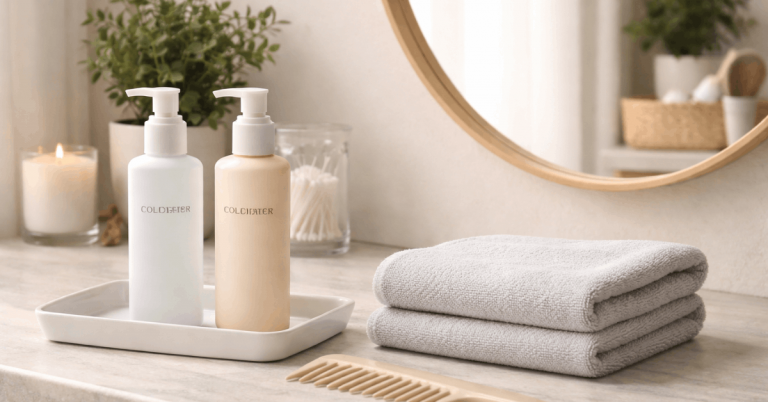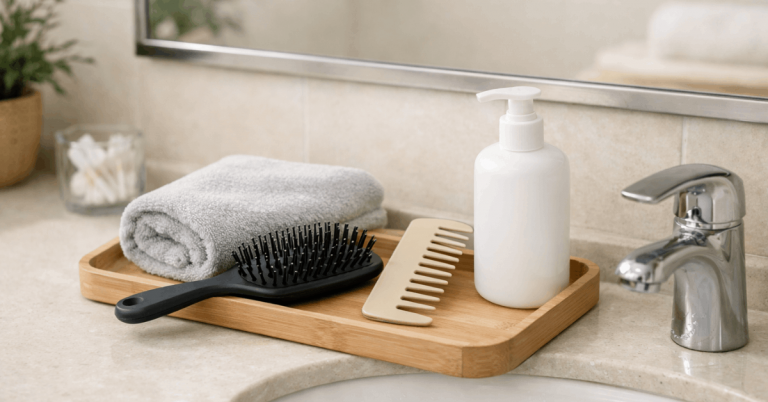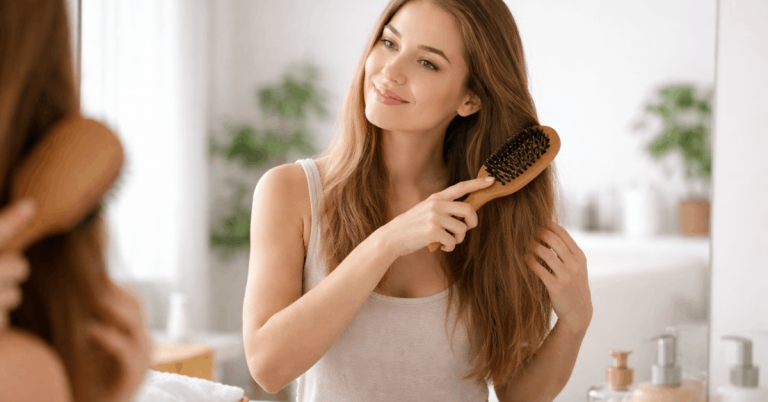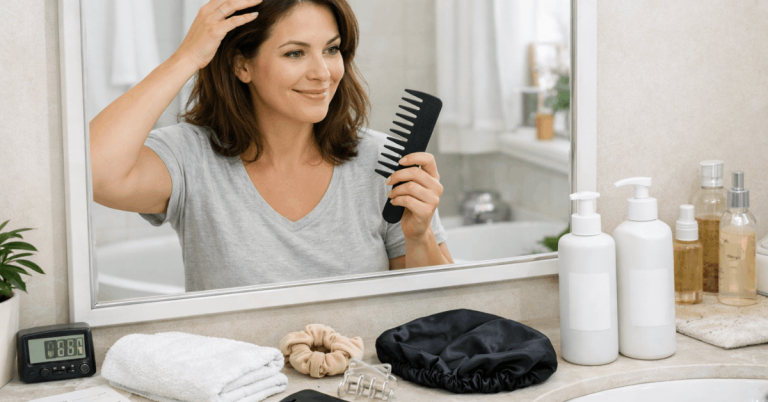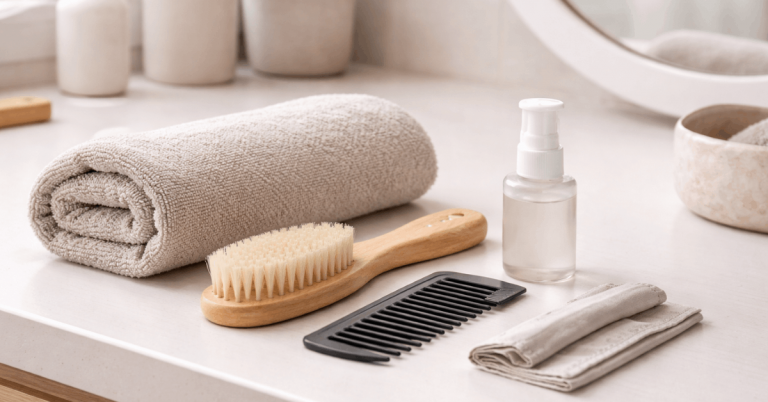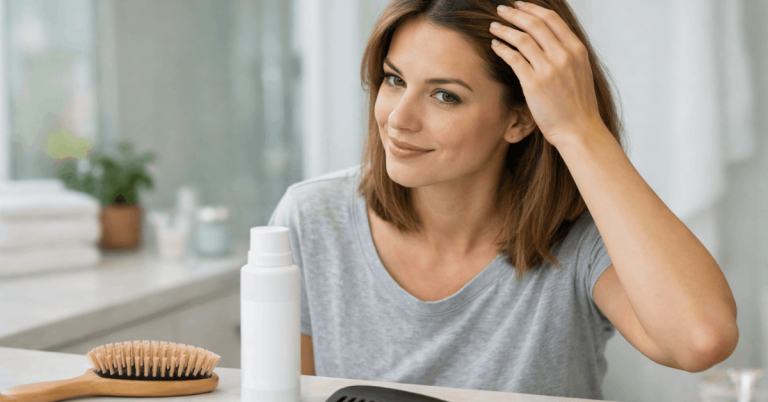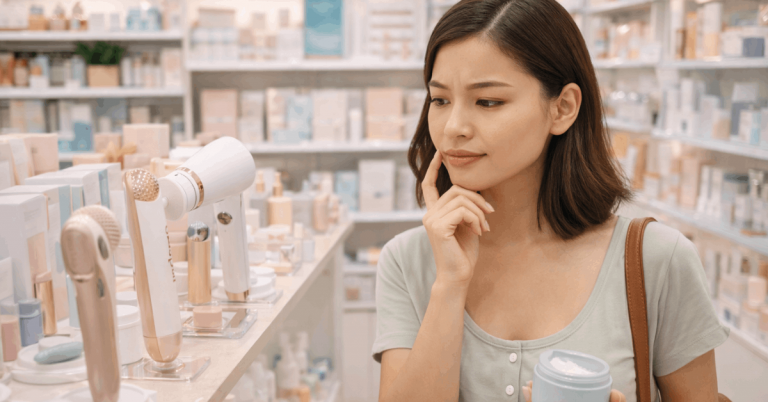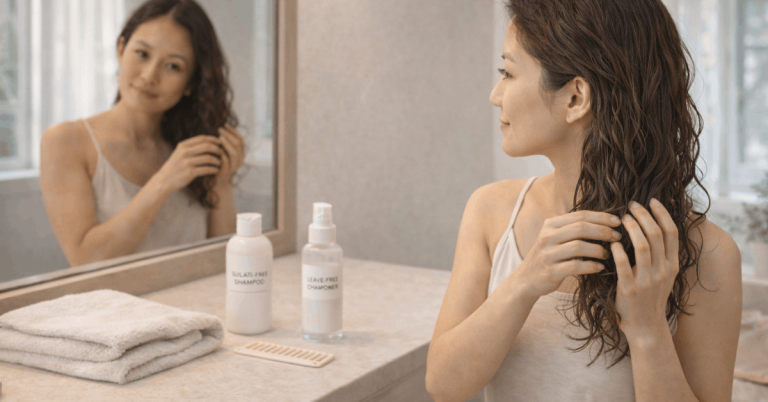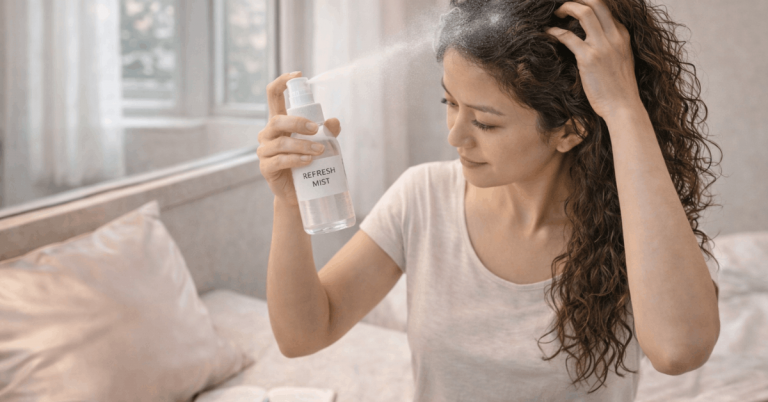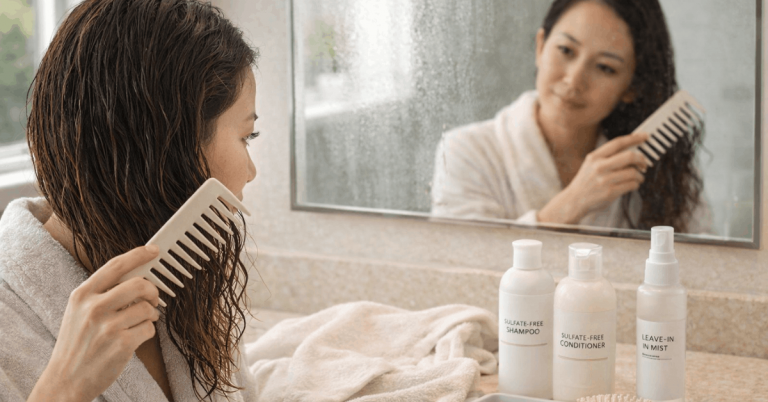
Creating a streamlined hair care routine is about choosing what matters most. Learning how to build a minimal hair care kit helps eliminate unnecessary clutter while improving your hair’s health and manageability.
This guide is for anyone who wants to simplify their daily routine using essential tools and products. Let’s break down the items you truly need and why they work.
Know Your Hair First
Before choosing any product or tool, know your hair type and its behavior. Understanding this helps you build the right kit for your needs.

Understand Scalp and Porosity
Dry scalps need gentle products, while oily ones require deeper cleansing. Hair porosity affects how well your strands absorb moisture.
Low-porosity hair may need lightweight products. High-porosity types need thicker creams and oils.
Identify Your Hair Type
Each hair type requires a unique care approach. Recognizing your pattern helps you select the right tools and products.
- Straight hair: Often needs light products to avoid weighing it down.
- Wavy hair: Benefits from lightweight creams or mousses for definition.
- Curly hair: Needs moisture-focused routines and curl-enhancing tools.
- Coily hair: Requires rich, hydrating products and gentle handling.
Always observe how your hair behaves after washing to confirm your actual type. Choose tools that enhance, not fight, your natural pattern.
Match Tools to Your Routine
If you style daily, you need heat tools and protectants. For wash-and-go users, a simple brush and leave-in may be enough.
Build based on frequency, not trends. Less is more when tools serve multiple functions.
Cleaning Basics: Start Simple
Every minimalist hair kit begins with effective cleansing products. Your shampoo and conditioner should match your hair’s natural oils.
Shampoo Essentials
Choose a sulfate-free shampoo that cleans without stripping oils. You can explore options like the SheaMoisture Raw Shea Butter Moisture Retention Shampoo for gentle cleansing.
Clarifying shampoo can be used weekly to remove buildup. If you’re low-maintenance, try bar shampoos to reduce packaging. Stick to one or two shampoo types.
Conditioner Matters
Pick a conditioner that helps detangle and restore softness. Go for silicone-free if you follow a low-poo routine. Focus on mid-length to ends when applying. Rinse thoroughly to avoid residue.
Tools That Detangle and Smooth
Good tools save time and protect your hair. Invest in a few essentials that get the job done.
Wide-Tooth Comb
Use it on wet hair to prevent breakage. Perfect for curly or tangled hair. Glide gently from ends to roots. Clean it weekly.
Boar Bristle or Paddle Brush
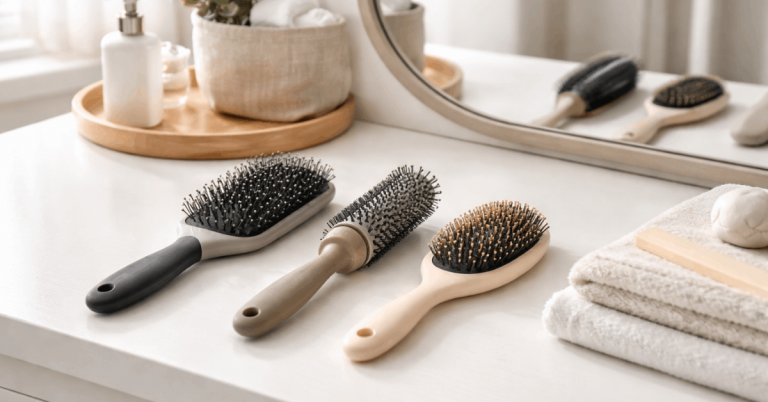
Boar bristle brushes distribute oils for straight or wavy hair. Paddle brushes are ideal for medium to long hair. Avoid brushing wet hair unless necessary. Replace every 6–8 months.
Detangling Brush
These have flexible bristles for pain-free detangling. Suitable for kids or sensitive scalps. Use on damp hair with leave-in spray. Store it away from humidity.
Stick to One or Two Styling Tools
Don’t overload your routine with multiple devices. Pick one based on your most-used hairstyle.
Heat Tools
Choose between a flat iron, curling wand, or basic hairdryer. Look for ceramic or tourmaline plates for safer heating.
Use on low to medium heat settings. Never style without a heat protectant.
Heat Protectant Product
Use this before any heat styling. A reliable option would be Tresemmé Thermal Creations Heat Tamer Spray, known for lightweight protection.
It prevents dryness and breakage. Choose lightweight sprays for daily use. Avoid heavy oils that burn on heat.
Multi-Use Styling Tools
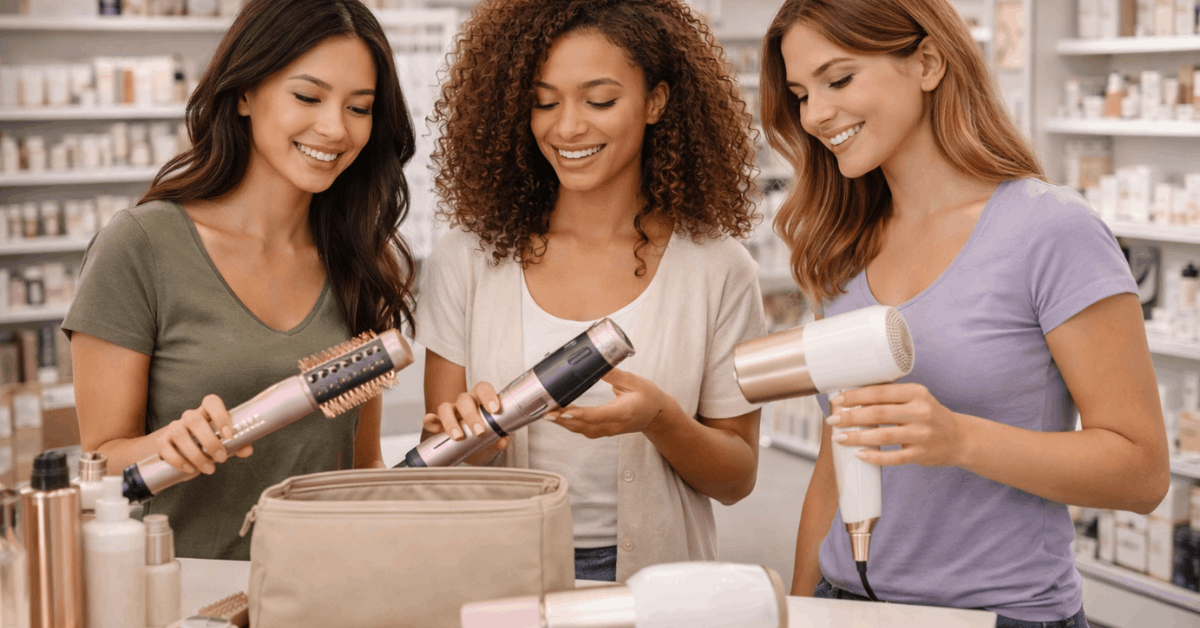
Some styling tools combine multiple features in one device. These options are best for saving space and simplifying your routine.
- Blow-dryer brushes or 2-in-1 tools offer both drying and styling in a single step.
- These devices significantly reduce storage and clutter.
- Look for tools with adjustable settings for better control and versatility.
- Always unplug the device after use to maintain safety and extend tool life.
Essential Products for Daily Hair Health
Your product shelf should stay light and intentional. Select multi-purpose items that simplify your process.
Leave-In Conditioner
Great for detangling, softening, and frizz control. Use a dime-sized amount after washing. Avoid roots to prevent buildup. Works on all hair types.
Hair Oil or Serum
Adds shine and seals in moisture. Use sparingly on dry or damp hair. Argan or jojoba oils are good options. Avoid mineral oil-based products.
Dry Shampoo
Helps refresh hair between washes. A widely used solution is Batiste Dry Shampoo, available in various formats.
Choose powder or spray versions. Apply at the roots and blend with fingers. Ideal for straight or fine hair.
Hair Accessories That Actually Matter
You don’t need drawers full of clips and bands. A few quality pieces will do.
Microfiber Towel or Hair Wrap
Reduces frizz and cuts drying time. Gentler than terry cloth towels. Use post-wash to remove excess water. Wash it weekly.
Silk or Satin Scrunchies
Minimize breakage and prevent hair dents. Use them for ponytails or buns. Avoid tight elastic bands. Hand washing to extend lifespan.
High-Quality Clips or Pins
Keep a small set for sectioning and styling. Choose non-slip grip materials. Use during blow-drying or curling. Store together in a small pouch.
Optional Add-Ons by Season or Lifestyle
You may not need these daily, but they support certain routines. Add them only if you regularly face specific challenges.
UV or Humidity Protection Spray
Useful for those in hot or tropical climates. Helps retain moisture and style. Spray before sun exposure. Pick non-greasy formulas.
Scalp Tools
Scalp care tools are great for boosting circulation and improving product absorption. Keep one in your kit if you want to enhance scalp health and relaxation.
- Use a scalp massager to gently stimulate blood flow during shampooing.
- It helps distribute product evenly across the scalp.
- Clean the tool after each use to avoid buildup.
- Best results occur when used with shampoo or oil-based treatments.
Overnight Masks or Hair Wraps
Ideal for deep repair. Use once a week for dry or processed hair. Wrap in silk or satin overnight. Rinse in the morning.
Organize and Maintain Your Kit
A minimal kit is only helpful if it stays clean and accessible. Regular upkeep keeps it functional.
Storage
Use a compact case or drawer organizer. Keep tools and products in sight. Don’t mix expired items. Clean surfaces weekly.
Maintenance
Wipe tools after each use. Wash brushes monthly with mild soap. Check expiry dates on products. Donate what you don’t use.
Replenish Thoughtfully
Replace items only when empty. Try samples before buying full size. Track what you use most. Stick to your essentials list.
Sample Kits by Hair Type
Each hair type benefits from different essentials. Here are simplified kits for four common categories.
Straight Hair
Use a sulfate-free shampoo, light conditioner, paddle brush, and dry shampoo. A flat iron and protectant spray can be optional. Scrunchies and a compact hair oil are enough. Keep tools lightweight.
Wavy Hair
Go for a gentle shampoo, leave-in spray, and microfiber towel. A diffuser attachment helps enhance waves. Use a wide-tooth comb for styling. Light mousse or gel is optional.
Curly Hair
Try co-wash or curl-enhancing shampoo, a detangling brush, and leave-in cream. Include curl oil or gel. Use a satin wrap overnight. Keep everything moisture-focused.
Coily Hair
Choose rich shampoo, deep conditioner, a wide-tooth comb, and scalp oil. Add a heat-free styling option, such as twist rods.
Use satin scrunchies and a bonnet. Focus on hydration and breakage prevention.
A Smarter Approach to Hair Care
You don’t need a drawer full of tools and bottles. Learning how to build a minimal hair care kit gives you control over what works and what doesn’t.
Focus on quality, utility, and your real-life routine. The simpler your kit, the more consistent your hair care will be.