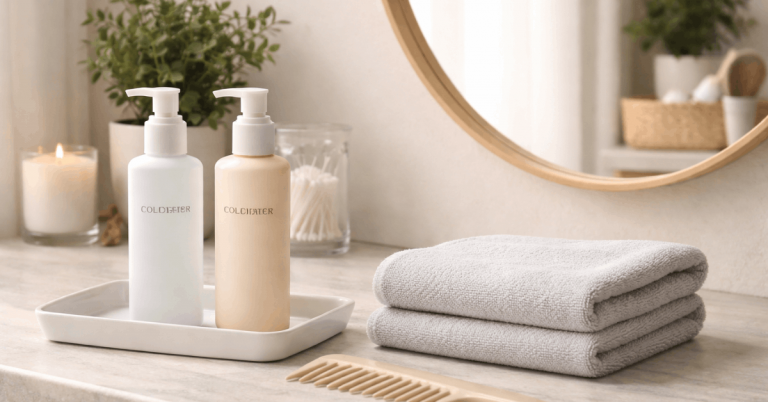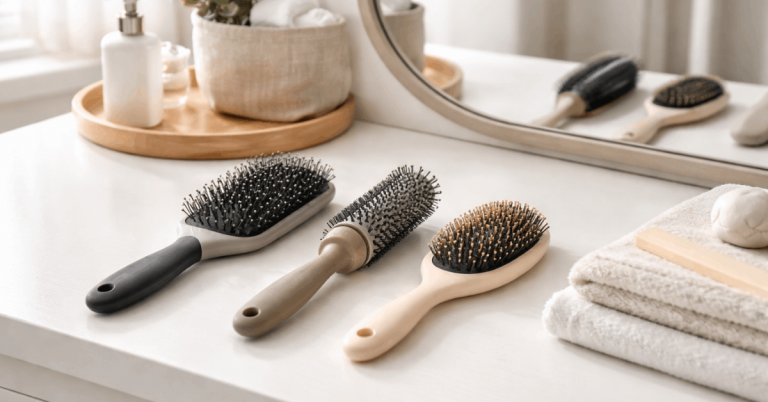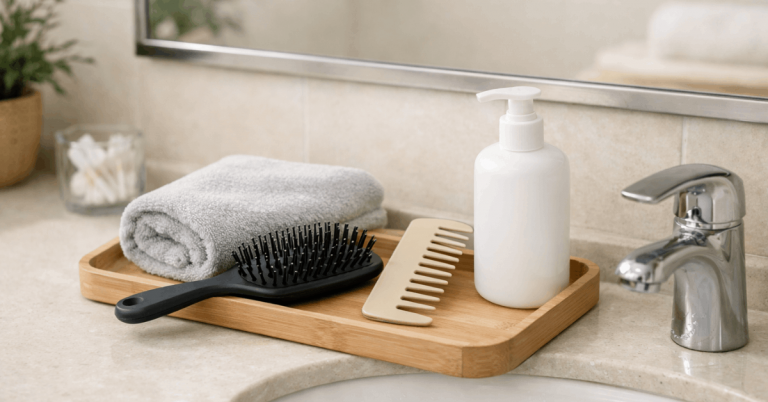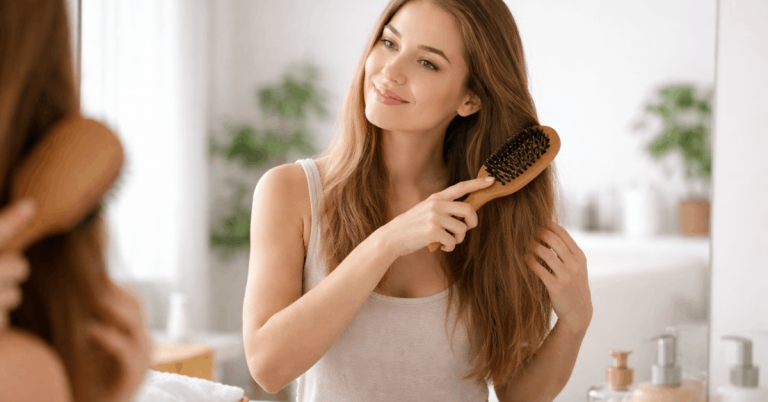
Dry hair and oily hair need different routines because your scalp and hair lengths don’t behave the same way.
This guide explains how to quickly identify your hair type and choose the right shampoo, conditioner, and tools for better results.
You’ll also get simple routines you can follow without buying extra products.
Dry vs Oily Hair — What’s Actually Different
Dry hair and oily hair act differently, so you should match your routine to the right problem.
Dry hair
- Feels rough and looks dull.
- Gets frizzy and tangles easily.
- Ends are split and broken more.
- Feels tight after washing.
- Gets worse with hot water and heat.
Oily hair
- Roots look greasy, and hair falls flat.
- Feels heavy within 1–2 days.
- Needs more frequent scalp cleansing.
- Builds up residue fast.
- Gets worse when you add product to the roots.
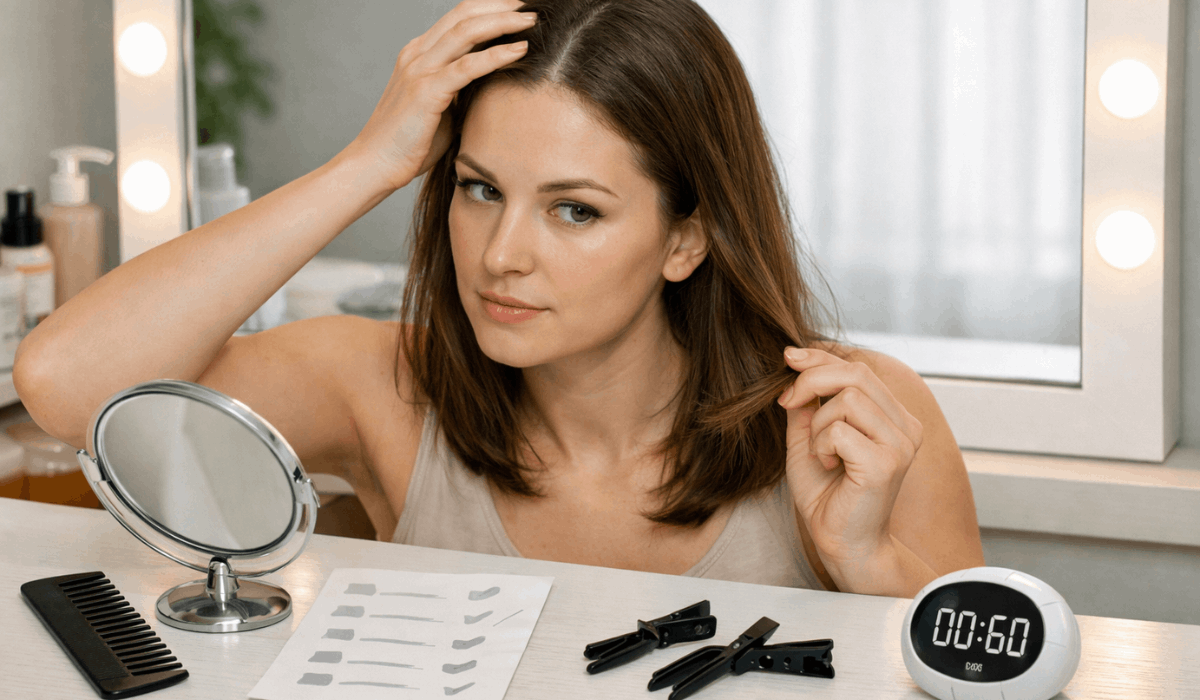
Quick Self-Check — Know Your Hair Type in 60 Seconds
You can spot your hair type fast by checking your roots, ends, and how your hair looks the day after washing.
Use this 60-second check before you change products or tools.
Step 1: Check your roots (touch + look)
- If roots feel slick or look shiny fast, you’re oily.
- If roots feel normal for 1–2 days, you’re likely balanced.
- If roots feel tight, dry, or itchy without oil, you are lean dry.
Step 2: Check your ends (feel + tangle test)
- If ends feel rough, snag, or split, you’re dry.
- If ends feel soft but roots get greasy, you’re likely a combo.
- If ends feel heavy and coated, you may have buildup, not just oil.
Step 3: Look at day-2 behavior
- Flat, greasy roots by day 2 = oily.
- Dry, frizzy lengths even after wash = dry.
- Greasy roots + dry ends = combo.
Quick decision
- Oily: roots get greasy first.
- Dry: ends look dry first.
- Combo: roots oily, ends dry.
Washing Rules That Work for Dry Hair
Dry hair improves when you wash less aggressively and protect your lengths. Use these rules to clean your scalp without stripping moisture from your ends.
- Wash 2–4 times per week, then adjust based on buildup and sweat.
- Use a gentle shampoo and focus it on your scalp, not your ends.
- Keep water lukewarm, not hot.
- Massage with fingertips, not nails, for 30–60 seconds.
- Rinse longer than you think you need to, so no shampoo stays behind.
- Apply conditioner from mid-length to ends only.
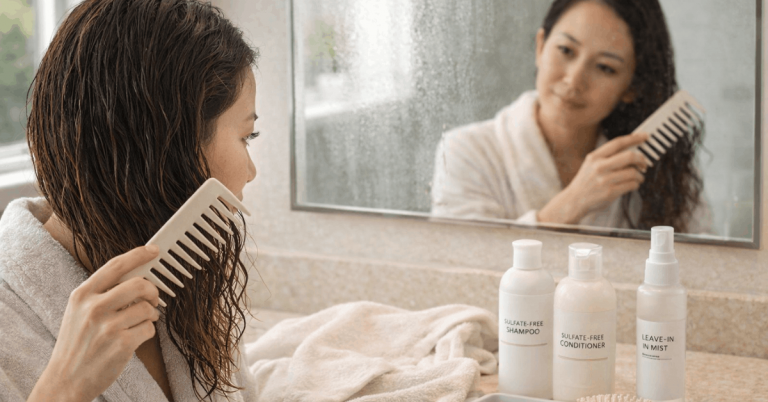
- Detangle in the shower with a wide-tooth comb while the conditioner is in.
- Limit shampoo on ends to what runs down during rinsing.
- Finish with a cooler rinse if your hair looks frizzy.
- Add a deep conditioner 1 time per week if hair feels rough or stiff.
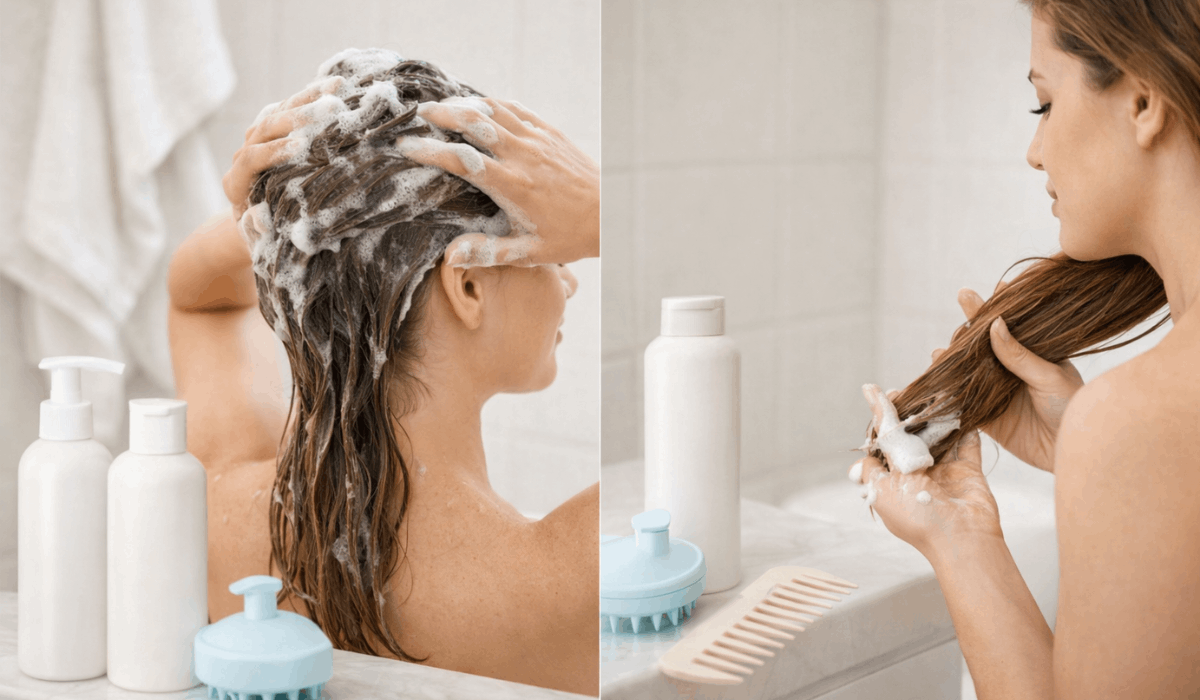
Washing Rules That Work for Oily Hair
Oily hair improves when you clean the scalp well without piling on heavy products.
These rules help you control oil, reduce buildup, and keep your lengths from drying out.
- Wash as needed, often every 1–2 days, based on how fast your roots get greasy.
- Shampoo your scalp only, and let the rinse clean the lengths.
- Massage with fingertips for 30–60 seconds to lift oil and residue.
- Rinse very well, especially around the hairline and crown.
- If your hair is very oily, double shampoo (two light washes, not one harsh one).
- Use a light conditioner on ends only, not on roots.
- Avoid heavy oils, creams, and leave-ins near the scalp.
- Use a clarifying shampoo about once every 1–2 weeks if you get buildup.
- Keep the water lukewarm, as hot water can make oiliness worse for some people.
- Clean your brush and comb weekly to stop oil and product from reapplying.
Brushing and Tools — What to Use for Dry Hair
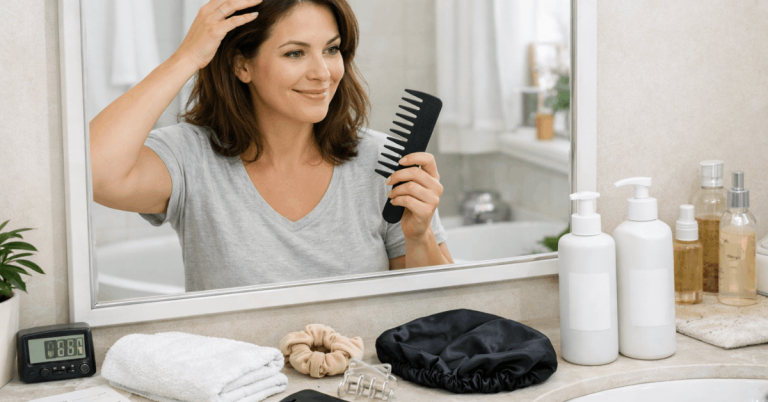
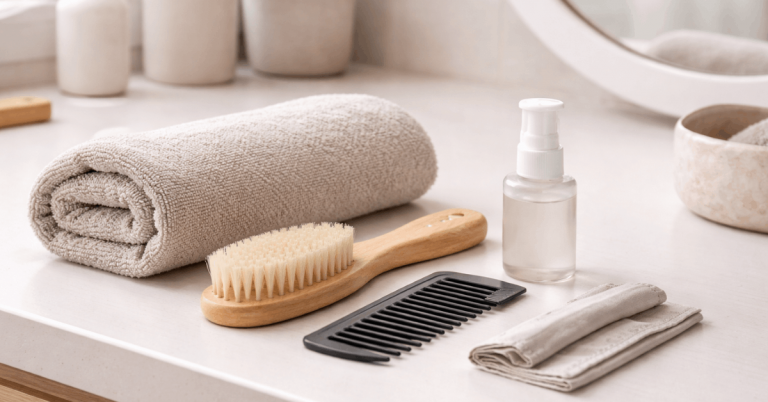
Dry hair breaks more easily, so your goal is to reduce pulling and friction. These tools help you detangle gently and protect your ends.
- Wide-tooth comb for detangling with minimal snapping.
- Flexible detangling brush for gentle brushing on damp hair.
- Paddle brush with smooth bristles for dry hair smoothing without yanking.
- Microfiber towel or cotton tee to blot water without rough rubbing.
- Satin bonnet or satin pillowcase to reduce friction while you sleep.
- Claw clip or soft scrunchie to avoid tight tension and breakage.
- Heat protectant spray if you use a blow dryer or hot tools.
- Blow dryer with a concentrator nozzle to control airflow and reduce frizz.
- Wide-tooth shower comb for detangling while conditioner is in.
- Sectioning clips to detangle in small parts instead of forcing knots through.
Brushing and Tools — What to Use for Oily Hair
Oily hair looks greasier faster when oil and product spread from your scalp into your lengths.
These tools help you control oil, keep hair cleaner-looking, and reduce buildup.
- Easy-clean paddle brush for quick daily brushing and simple washing.
- Boar + nylon mix brush to smooth hair, but use lightly to avoid spreading oil.
- Wide-tooth comb for detangling without over-brushing roots.
- Fine-tooth comb for precise parting, not for full brushing.
- Scalp brush (soft silicone) for shampoo massage and better scalp cleansing.
- Clarifying shampoo (occasional) to reset buildup, not daily.
- Lightweight conditioner for ends only, so roots stay fresh.
- Dry shampoo (sparingly) for quick root refresh between washes.
- Heat tools only if needed, since heat can make oil more obvious on flat hair.
- Brush-cleaning kit or mild soap to wash brushes weekly and remove oil residue.
Product Pick Guide — What Helps and What Makes It Worse
Products work only when they match your scalp and your lengths. Use this guide to pick what helps, and avoid what makes dryness or oiliness worse.
Helps dry hair
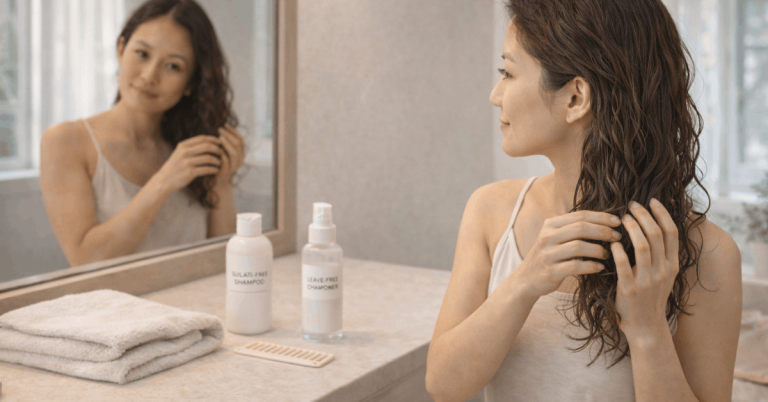
- Gentle, moisturizing shampoo (non-stripping).
- Rich conditioner for mid-lengths and ends.
- Weekly hair mask for extra softness and slip.
- Leave-in conditioner to reduce tangles and frizz.
- Light oil or serum on ends only for sealing and shine.
- Heat protectant before blow-drying or styling.
Makes dry hair worse
- Harsh clarifying shampoo is used too often.
- Sulfate-heavy cleansers, if your hair feels stripped after washing.
- Alcohol-heavy styling sprays that leave hair stiff.
- Too much protein if hair feels brittle and stiff.
- Daily hot tools without protection.
Helps oily hair
- Lightweight shampoo focused on scalp cleansing.
- Clarifying shampoo 1–2 times per month if buildup is common.
- Light conditioner on ends only.
- Scalp-friendly treatment for itch or flaking (if needed).
- Dry shampoo for quick root refresh between washes.
Makes oily hair worse
- Heavy oils and butters near the scalp.
- Thick creams and leave-ins are applied at the roots.
- Silicone-heavy products that build up fast (for some hair types).
- Overusing dry shampoo without washing it out.
- Layering too many styling products at the roots.
When to Change Your Plan or Get Help
If your routine isn’t improving your hair or scalp, adjust it early instead of adding more products. Use these seven signs to know when to change your plan or get help.
- No improvement after 2–4 weeks: Change one thing at a time.
- Roots still greasy fast: Improve scalp wash and stop root-heavy products.
- Ends still dry or breaking: Reduce heat and add moisture to ends only.
- Oily roots + dry ends: Treat it as combo hair with two-zone care.
- Itching, burning, or redness: Stop new products and consider a dermatologist.
- Flaking that won’t improve: Use targeted scalp care and get help if it persists.
- Sudden heavy shedding: Get checked if it lasts more than a few weeks.
The Bottomline
Dry hair and oily hair improve faster when you treat your scalp and your ends as separate zones.
Keep your routine simple, then adjust one step at a time based on how your hair looks and feels after 2–4 weeks.
Try the quick self-check today and build your routine with the right wash rules and tools to get consistent results.