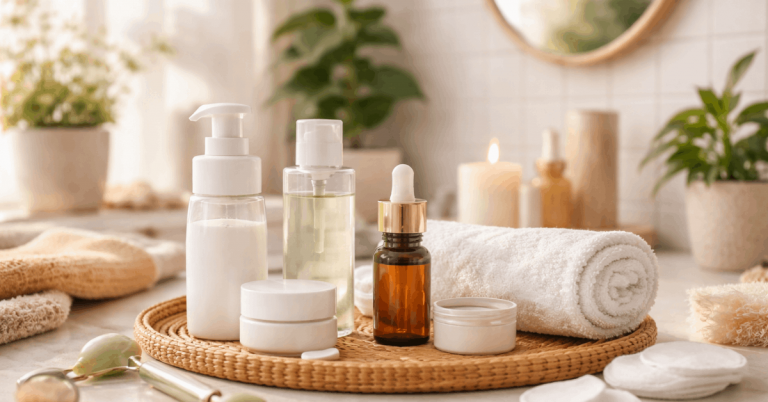
Choosing gentle skincare products means noticing what your skin can use comfortably. A calm routine uses fewer formulas, clear roles, and time to observe results.
It can help skin that feels tight, irritated, or overwhelmed by change. It stops marketing claims and complicated layering from directing every decision.
Begin With Your Skin, Not the Label
Labels offer clues but cannot predict every reaction. Start with daily skin signals before adding anything new.
Notice Patterns Before Shopping
Notice what happens after cleansing and after a new product. Tight cheeks, itchy patches, shine, or bumps may signal a mismatch in texture, frequency, or product combination.
Weather, stress, makeup, and medication can change skin behavior. A two-week note gives better context and a reason to change one item.

Treat “Gentle” as a Claim, Not a Guarantee
“Clean,” “natural,” and “hypoallergenic” are starting points, not comfort guarantees. Essential oils can sting, while simple formulas can feel heavy for some people.
Read ingredients, patch-test, and notice your response. Aim for skin comfort, steady tolerance, and a formula that fits your routine.
Read Ingredients With a Clear Purpose
You do not need to memorize every name on a package. Focus on its purpose and ingredients you already know you dislike.
Prioritize Barrier-Friendly Basics
Gentle formulas often use humectants and emollients for comfort after cleansing. Glycerin, ceramides, panthenol, squalane, and colloidal oatmeal often appear in formulas for dry or reactive skin.
They do not guarantee a match, but they can be useful clues in a focused formula. Look for hydration support, comfortable texture, and ingredients that match your need.
Be Cautious With Common Triggers
Fragrance, strong essential oils, rough scrubs, and high-strength active ingredients can be difficult for some sensitive or compromised skin barriers.
Alcohol in a formula is not always a problem, but a product that consistently stings, burns, or leaves your face tight is worth reconsidering.
Be especially careful when using acids, retinoids, or acne treatments alongside other potent products. Protect your tolerance, your skin barrier, and the ability to identify which step is causing a reaction.
Build a Small Routine Before Adding Treatments
A small routine makes it easier to tell what your skin needs and what it does not. Keep the daily baseline stable before experimenting with targeted extras.
- Cleanse gently when sweat, sunscreen, or makeup needs removal.
- Moisturize consistently to support comfort after washing.
- Use sunscreen daily when skin will be exposed to daylight.
Choose a Cleanser by Your After-Wash Feel
A cleanser should remove daily residue without making your face feel squeaky, hot, or uncomfortable.
Vanicream Gentle Facial Cleanser is one fragrance-free, soap-free example for people seeking a pared-down face wash, although it will not suit every skin type or routine.
Use lukewarm water and light fingertips, then pat dry instead of rubbing. A good cleanser leaves clean skin, less tightness, and a practical start for the next step.
Also Read: Simple Skincare Routines That Actually Work

Use Moisturizer and Sunscreen as Steady Anchors
Moisturizer can support dry or reactive areas, while sunscreen helps protect skin exposed to daylight. Choose a gel, lotion, or cream based on how your face feels, your climate, and whether you wear makeup.
In the morning, apply sunscreen as the final skincare layer and use enough product to cover the face, neck, and other exposed areas.
These steps create daily support, predictable protection, and fewer reasons to add unnecessary products.
Introduce New Products in a Controlled Way
Adding several formulas at once makes it hard to know what is helping or causing trouble. Use one new product for one clear reason, then give your skin time to respond.
Patch-Test and Change One Variable
For a new leave-on formula, test a small amount on a discreet area according to the product instructions before applying it widely. Introduce it slowly, especially if it contains exfoliating acids, retinoids, or strong acne treatments.
Keep the rest of your routine stable so you can identify a reaction without guessing. This method gives you clearer feedback, less irritation, and a better chance of using the product safely.
Know When Less Is the Better Choice
A routine does not need a serum, mask, toner, oil, exfoliant, and treatment every day to be effective. If your skin is comfortable and stable with cleansing, moisturizer, and sunscreen, extra steps may not add much value.
Persistent burning, redness, peeling, or sudden bumps are signs to simplify rather than push through discomfort. Return to basic care, gentle handling, and a routine you can repeat without anxiety.
Keep the Routine Useful Through Seasonal Changes
Skin can feel different during humid commutes, dry indoor heating, travel, or long hours outdoors. Adjust texture and frequency before replacing every product you own.
Adjust Texture Before Replacing Everything
A lightweight lotion may feel better in humidity, while a cream may be more comfortable during cold, dry months. You can also use less moisturizer on oily areas and a little more around the cheeks or mouth.
Keep the core steps familiar while changing one small detail at a time. This avoids seasonal overreaction, wasted spending, and confusion when your skin shifts temporarily.
Get Help for Ongoing Reactions
A basic routine can help you track triggers, but it cannot diagnose every skin concern. See a dermatologist or qualified clinician for painful acne, persistent rashes, repeated swelling, eczema-like patches, or reactions that do not settle after simplifying.
Bring a list of products, timing, and symptoms so the discussion is specific. Professional guidance may offer clear answers, appropriate treatment, and less time spent testing products that do not fit.
Conclusion: Choose Calm, Consistent Care
Gentle skincare is not about avoiding every active ingredient or buying only one type of formula. It is about choosing products with a clear role, using them with patience, and stopping when your skin signals discomfort.
Keep your baseline simple, add only what serves a genuine need, and let your routine change gradually as your skin or environment changes.
That approach supports long-term comfort, better decisions, and a calmer, more confident everyday relationship with skincare.