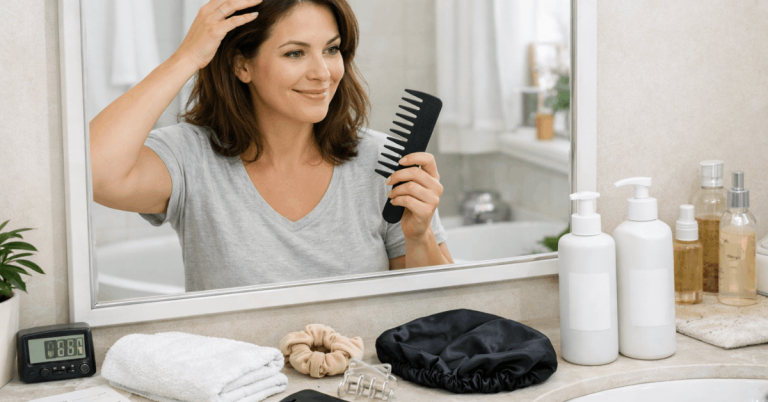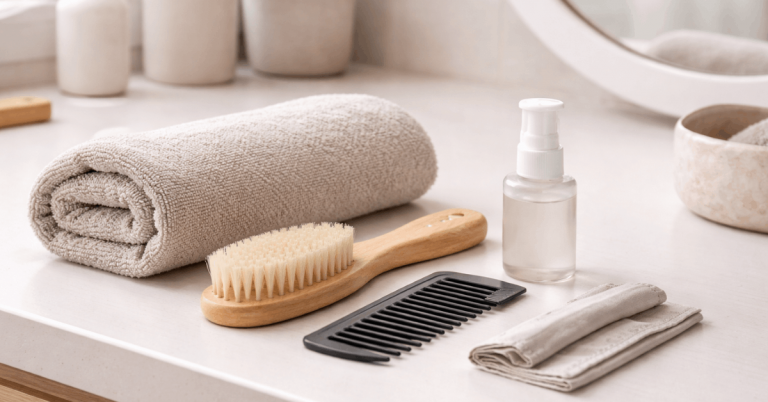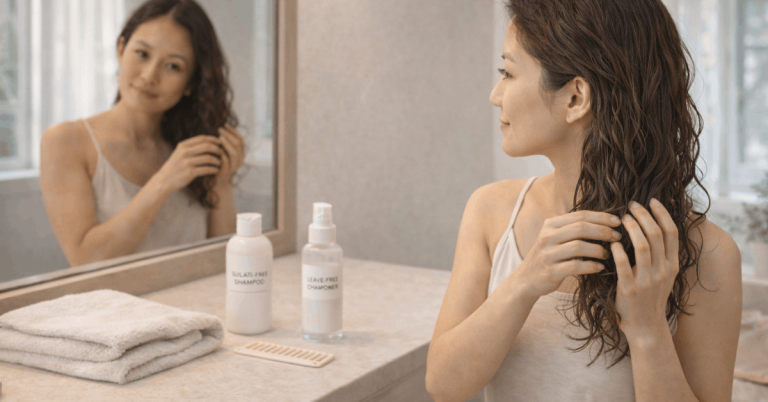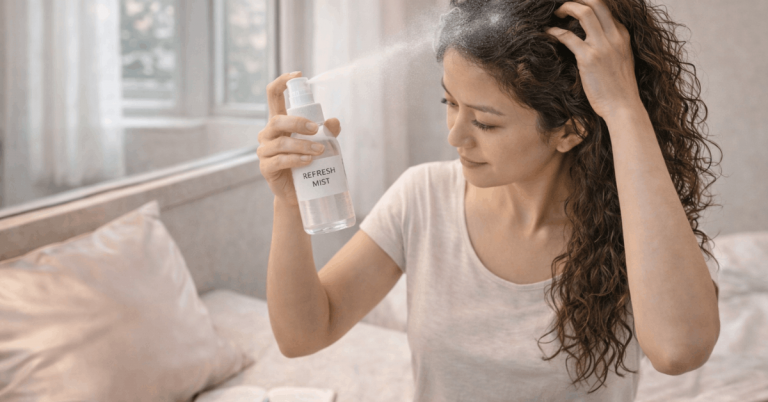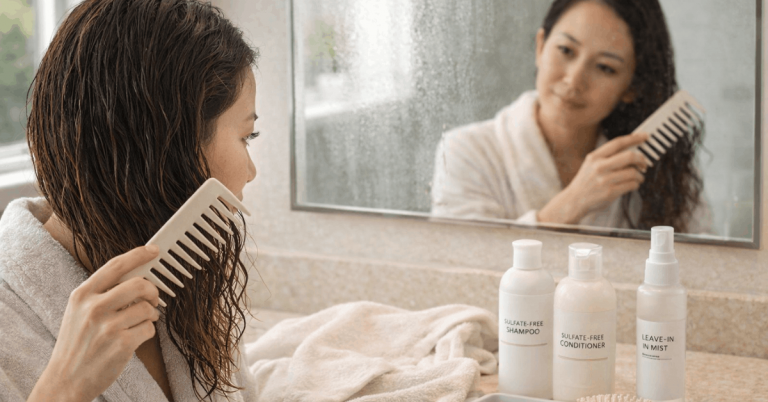
In busy weeks, routines that actually stick tend to be simple, repeatable, and gentle on time. A minimalist approach helps you Maintain Healthy Hair while cutting clutter, wasted spend, and decision fatigue.
Fewer products, clearer steps, and better habits produce cleaner scalps and stronger strands without marathon bathroom sessions. Consistent care wins over novelty.
Minimalism and Hair Health
Minimalism in hair care means intentional reduction, not neglect. Core actions target what moves the needle most: clean the scalp, replenish moisture, protect against heat and sun, and style without strain.
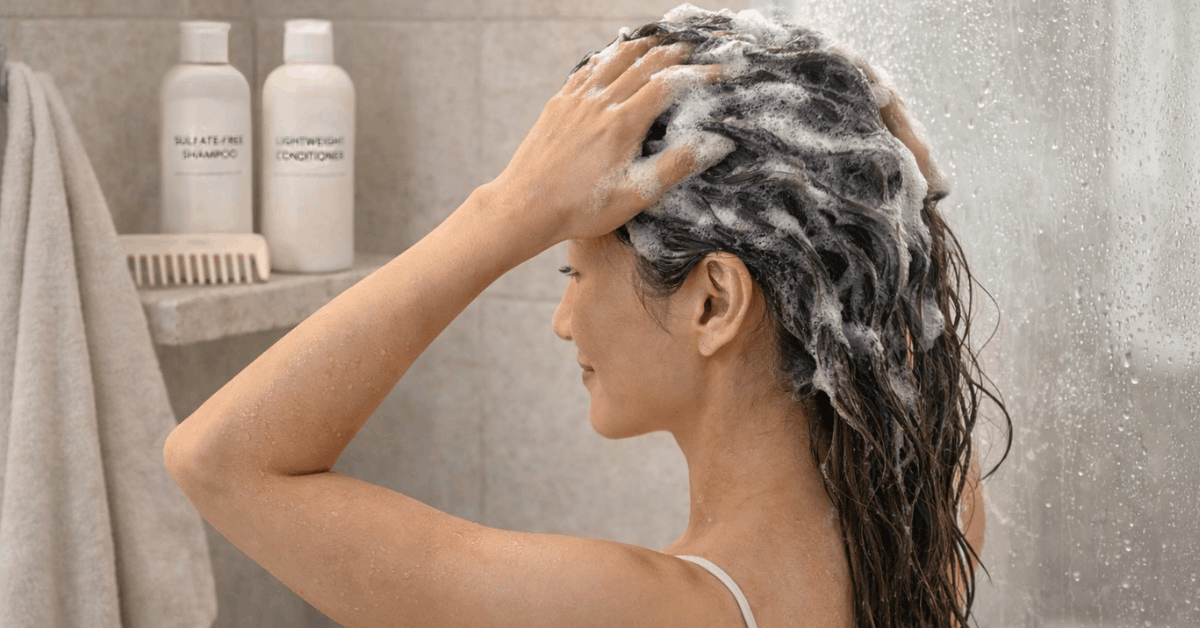
Fewer formulas also lower the risk of irritation and residue that dulls shine or triggers flakes. Sustainability improves naturally when purchases shrink, and packaging waste falls.
What A Minimalist Hair Care Routine Is
A minimalist hair care routine focuses on four pillars: cleansing, conditioning, protection, and styling. Streamlined plans favor multi-use products that do their job without heavy fragrance or long ingredient lists.
Ingredient safety belongs beside performance, so labels that state pH, irritant risk, and use instructions help decision-making. Overlap with “clean beauty” or “low-maintenance” is common, yet minimalism centers on clear intent and fewer moving parts.
Minimalism vs. Clean Beauty vs. Low-Maintenance
Minimalism removes excess steps and products, clean beauty prioritizes safer ingredients, and a low-maintenance hair routine reduces time and effort. Combining these ideas works well, provided the plan remains realistic for your hair type, schedule, and climate.
Benefits Of A Minimalist Hair Care Routine
Lower costs arrive when duplicate products leave the shelf, and refills replace experiments.
- Scalp comfort improves as buildup drops and fragrances or dyes decrease in frequency.
- Environmental impact shrinks when packaging and shipping footprints fall.
- Hair strength rebounds once heavy layers lift and breakage risks decline.
The Core Steps To Maintain Healthy Hair
Light structure makes minimalism practical every day. Keep the cadence steady, evaluate results every few weeks, and adjust frequency rather than adding new items.
Cleansing
Gentle cleansing keeps follicles clear and the scalp microbiome stable. Aim for two to three washes weekly for most hair types, then shift up or down based on oil production, workouts, and humidity.
Selecting a sulfate-free shampoo limits the impact of harsh surfactants while still removing sweat, sebum, and pollution.
- Pick a formula aligned to hair type and local water hardness.
- Space washes to avoid stripping natural oils that guard against irritation.
- Balance hydration and structure through protein and moisture balance rather than constant product rotation.
Conditioning
Conditioner replaces lost slip, adds softness, and reduces friction that causes split ends. A single well-chosen conditioner can handle detangling, light repair, and everyday smoothness.
- Apply mid-lengths to ends first, then sweep residual toward the crown.
- Leave on for the label’s dwell time to allow cationic agents to bond properly.
- Rinse until hair feels smooth yet not squeaky, then blot dry to protect the cuticle.
Protection
Everyday protection prevents preventable damage. Heat, UV, and rough textiles take a quiet toll that shows up months later as frizz, breakage, and fading.
- Use a heat protectant spray whenever temperatures exceed warm airflow.
- Wear a hat outdoors at midday or apply a UV-filter mist during long exposure.
- Consider the silk pillowcase benefits to reduce overnight friction and morning frizz.
Moisture and Scalp Care
Targeted scalp care supports comfort and growth conditions. Frequent heavy oils can clog follicles, so aim for light, non-comedogenic options and measured frequency.
- Reach for soothing ingredients such as aloe, oat derivatives, or zinc.
- Keep exfoliation gentle and infrequent to avoid disrupting the barrier.
- Track how the scalp responds across seasons, then adjust cadence rather than adding products.
Styling
Minimalist styling enhances natural texture instead of fighting it daily. Low-tension looks protect edges and lengths, while strategic heat keeps finish quality high.
- Air-dry when practical, then set shape using clips or soft scrunching.
- Rotate protective hairstyles for beginners to spread tension points.
- Keep tool passes slow and limited, using the lowest effective heat.
Minimalist Hair Products: What To Look For
Clear product criteria simplify choices in crowded aisles. Focus on multi-use, ingredient-transparent options that minimize irritants while delivering consistent results. Choosing fewer, better products also shortens storage space and restock lists.
Qualities Of A Minimalist-Friendly Product
Short, readable ingredient lists, fragrance-free or low-fragrance options, and lightweight textures support sensitive scalps and finer strands.
Packaging that is recyclable or refillable reduces long-term impact. Straightforward usage directions and washing-frequency guidance prevent overuse that leads to buildup.
Examples Of Minimalist-Friendly Product Types
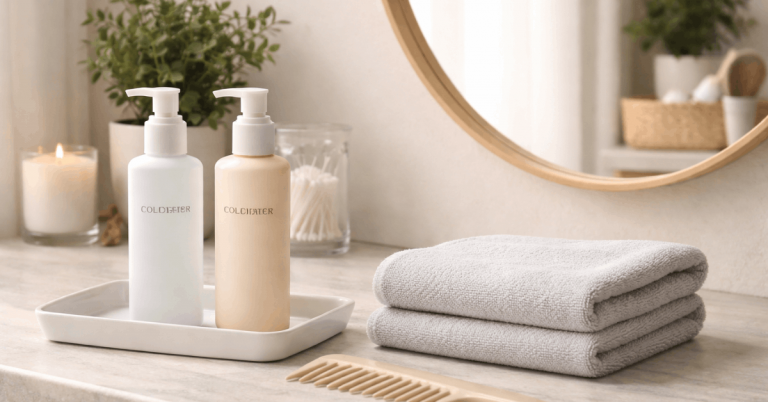
Minimalist shampoo provides gentle cleansing for scalp comfort. Minimalist conditioner offers hydration and slip without waxy residue.
A minimalist leave-in can double as light heat protection for blow-dry days. Occasional minimalist hair mask sessions fit best every two to four weeks rather than every wash.
How To Evaluate Minimalist Hair Products
Selecting products through a simple framework cuts the noise. These four filters prevent impulse buys and help match formulas to your needs.
Group 1: Ingredient Safety
Shorter lists with fewer potential irritants tend to be easier on sensitive skin. Labels that avoid sulfates, silicones, parabens, dyes, and heavy fragrance often lower redness, itching, or scale.
Group 2: Scalp Compatibility
pH-balanced formulas respect the acid mantle, while non-comedogenic oils reduce pore blockage. Calming components such as aloe or colloidal oatmeal help reactive scalps stay comfortable during season changes.
Group 3: Performance and Texture
Lightweight, residue-free textures rinse clean and leave hair responsive to subsequent styling. Consistency matters more than dramatic single-use effects that often come from heavy films.
Group 4: Brand Philosophy
Transparency, evidence-based claims, and clear maintenance instructions save time. Brands that publish testing methods and realistic wash guidance support simpler routines.
Minimalist Hair Care By Hair Type
Clear priorities differ across textures and treatments. A small matrix keeps decisions focused and prevents overbuying. Revisit during climate shifts or after chemical services.
| Hair Type | Minimalist Focus |
| Curly/Coily | Moisture, sealing, protective styling, low manipulation between wash days |
| Straight | Gentle cleansing, lightweight conditioner, scalp balance, anti-flat roots |
| Fine/Thin | Non-heavy formulas, volumizing techniques, minimal oils near the scalp |
| Colored/Treated | Toner or gloss upkeep, UV protection, bond-building at conservative frequency |
| Frizz-Prone | Humectants when humidity is low, low-heat finishing, anti-friction fabrics |
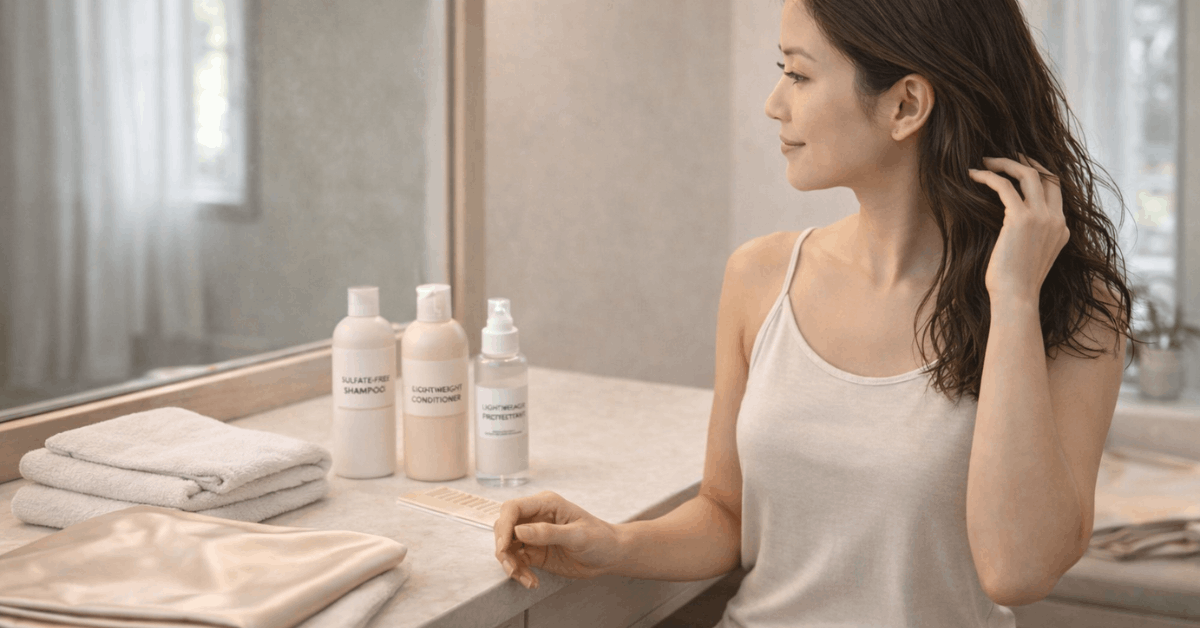
Styling and Maintenance That Protects Results
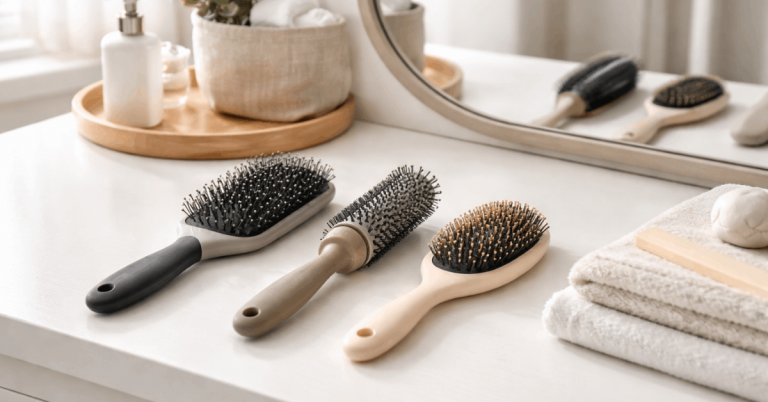
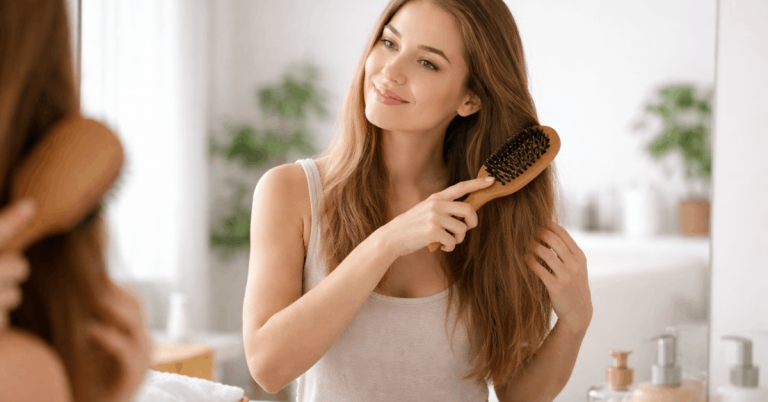
Daily habits either protect progress or undo it. Small technique changes reduce breakage, enhance shine, and keep styles longer. Brushing from ends upward minimizes tension.
Switching the hair part occasionally distributes weight and helps roots stand up without teasing. Booking light dusting trims on a predictable schedule prevents splits from traveling and preserves shape without major length loss.
Quick, Low-Effort Treatments
Short, strategic treatments keep the shelf simple and the routine sustainable. At home, consider an occasional clarifying wash to remove hard-water minerals and styling residue, followed by a hydrating conditioner.
A minimalist hair mask every two to four weeks adds suppleness without greasiness. In-salon options such as scalp therapy sessions, deep conditioning, or a gloss refresh can replace several at-home products while delivering clear, repeatable results.
Practical Scalp Health Tips
Healthy hair starts at the scalp, so focus on comfort, cleanliness, and balanced oils. Keep nails off the skin to prevent micro-injury during washing.
Rinse thoroughly after workouts to remove sweat salts that can irritate sensitive skin. Space leave-ins and oils thoughtfully, especially on fine or oily hair, to avoid film formation at the root.
A Minimalist Daily-To-Weekly Rhythm
Simple cadence beats complicated calendars. Treat the following rhythm as a baseline, then adapt to climate, training, and hair type.
- Wash two or three times weekly using a sulfate-free shampoo appropriate to your scalp.
- Condition every wash, prioritizing mid-lengths and ends for slip and softness.
- Apply heat protectant spray on any blow-dry or hot tool day.
- Sleep on a silk or satin pillowcase and secure hair in a loose, low-tension set.
- Clarify minerals and residue one or two times monthly, then rehydrate.
Simple Minimalist Hairstyles
Low-effort looks protect hair while staying polished. Rotate styles to reduce repeated stress on the same areas and to keep routines engaging without extra products.
- Simple low bun for workdays that require neat lines and zero heat.
- Loose braid to minimize tangles and protect ends during commutes or sleep.
- Air-dried waves set with clips for shape, then released after full dry.
- Minimal-heat straight finish using a single pass and cool shot to set.
- Claw-clip updo that avoids tight elastics and concentrates tension safely.
Final Takeaway
Streamlined care favors consistency, not perfection. A tight routine that prioritizes the scalp, respects texture, and protects against friction will maintain shine and strength over time.
Start with four pillars, pick multi-use formulas, and run a short weekly review to tweak frequency. Healthy hair follows when simplicity becomes a habit.