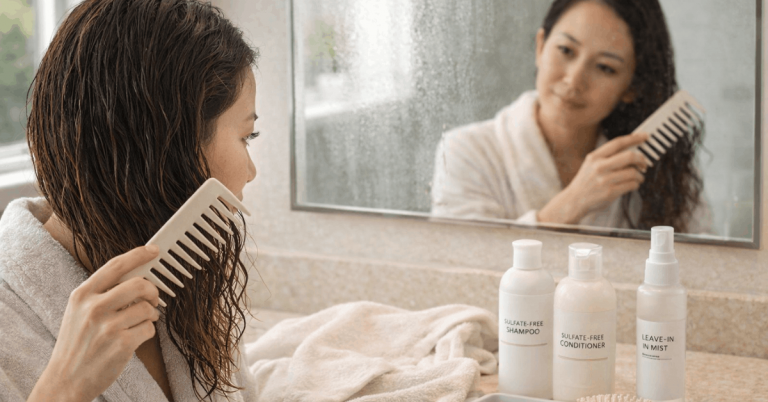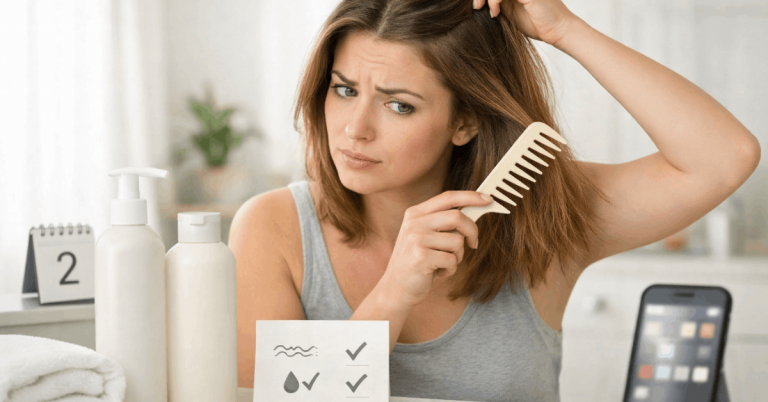
Keeping hair looking fresh between washes is about managing oil, shape, and buildup without overdoing products.
This guide focuses on simple habits, basic tools, and easy routines that help hair stay clean-looking longer without daily washing.
You will learn practical steps that fit into everyday personal care and low-maintenance beauty routines.
Understand Why Hair Loses Freshness Between Washes
Hair loses freshness when oil, moisture, and residue build up on the scalp. Knowing the cause helps you manage it more effectively.
- Natural scalp oil production: The scalp produces oil that spreads to the roots. Fine or straight hair shows oil faster.
- Sweat and daily activity: Heat and movement mix sweat with oil. Roots start to look greasy quickly.
- Product buildup: Styling products collect over time. Even light products can weigh hair down.
- Environmental exposure: Dust, pollution, and humidity stick to oily roots. The hairline and part are affected first.
- Overwashing effects: Washing too often increases oil production. Hair looks greasier sooner between washes.
Brush and Tool Habits That Keep Hair Looking Clean
The way you use brushes and tools affects how long hair stays fresh between washes. Simple adjustments can improve appearance without adding more products.
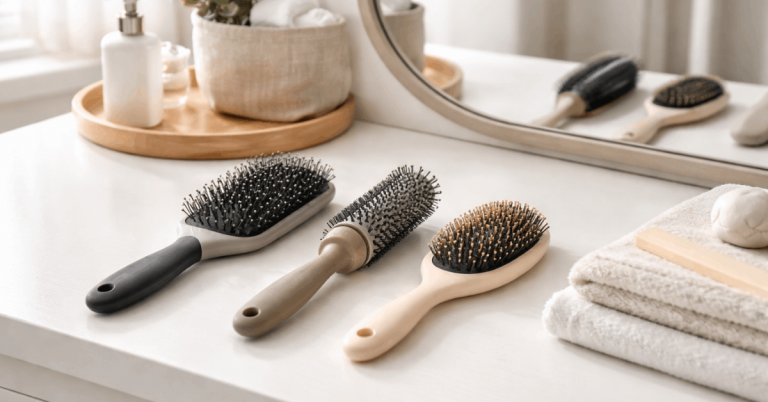
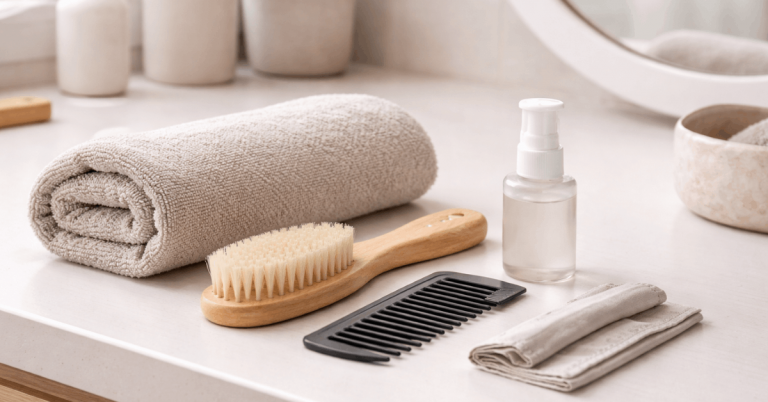
- Using the right brush: Natural- or mixed-bristle brushes help spread oil away from the roots. This reduces greasy buildup on the scalp.
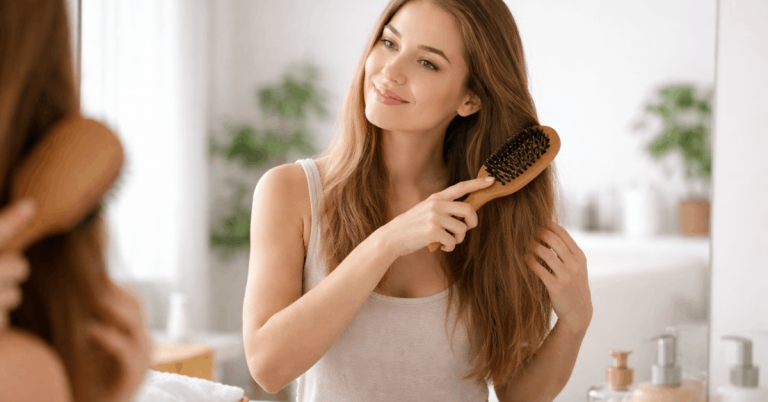
- Brushing at the right time: Brushing once or twice a day is enough. Overbrushing can spread oil too quickly.
- Focusing on lengths, not roots: Light brushing at the roots prevents excess shine. Most brushing should target mid-lengths and ends.
- Cleaning your brushes regularly: Dirty brushes transfer oil and residue back into clean hair. Washing brushes weekly keeps hair looking cleaner.
- Avoiding harsh tools: Rough brushes and tight combs stress the scalp. Gentle tools protect hair and reduce oil stimulation.
Root-Focused Refresh Methods
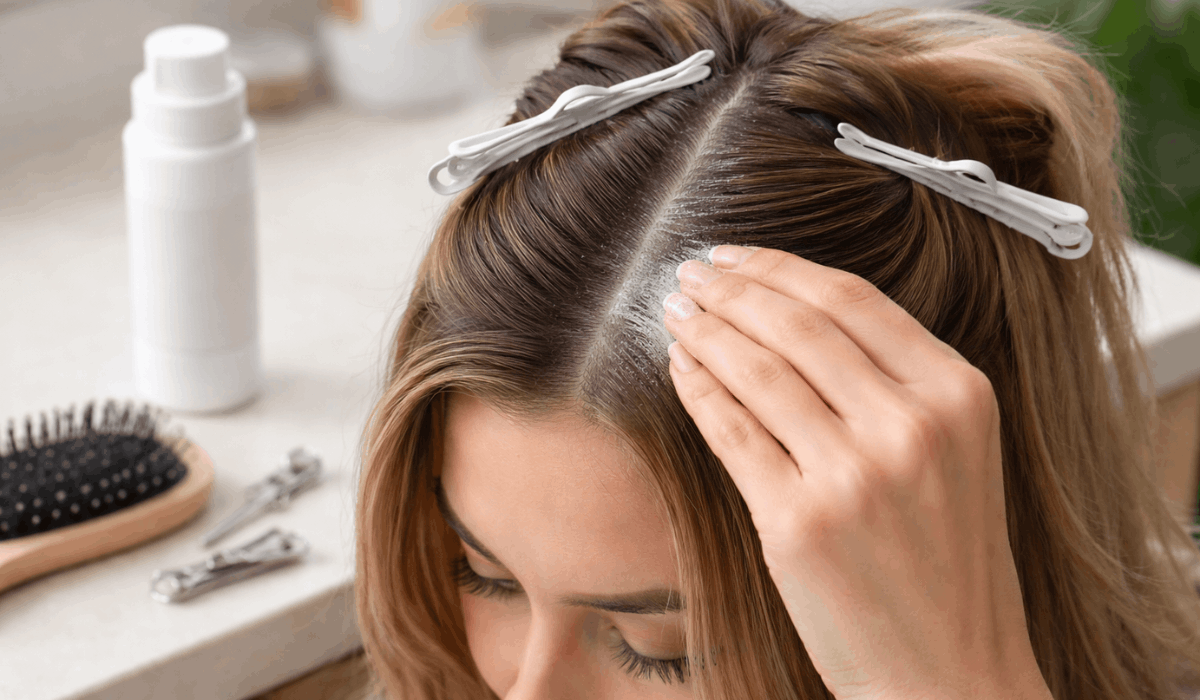
Roots need targeted care to stay fresh between washes. Small steps help reduce shine and bring back volume.
- Apply products only at the roots: Focus on the scalp area, not the lengths. This prevents unnecessary buildup.
- Use small amounts: Too much product makes roots look dull. Start light and add only if needed.
- Work in sections: Part hair to reach oily areas directly. This improves effectiveness.
- Let products settle: Give them time to absorb before touching hair. This avoids residue.
- Refresh selectively: Treat only greasy spots, not the whole head. Hair looks cleaner overall.
Dry Shampoo Done Properly
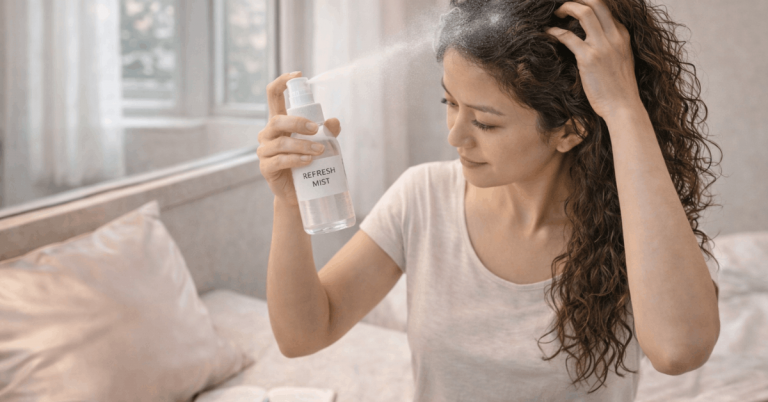
- Use a light spray or shake, not a heavy coat.
- Apply 15–20 cm away from the scalp.
- Target the part, crown, and hairline.
- Let it sit for at least 30 seconds.
- Gently brush or massage to remove excess.
Oil-Absorbing Alternatives
- Blot roots with oil-absorbing paper.
- Use a small amount of powder if needed.
- Apply with a brush for control.
- Focus on visibly shiny areas.
- Best for short-term, quick fixes.
Styling Choices That Hide Oil and Flatness
The right styles make hair look intentional, not greasy. Simple styles work best between washes.
- Add height at the roots: Volume draws attention away from oil.
- Avoid sleek styles: Flat looks highlight grease.
- Change your part: A new part lifts roots instantly.
- Use texture wisely: Light waves reduce shine.
- Keep styles loose: Tight styles press oil into hair.
Low-Effort Hairstyles That Add Lift
- Loose buns add height naturally.
- Half-up styles hide oily roots.
- Soft waves break up flatness.
- Messy styles look intentional.
- Lifted roots reduce oil visibility.
Using Heat Tools Without Causing Damage
- Use heat only at the roots.
- Keep tools on low to medium heat.
- Limit heat exposure time.
- Avoid layering multiple products.
- Skip heavy creams and waxes.
Daily Habits That Extend Hair Freshness
Everyday habits affect how fast hair gets oily. Small changes help hair stay cleaner longer.
- Touch hair less often: Hands transfer oil quickly.
- Avoid constant adjusting: Repeated contact adds grease.
- Keep hair off the face: Skin oils move to roots.
- Wash hands regularly: Clean hands reduce the risk of transfer.
- Be mindful during the day: Awareness prevents buildup.
Reducing Hand-to-Hair Contact
- Avoid running fingers through hair.
- Skip playing with ends or roots.
- Use clips instead of touching.
- Adjust hair only when needed.
- Keep styling minimal.
Keeping Accessories and Pillowcases Clean
- Wash hats and caps often.
- Clean scrunchies and hair ties weekly.
- Rotate hair clips regularly.
- Change pillowcases frequently.
- Clean fabrics reduce oil transfer.
Product Choices That Don’t Weigh Hair Down
Heavy products shorten the time between washes. Lightweight formulas help hair stay fresh longer.
- Read product textures: Thick formulas build up faster.
- Use less product overall: More is not better.
- Apply away from the scalp: Focus on ends only.
- Avoid layering products: Mixing causes residue.
- Choose simple formulas: Fewer ingredients reduce buildup.
Avoiding Heavy Creams and Oils Between Washes
- Rich creams trap oil at the roots.
- Oils add shine where it’s not needed.
- Heavy products flatten hair.
- Buildup dulls volume quickly.
- Best saved for wash days.
Choosing Lightweight Styling Products
- Use mists instead of creams.
- Choose sprays with light hold.
- Avoid waxes and pomades.
- Apply sparingly and evenly.
- Lightweight products keep movement.
Nighttime Hair Care That Preserves Freshness
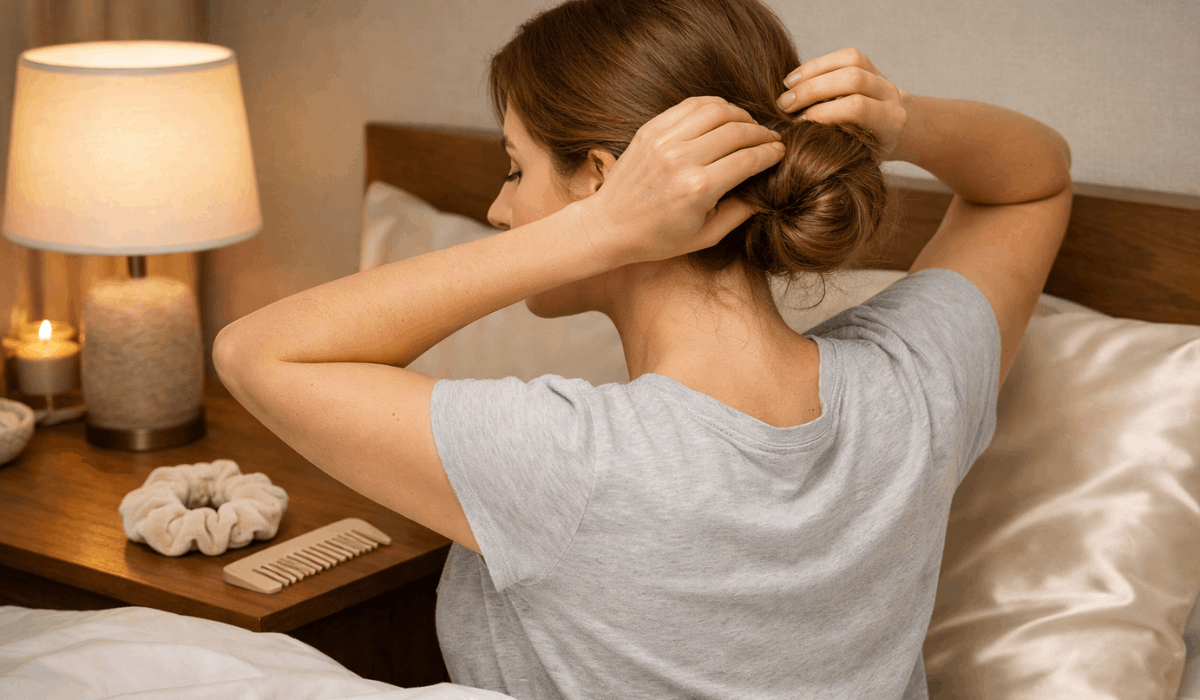
What you do at night affects how your hair looks in the morning. Simple nighttime habits prevent oil transfer and flattening.
- Prep hair before bed: Detangle gently.
- Avoid sleeping with oily roots exposed: Style loosely.
- Reduce friction: Smooth fabrics matter.
- Keep hair elevated: Prevents flattening.
- Maintain clean sleep surfaces: Reduces buildup.
Sleeping With Hair Loosely Styled
- Loose braids prevent oil spread.
- Soft buns lift roots overnight.
- Avoid tight styles.
- Keep styles low tension.
- Comfort supports freshness.
Protecting Hair While You Sleep
- Satin reduces friction better than cotton.
- Smooth fabrics limit oil transfer.
- Cotton absorbs more oil.
- Clean pillowcases matter most.
- Fabric choice affects morning results.
Knowing When It’s Time to Wash
Freshness routines have limits. Washing at the right time keeps the scalp healthy.
- Watch for scalp discomfort: Itching is a key sign.
- Notice heaviness at the roots: Oil buildup increases weight.
- Check shine levels: Excess shine signals grease.
- Feel product residue: Buildup means it’s time.
- Trust consistency, not rules: Hair needs vary.
Signs Hair Needs Washing
- Persistent itchiness
- Heavy or sticky roots
- Dull, lifeless appearance
- Reduced volume
- Unresponsive to refresh methods.
Why Pushing Too Long Can Backfire
- Oil clogs the scalp.
- Product buildup increases irritation.
- Hair looks dull and limp.
- Scalp balance is disrupted.
- Healthy washing supports freshness.
Final Section
Keeping hair fresh between washes comes down to smart habits, simple tools, and lightweight products used consistently.
When you understand your scalp, adjust daily routines, and refresh roots the right way, hair stays clean-looking without extra effort.
Start applying these steps today and build a routine that keeps your hair looking fresh, comfortable, and easy to manage.