Hairbrushes collect oil, hair, and product residue every time you use them.
Cleaning them properly helps keep your hair healthier, your scalp cleaner, and your tools working properly.
This guide shows you simple, practical steps to clean hairbrushes without harsh products or complicated methods.
Why Cleaning Hairbrushes Is Part of Basic Hair Care
Cleaning your hairbrush helps keep your hair and scalp clean. It prevents buildup from returning to freshly washed hair.
- Prevents oil from spreading back onto clean hair: Brushes hold oil and residue. Without cleaning, this buildup moves back to the roots.
- Reduces product and dirt on the scalp: Dirty brushes push old product and debris onto the scalp. This can affect scalp comfort.
- Improves brushing and styling results: Clean bristles move through hair more smoothly. This helps reduce snagging and breakage.
- Supports basic hair hygiene: Brushes touch your scalp every day. Cleaning them is a simple care habit.
How Often You Should Clean Your Hairbrushes
How often you clean your hairbrush depends on how often you use it and how much product you apply.
Regular cleaning helps prevent buildup before it becomes a problem.
- Once a week for daily use: Brushes used every day collect oil and hair quickly. Weekly cleaning helps keep buildup under control.
- Every two weeks for light use: If you brush occasionally and use little product, cleaning every two weeks is usually enough.
- After heavy product use: Styling creams, sprays, and oils stick to bristles. Clean your brush soon after using heavy products.
- Immediately, if buildup is visible: If you see residue, trapped hair, or odor, it’s time to clean the brush right away.
- More often on oily scalps: Oily hair transfers residue more quickly. Frequent cleaning helps prevent grease from spreading back to the hair.
What You Need Before Cleaning Your Hairbrush
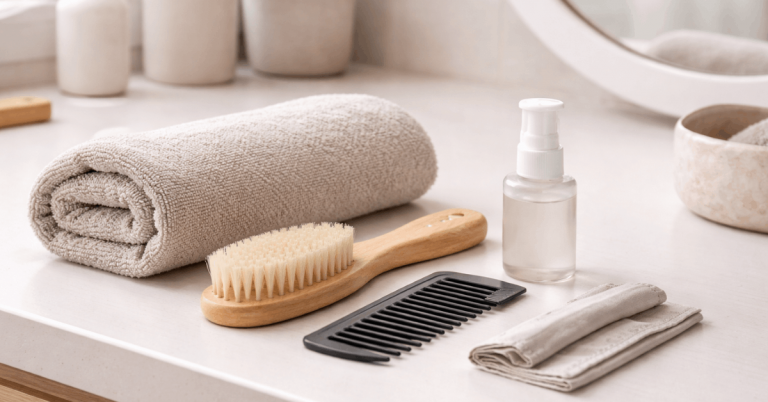
You do not need special products to clean a hairbrush properly. Most of what you need is already available at home.
- Warm water: Helps loosen oil, dirt, and product residue from the bristles.
- Mild shampoo or gentle soap: Cleans buildup without damaging the brush material.
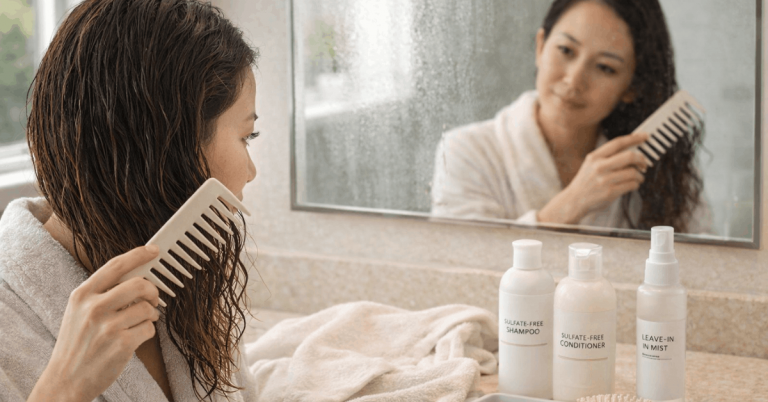
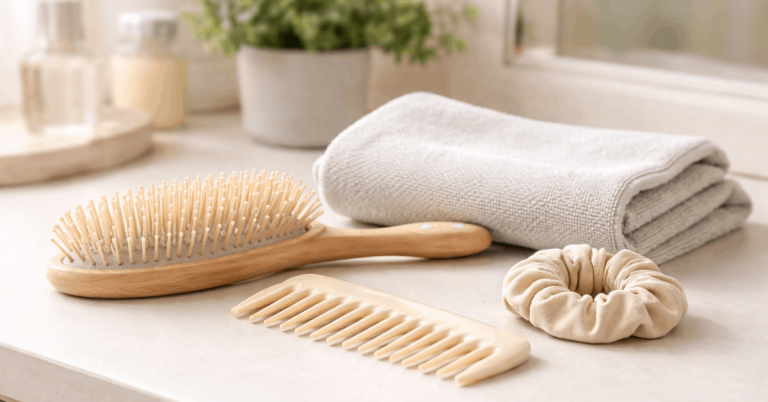
- Wide-tooth comb or fingers: Used to remove trapped hair before washing.
- Small bowl or sink: Holds water for soaking or rinsing the brush head.
- Clean towel: Helps absorb moisture and supports proper air-drying after cleaning.
Step-by-Step: How to Clean Hairbrushes Properly
Cleaning a hairbrush is a simple process when done in the right order. Following these steps helps remove buildup without damaging the brush.
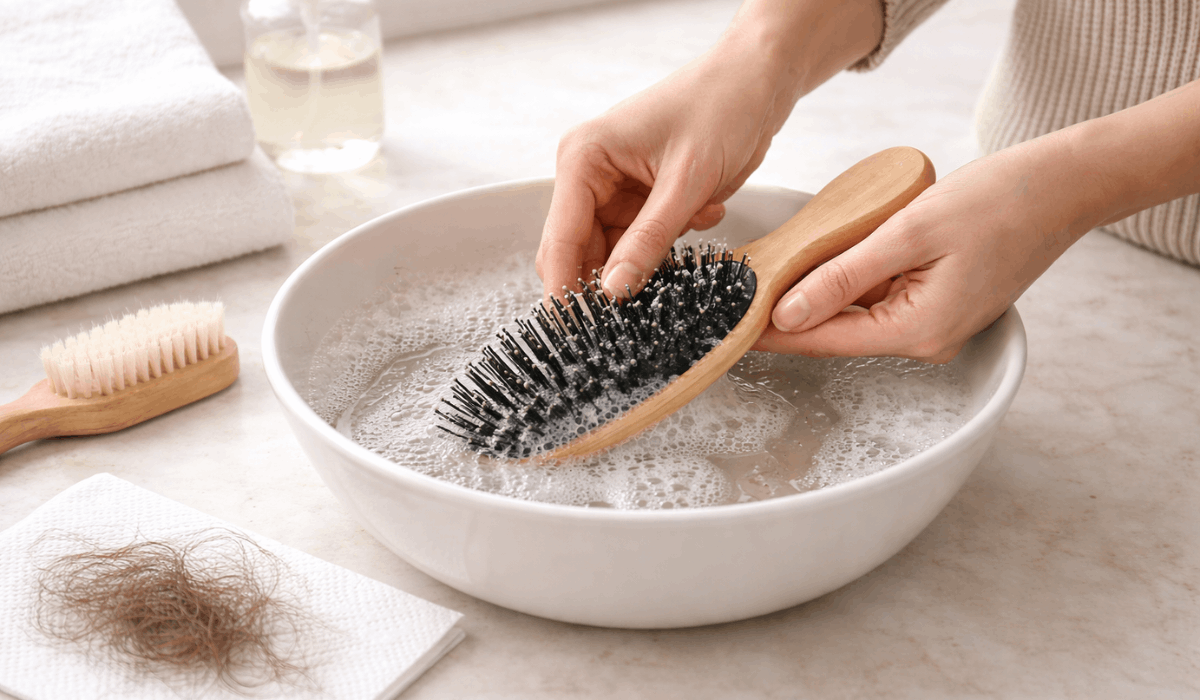
- Remove trapped hair first: Pull out loose hair using your fingers or a wide-tooth comb. This makes washing more effective.
- Prepare warm, soapy water: Fill a bowl or sink with warm water and add a small amount of mild shampoo or soap.
- Clean the brush head gently: Swirl the bristles in water, then use your fingers to loosen any buildup between them.
- Rinse thoroughly: Run clean water over the bristles to remove all soap and residue.
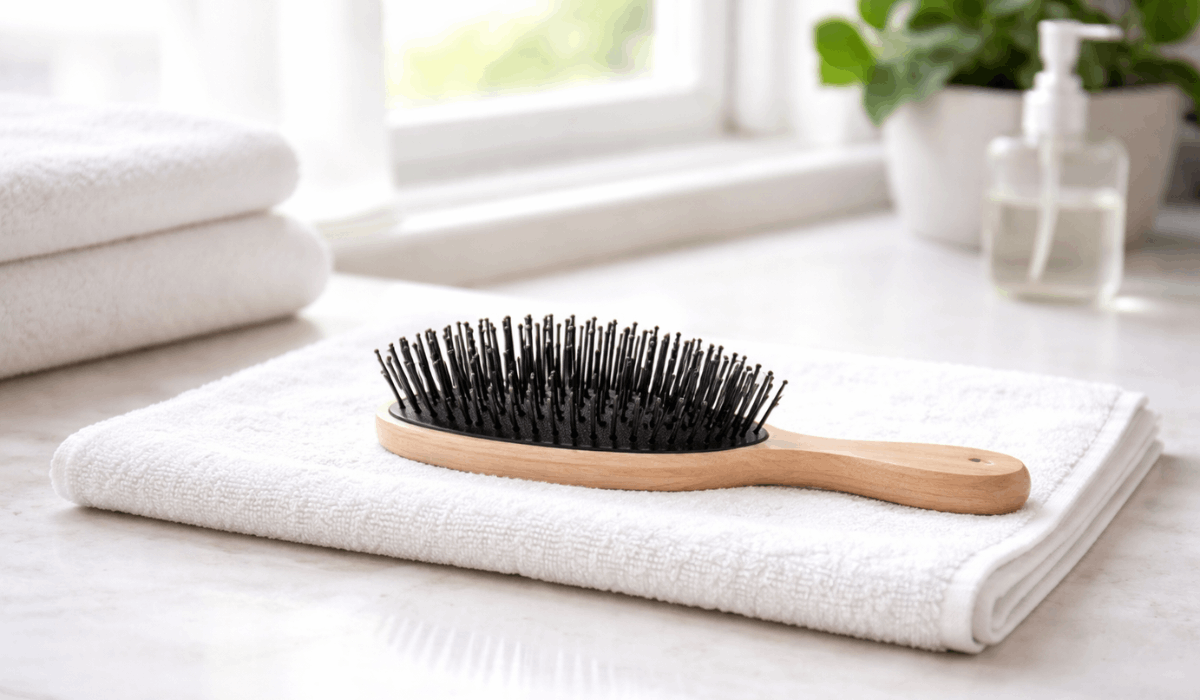
- Dry the brush properly: Place the brush bristle-side down on a clean towel and let it air-dry completely.
Cleaning Different Types of Hairbrushes
Not all hairbrushes can be cleaned the same way. The material of the brush determines how much water and how well it can be handled.
- Plastic and nylon brushes: These are the easiest to clean and can handle brief soaking in warm, soapy water. Rinse well and dry fully to prevent residue.
- Wooden hairbrushes: Water can damage the wood and loosen the base. Clean with a damp cloth and avoid soaking to prevent warping.
- Natural boar bristle brushes: These need gentle cleaning to protect the bristles. Use minimal water and a small amount of mild cleanser, then air-dry carefully.
- Paddle and cushioned brushes: Water can seep into the cushion base. Keep cleaning focused on the bristles and avoid submerging the brush.
What Not to Do When Cleaning Hairbrushes
Some cleaning habits damage hairbrushes and shorten their lifespan. Avoiding these mistakes helps keep brushes effective longer.
- Do not soak brushes for long periods: Prolonged water exposure weakens glue and brush bases. This can cause bristles to loosen.
- Avoid harsh cleaning products: Strong detergents damage bristles and brush materials. They may also leave residue behind.
- Do not use hot water: High temperatures can warp plastic and crack wood. Warm water is safer.
- Skip heat-based drying: Hair dryers and heaters damage brush structure. Air-drying is best.
- Do not scrub aggressively: Rough handling bends bristles. This reduces brushing quality.
How Clean Brushes Help Hair Stay Fresher Longer
Clean brushes reduce how quickly hair looks oily. They help maintain freshness between washes.
- Limits oil transfer to roots: Clean bristles do not reapply oil. Hair stays fresher longer.
- Reduces product residue on hair: Less buildup transfers back during brushing. Hair feels lighter.
- Improves airflow through hair: Clean bristles separate strands better. This prevents flatness.
- Supports balanced scalp contact: Clean brushes evenly contact the scalp. This improves comfort.
Simple Habits That Keep Brushes Cleaner Between Washes
Daily habits reduce the buildup on brushes. These steps make cleaning easier.
- Remove hair after each use: Trapped hair holds oil and dust. Removing it limits buildup.
- Wipe bristles regularly: A dry cloth removes surface residue. This slows the buildup.
- Store brushes in dry areas: Moist spaces encourage residue and odor. Dry storage protects tools.
- Keep brushes away from loose products: Powder and sprays stick to bristles. Distance helps.
- Avoid sharing brushes: Sharing increases the transfer of oil and bacteria. Personal use keeps brushes cleaner.
How Product Buildup Affects Hairbrushes
Hair products build up on brushes over time. This changes how brushes perform.
- Oils coat bristles: Natural oils cling to brush surfaces. This causes residue transfer.
- Creams and sprays harden: Styling products dry on bristles. This reduces flexibility.
- Buildup attracts dirt: Sticky residue traps dust. Brushes get dirty faster.
- Residue reduces grip: Coated bristles do not hold hair properly. Styling becomes uneven.
- Dirty brushes require more frequent washing: Buildup increases cleaning needs.
Cleaning Hairbrushes After Illness or Scalp Issues
Extra cleaning is important when recovering from illness or scalp problems. Brushes can hold bacteria.
- Removes lingering germs: Cleaning helps eliminate bacteria on bristles. This supports recovery.
- Reduces risk of reinfection: Clean tools prevent germs from returning. This protects scalp health.
- Protects irritated scalps: Clean brushes reduce friction and residue. This improves comfort.
- Supports healing treatments: Medicated products work better on clean tools. This improves results.
- Encourages better hygiene habits: Regular cleaning supports overall personal care.
When It’s Time to Replace a Hairbrush
Not all brushes can be cleaned and saved. Knowing when to replace them protects hair.
- Bristles remain bent after cleaning: Deformed bristles damage hair. Replacement is needed.
- Brush holds odor: Persistent smells indicate trapped residue. Cleaning may no longer work.
- Cushion base feels loose: Structural damage affects brushing. Replacement improves control.
- Visible cracks or splits appear: Damaged brushes can scratch the scalp. Safety matters.
- Brush no longer styles evenly: Uneven tension affects results. A new brush restores performance.
Can Dirty Brushes Cause Scalp Problems?
Dirty brushes can contribute to scalp discomfort. Buildup affects scalp health.
- Bacteria collect on bristles: Dirty tools hold germs. This can irritate the scalp.
- Residue clogs scalp pores: Oil and product buildup block airflow. This affects balance.
- May worsen dandruff: Dirty brushes redistribute flakes. This spreads irritation.
- Increases itchiness: Residue causes friction during brushing. This irritates sensitive skin.
- Sensitive scalps react faster: Clean tools reduce the risk of irritation. This supports comfort.
Final Section: Make Brush Cleaning Part of Your Routine
Keeping your hairbrushes clean helps protect your hair, scalp, and daily styling results.
When brush cleaning becomes a regular habit, buildup is easier to control, and tools last longer.
Start adding brush cleaning to your routine today to support healthier hair and better everyday care.