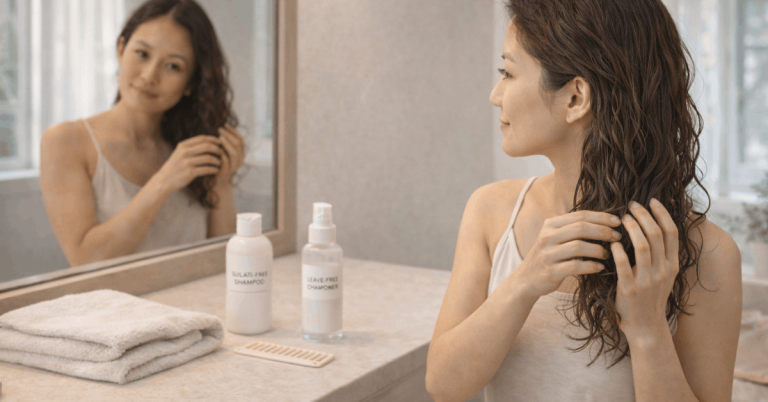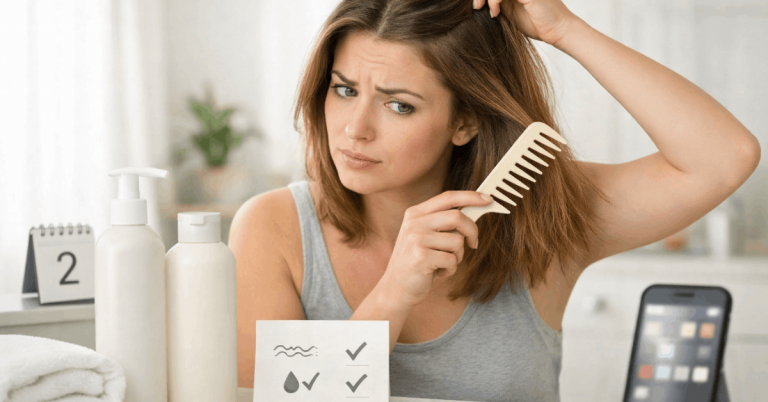
A hair care routine only works when it fits your daily life and the tools you actually use.
This guide shows you how to build a simple routine focused on cleaning, conditioning, and protecting your hair without unnecessary steps or products.
You’ll learn how to choose the right habits, brushes, and basic tools so your hair stays manageable, comfortable, and easy to maintain.
Start With Your Hair Goal and Your Real Schedule
Your routine only works if it fits your real life. Start by choosing one clear goal and a schedule you can repeat. This keeps your routine simple and consistent.
- Define one main goal: Breakage control, less oil, less dryness, scalp comfort, or easier mornings.
- Be honest about time: Choose a routine you can keep, not one you “plan” to do.
- Set wash frequency by signs: Itch, buildup, limp roots, or dry ends should guide you.
- Pick one baseline rule: Handle your hair gently every day to prevent damage.

Build the Core Routine in 3 Steps
A routine works when you repeat the same basic steps in the right order. These three steps cover most hair needs without adding extra products.
Keep each step simple so it stays easy to maintain.
Step 1 — Cleanse the Scalp the Right Way
- Choose your cleanser type: Use gentle shampoo for regular washing, balancing shampoo for oil control, and clarifying shampoo only when buildup is obvious.
- Use a simple technique: Clean with fingertips, massage briefly, focus on the scalp, and rinse very well.
- Avoid common mistakes: Skip hot water, don’t scratch, don’t rush rinsing, and don’t use too much shampoo.
- Clarify when needed: Do it after heavy product use, when hard water signs appear, or when buildup returns quickly.
Step 2 — Condition for Slip, Not Weight
- Keep the goal clear: Conditioner helps reduce tangles and breakage, so you want smoothness, not heaviness.
- Apply in the right place: Focus on mid-lengths and ends, not your scalp.
- Match the formula: Choose light textures for fine hair and richer formulas for dry or thick ends.
- Rinse based on your hair: Rinse fully for fine hair, and rinse a little less for very dry ends if needed.
Step 3 — Protect Between Washes
- Treat daily handling as protection: Friction and rough habits cause most damage, even with good products.
- Dry gently: Press-dry with a microfiber towel instead of rubbing.
- Detangle with low tension: Start at the ends and move upward slowly to avoid snapping hair.
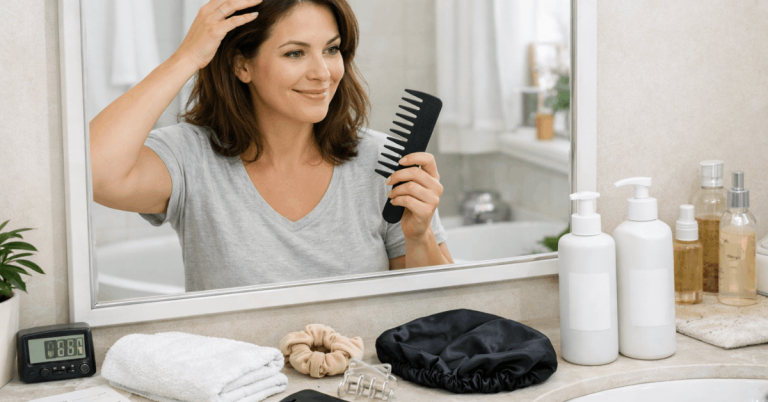
- Reduce stress on hair: Limit heat, use protection when you do use it, and choose soft accessories and low-tension styles.
Choose the Right Brush and Tools for Your Routine
The right tools make your routine easier and reduce daily wear and tear.
You don’t need many tools, but the ones you use should work with your hair, not against it. Simple choices often give better results than complex setups.
- Focus on function, not quantity: Choose tools that reduce tension and friction instead of adding extra steps.
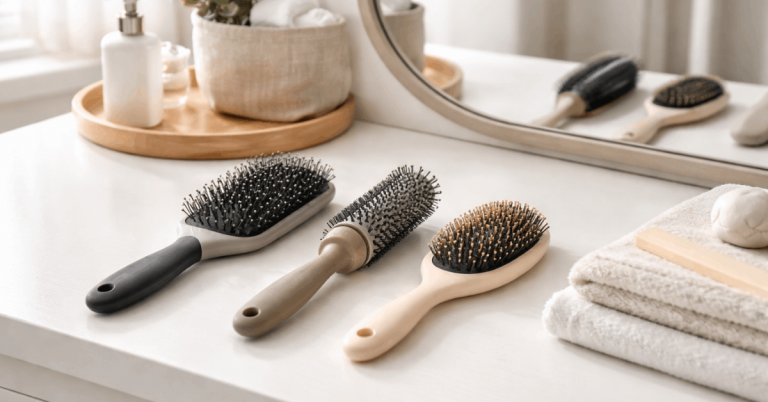
- Use a gentle daily brush: A soft or flexible brush helps smooth hair without pulling or snapping strands.
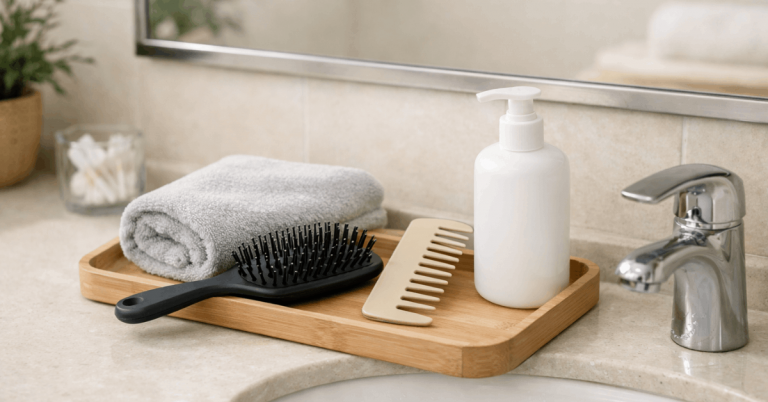
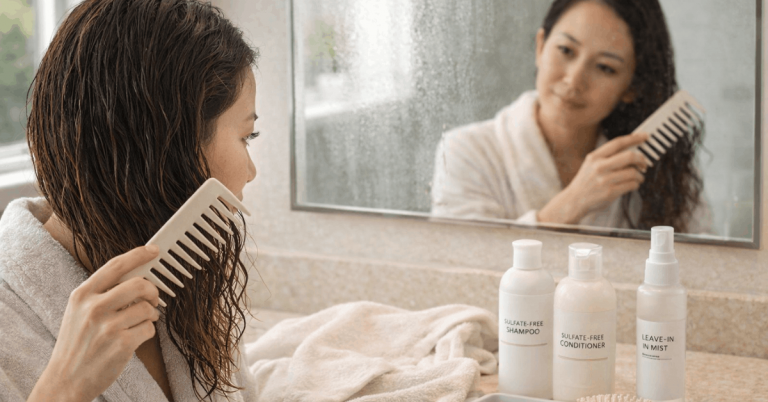
- Add a wide-tooth comb: This tool is useful for wet hair and careful detangling when hair is most fragile.
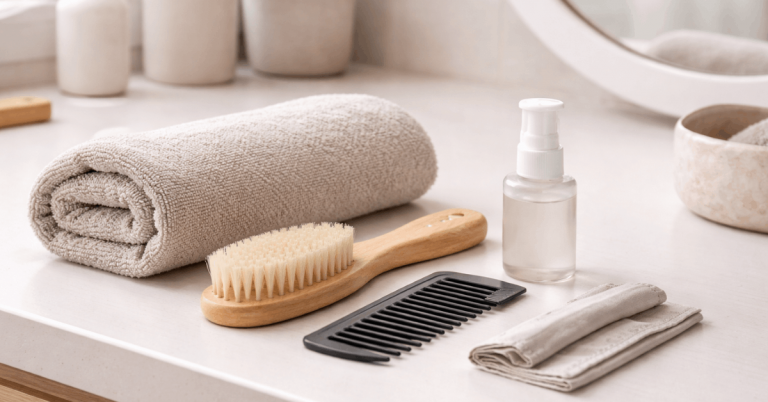
- Choose a microfiber towel: Soft fabric reduces friction during drying and helps prevent breakage.
Weekly Routine That Keeps Hair Stable
A light weekly routine helps prevent small issues from turning into bigger problems. These habits support your daily routine without adding much time.
The goal is maintenance, not extra treatment.
- Reset buildup when needed: Use a clarifying wash only if hair feels dull, heavy, or coated.
- Condition with purpose: Add a deeper conditioner only when ends feel dry or rough.
- Clean your tools: Wash brushes and combs to remove oil, product, and residue.
- Check ends and scalp: Look for split ends, dryness, or irritation, and adjust your routine early.

Fix the Most Common Routine Problems Fast
Most hair routine problems come from small habits, not missing products. Fixing them early saves time and effort.
Start with simple adjustments before making any changes to your routine.
- Hair gets greasy too fast: Clean the scalp longer, rinse better, and keep conditioner off the roots.
- Hair feels dry or rough: Reduce friction, slow down detangling, and limit heat use.
- Breakage keeps showing up: Switch to gentler tools, avoid tight styles, and handle hair with less tension.
- Routine feels inconsistent: Simplify your steps and stick to the basics until results stabilize.
Lifestyle Habits That Affect Hair More Than You Think
Hair care does not stop with products and tools. Daily habits often have a bigger impact on how your hair looks and feels.
Small lifestyle adjustments can improve results without changing your routine.
- Sweat and activity levels: Rinse or wash after heavy sweating to prevent buildup and scalp discomfort.
- Weather exposure: Wind, sun, and dry air increase friction and dryness, so adjust protection as conditions change.
- Sleep habits: Friction from pillows and tight styles at night can cause breakage and frizz.
- Water quality and routine changes: Hard water, travel, or schedule shifts may require small routine adjustments.
Read Product Labels Without Overthinking
You do not need to understand every ingredient to choose the right product.
Reading labels is about avoiding obvious mismatches, not finding a perfect formula. Simple checks help you prevent buildup and irritation.
- Identify the product purpose: Look for terms like gentle, clarifying, moisturizing, or lightweight to match your current need.
- Match formulas to your hair type: Fine hair usually needs lighter products, while dry ends may need richer textures.
- Watch for buildup signs: Heavy layering can make hair dull, sticky, or limp over time.
- Notice scalp reactions: Itching, tightness, or irritation are signs the product may not suit you.
The Busy-Day Routine (When You Have No Time)
Even on rushed days, basic care keeps your hair manageable. A short routine helps prevent damage when time is limited. The focus is control, not styling.
- Quick daily check: Gently brush or comb to remove tangles and reset hair shape.
- Fast drying habits: Press-dry with a microfiber towel or air-dry when possible.
- Low-tension styling: Use soft ties, clips, or loose styles to reduce pulling.
- Skip heat when rushed: Avoid heat tools on busy days to prevent unnecessary stress.
Conclusion — A Routine That Works Is One You Repeat
A simple hair care routine works best when you can repeat it without stress.
By focusing on basic steps, gentle tools, and everyday habits, you give your hair consistent care instead of constant changes.
Start applying these steps today, simplify your routine where possible, and commit to small habits that keep your hair healthy and manageable.