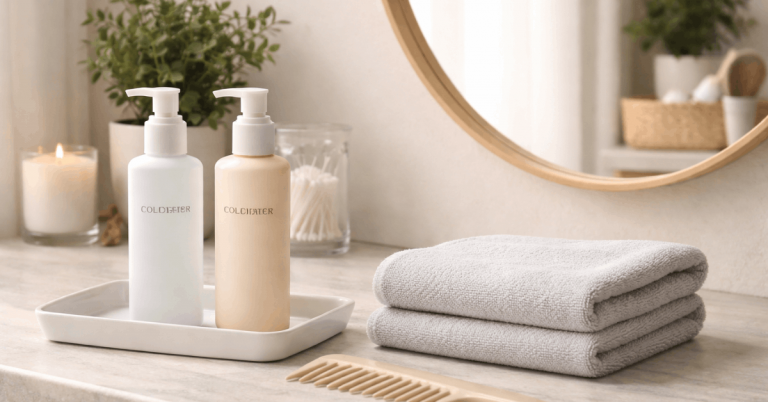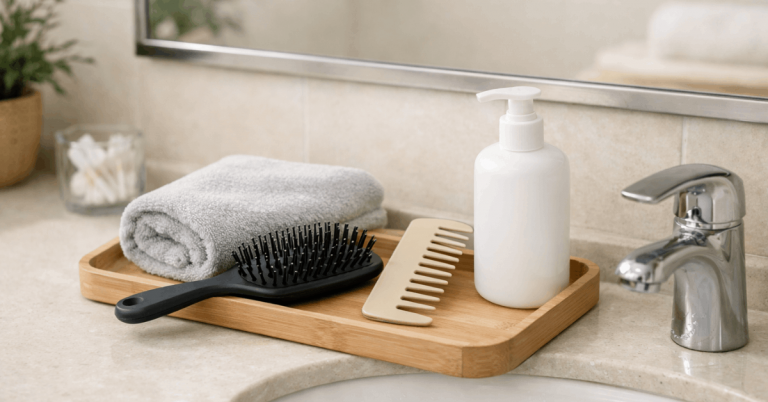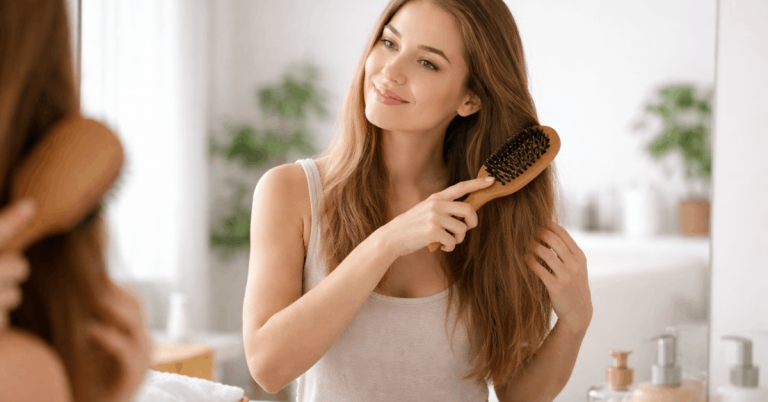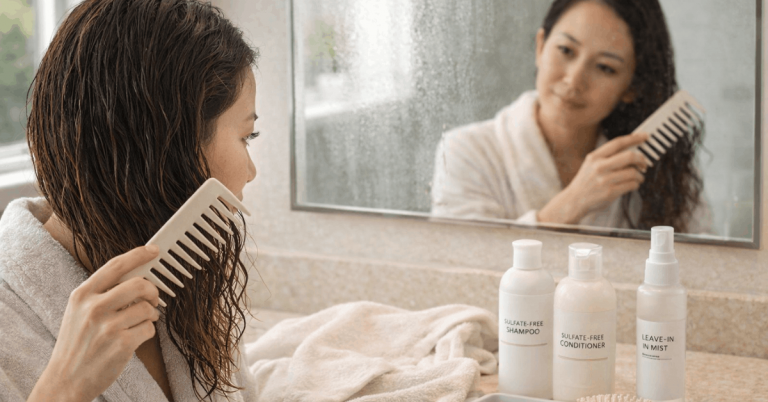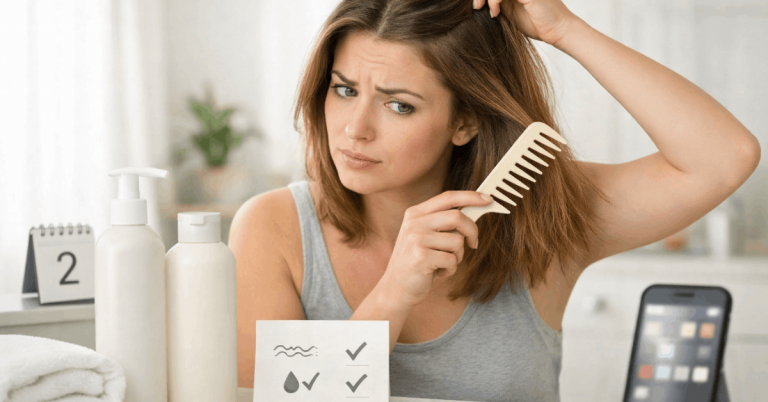
Healthy hair is possible without expensive products when you stick to basics that protect your scalp, reduce breakage, and prevent buildup.
You get better results without expensive products by improving how you wash, dry, brush, and style your hair, plus using a few low-cost tools that limit damage.
This guide gives you simple habits you can start today to keep your hair healthier while spending less.
Start With Scalp Basics
Your scalp controls oil, buildup, and irritation, which directly affect how healthy your hair looks and feels.
- Wash Frequency — Wash based on how oily, sweaty, or itchy your scalp gets.
- Root-Only Shampoo — Clean the scalp and roots, then let the rinse clean the ends.
- Thorough Rinse — Rinse longer to prevent leftover product from causing buildup or flakes.
- Gentle Pressure — Use fingertips in small circles, avoiding nails.
- Scalp Massage — Massage 1–2 minutes to loosen buildup and support circulation.
- Light Scalp Products — Keep heavy oils and thick creams off the scalp area.
- Warning Signs — Notice burning, thick flakes, redness, or sudden shedding early.
Wash Smarter, Not More Expensive
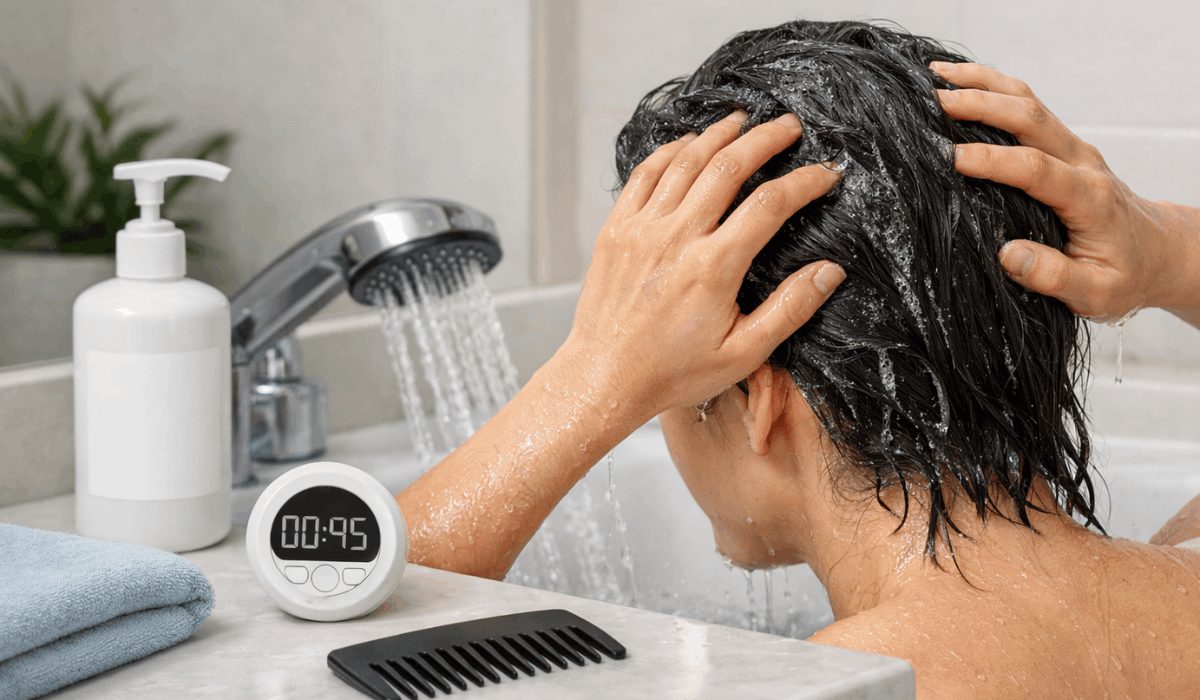
You get better hair results by changing how you wash, not by buying a more expensive bottle.
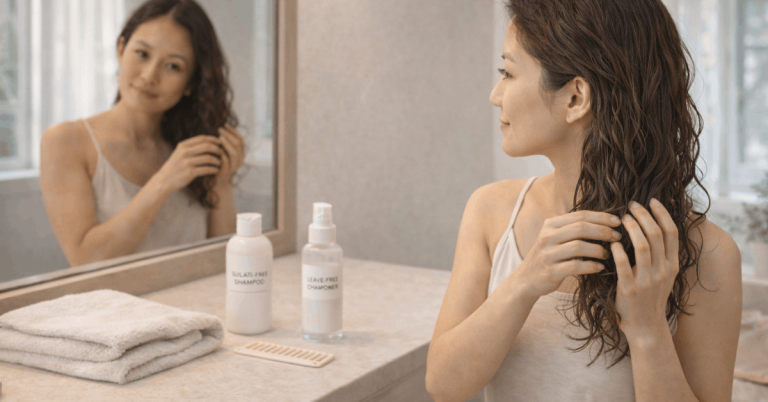
- Pre-Rinse Well — Soak hair fully to loosen oil and dirt before shampoo.
- Use Less Product — Start small and add only if your scalp still feels oily.
- Target the Scalp — Work shampoo into the roots, not the full length.
- Short, Gentle Scrub — Massage 30–60 seconds with fingertips, then stop.
- Rinse Longer — Rinse until hair feels clean and not slippery from residue.
- Condition the Ends — Put conditioner on mid-lengths and ends, not the scalp.
- Detangle During Conditioning — Use fingers or a wide-tooth comb while hair is slick.
- Finish with a Cool Rinse — Use slightly cooler water to help reduce frizz.
Brush and Comb Habits That Prevent Damage
The right brush and technique reduce breakage more than any “repair” product.
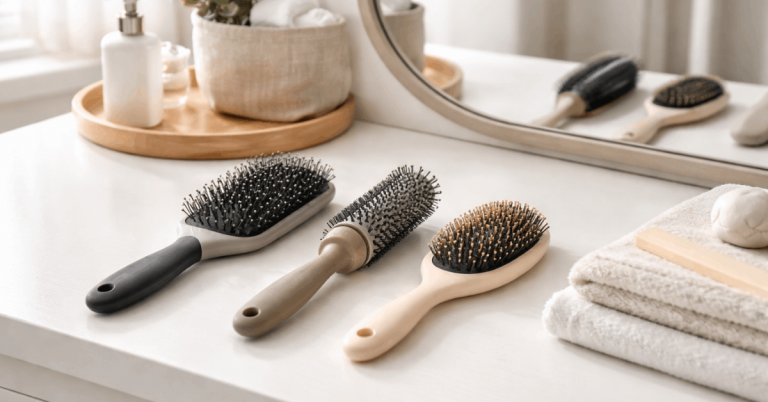
- Tool Match — Pick a brush or comb that fits your texture and thickness.
- Ends First — Detangle from ends to roots to prevent snapping.
- Wet Hair Rule — Use a wide-tooth comb on wet hair, not a hard brush.
- Section Method — Work in small sections so you pull less.
- Clean Tools — Remove hair weekly and wash tools to cut oil and residue.
Low-Cost Hair Tools That Actually Help
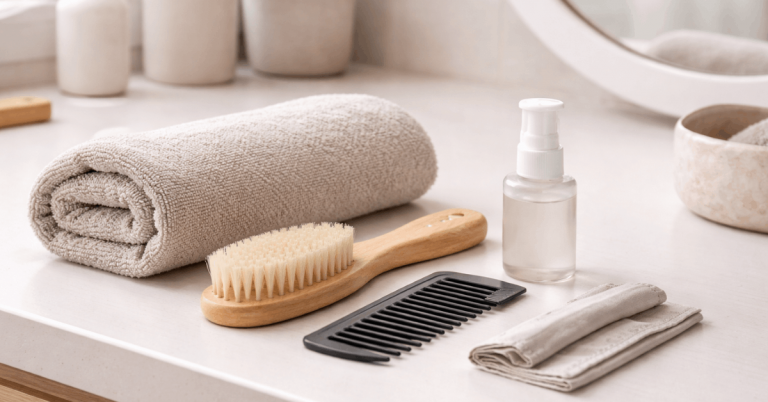
A few cheap tools reduce friction, tangles, and breakage every day.
- Wide-Tooth Comb — Detangles with less pulling and less snapping.
- Gentle Drying Cloth — Use a microfiber towel or cotton tee to reduce frizz.
- Satin Protection — Use a satin bonnet or a satin pillowcase to reduce friction at night.
- Safer Hair Ties — Use scrunchies, spiral ties, or claw clips to reduce tension.
- Replace on Time — Swap worn brushes, stretched ties, and rough comb edges.
Heat Styling Without Ruining Your Hair
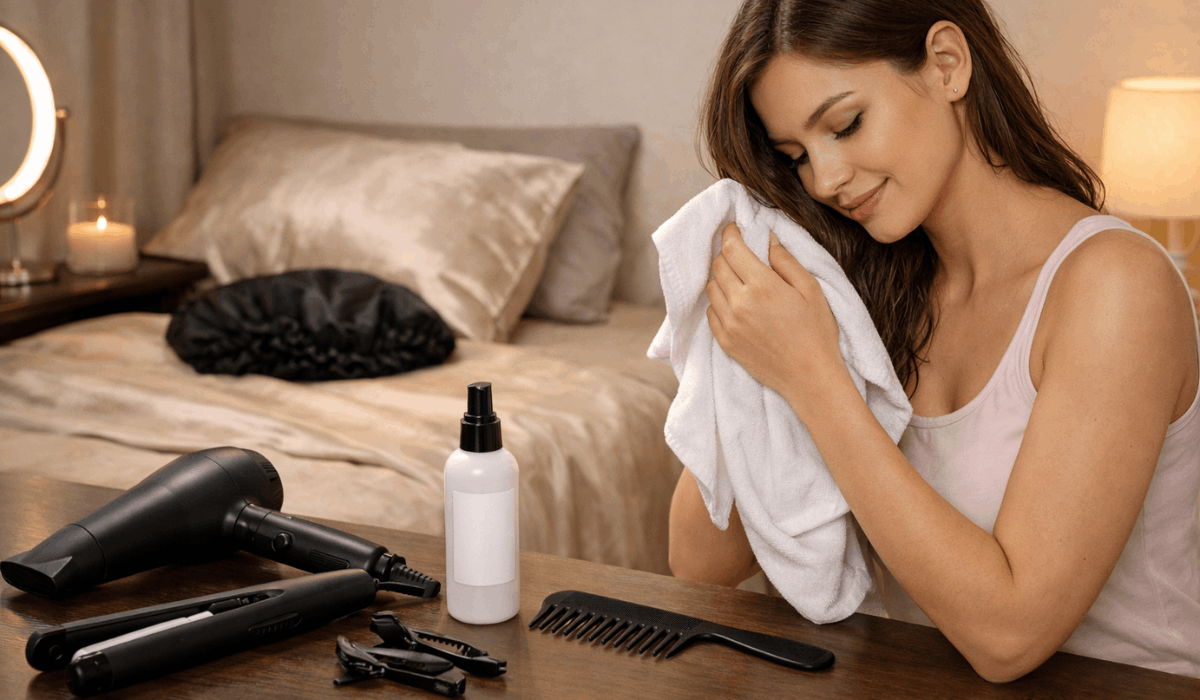
You can still style your hair if you control heat settings, timing, and technique.
- Use Less Heat — Heat style fewer days per week when possible.
- Lower Settings — Use the lowest heat that still works for your hair.
- Fewer Passes — One slow pass beats multiple hot passes.
- Dry Smarter — Blot gently and air-dry partway before heat.
- Heat Protection — Use a basic heat protectant and keep tools moving.
Daily Habits That Keep Hair Strong
Small daily choices decide how much damage your hair takes over time.
- Looser Styles — Avoid tight ponytails that pull edges and roots.
- Reduce Friction — Limit rubbing from hoodies, hats, and rough towels.
- Trim Timing — Trim when split ends show, not only by a strict schedule.
- Protect During Sleep — Tie hair loosely and reduce tangles overnight.
- Fast Routine — Keep a simple routine you can repeat on busy days.
Food, Hydration, and Lifestyle Factors
Hair health depends on basic nutrition and recovery, not just products.
- Protein Basics — Eat enough protein to support hair structure.
- Key Nutrients — Focus on iron, zinc, and omega-3 sources in normal meals.
- Hydration — Drink enough water to help soothe scalp discomfort and reduce dryness.
- Stress and Sleep — Poor sleep and high stress can worsen shedding.
- Get Checked — Sudden shedding changes deserve a basic medical checkup.
Protect Your Hair From Water and Weather Damage
Sun, wind, humidity, and salt or chlorine can weaken hair fast.
- Sun Protection — Use a hat or scarf to reduce UV and dryness.
- Wind Control — Use loose protective styles to prevent knotting.
- Humidity Plan — Use lighter products and less heat on humid days.
- Pool/Ocean Prep — Wet hair first and rinse right after swimming.
- After Exposure — Rinse, condition ends, and dry gently.
Color, Bleach, and Chemical Treatments on a Budget
Chemical services increase breakage risk, so your routine must get stricter.
- Less Processing — Space out services to reduce repeated damage.
- Gentle Washing — Use milder washing and avoid harsh scrubbing.
- Lower Heat — Cut heat frequency and lower temperatures.
- Condition Focus — Prioritize conditioning on mid-lengths and ends.
- Pause If Needed — Stop processing if breakage increases.
When to Get Help and What to Ask For
Getting help early can stop small issues from becoming long-term problems.
- Red Flags — Pain, patchy loss, thick flakes, or sudden shedding.
- Bring Proof — Show photos, a timeline, and details of your routine.
- Ask Causes — Ask what is most likely causing your changes.
- Ask a Plan — Ask what to change first and what to stop.
- Follow Up — Track results and return if symptoms stay.
Common Mistakes That Waste Money
These habits create issues that people try to “buy” their way out of.
- Over-Oiling — Heavy oils can cause buildup and itchy roots.
- Product Hopping — Switching too fast hides what actually works.
- Heat as a Fix — Heat can mask dryness while causing more damage.
- Dirty Tools — Unclean brushes spread oil and residue back into hair.
- Hard Water — Mineral buildup can make hair rough and dull.
Simple Weekly Routine (Budget Version)
A simple weekly plan keeps you consistent and stops problems early.
- Oily Plan — Wash more often, condition only the ends.
- Dry Plan — Wash less often, focus on gentle conditioning.
- Curly Plan — Detangle gently, avoid rough drying, protect at night.
- Deep Step — Do one weekly deep-conditioning session with what you have.
- Track Results — Note changes for 2–4 weeks before adjusting.
Final Takeaways
You can get healthy hair without expensive products by staying consistent with scalp care, gentle detangling, smart washing, and controlled heat.
Simple tools and low-damage habits reduce breakage and buildup more than premium formulas.
Pick three changes from this guide and follow them for 30 days to build healthy hair without expensive products.