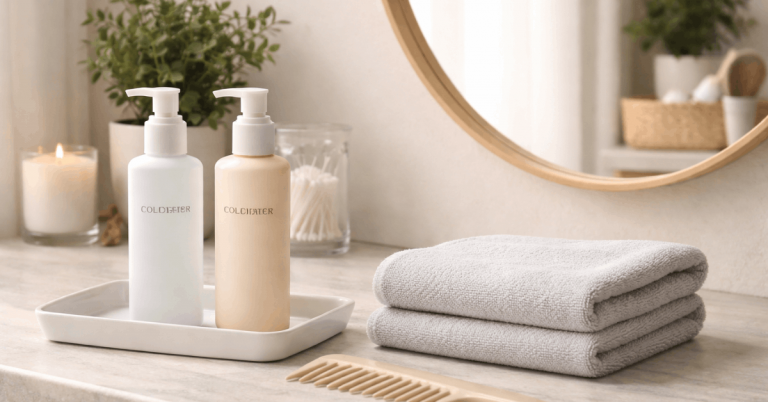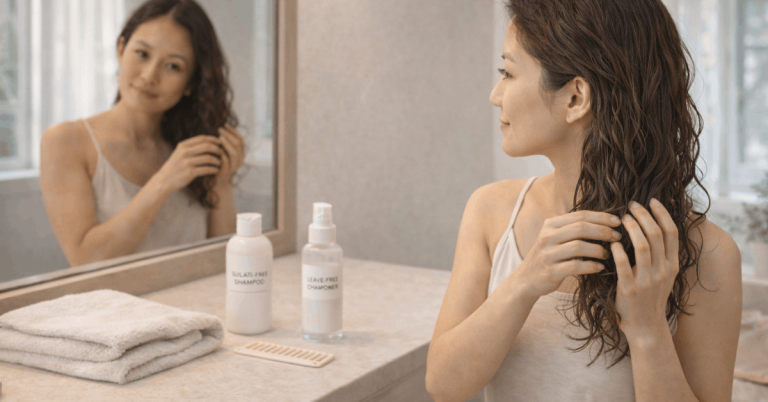
Most hair damage comes from everyday habits, not from skipping treatments or using the wrong products.
Many haircare mistakes occur during simple steps like brushing, washing, drying, and using tools.
This article breaks down the most common daily mistakes and shows how small changes can make your routine easier and safer for your hair.
Using the Wrong Hair Brush for Daily Needs
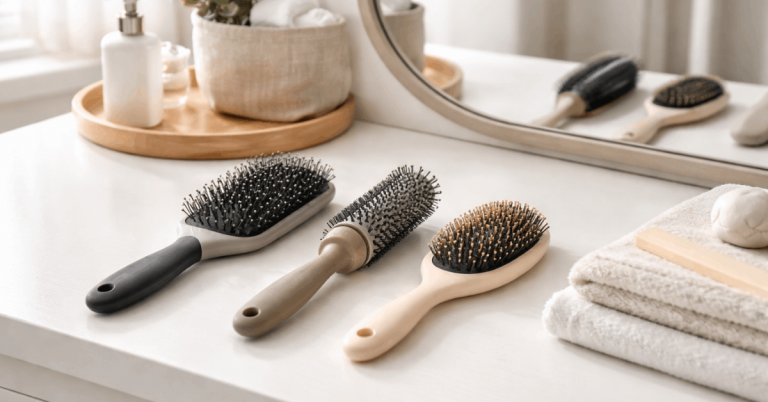
Your hair brush affects breakage, scalp comfort, and daily hair control more than most people realize.
Using the wrong type for your hair or routine creates damage that builds up slowly.
- Choosing stiff or harsh bristles: Hard bristles pull on hair, irritate the scalp, and increase breakage during daily brushing.
- Using one brush for every situation: Wet hair, dry hair, and detangling all need different brush designs to reduce stress.
- Ignoring hair length and thickness: Fine hair needs softer bristles, while thick hair needs wider spacing to avoid pulling.
- Brushing without considering scalp sensitivity: Rough brushes can cause discomfort, redness, and excess oil production.
- Keeping old or damaged brushes: Worn bristles snag hair and cause uneven tension during brushing.

Brushing Hair the Wrong Way
How you brush matters as much as the brush you use. Poor brushing technique causes daily stress, leading to breakage and scalp discomfort over time.
- Starting from the roots instead of the ends: This pulls knots tighter and increases breakage along the hair length.
- Brushing too fast or with force: Speed and pressure create unnecessary tension and damage fragile strands.
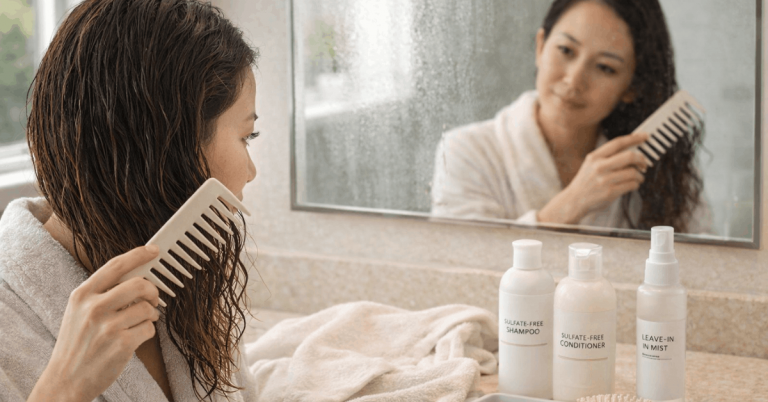
- Brushing wet hair aggressively: Wet hair stretches more easily and breaks more easily when handled roughly.
- Brushing too often without need: Repeated brushing adds friction and weakens hair over time.
- Ignoring resistance while brushing: Forcing the brush through tangles results in snapping rather than gentle detangling.
Overwashing or Underwashing Hair
Wash frequency plays a major role in scalp comfort and hair condition. Washing too much or too little disrupts balance and creates avoidable daily problems.
- Washing hair too often: This strips natural oils, leading to dryness, irritation, and increased frizz.
- Not washing often enough: Oil, sweat, and product buildup can cause odor, itchiness, and dull-looking hair.
- Following trends instead of scalp needs: Popular routines may not match your skin type or lifestyle.
- Ignoring signs from your scalp: Itch, flakes, or excess oil are signals your wash schedule needs adjustment.
- Using the same routine year-round: Changes in weather and activity levels often require wash frequency changes.
Ignoring Hair Tool Hygiene
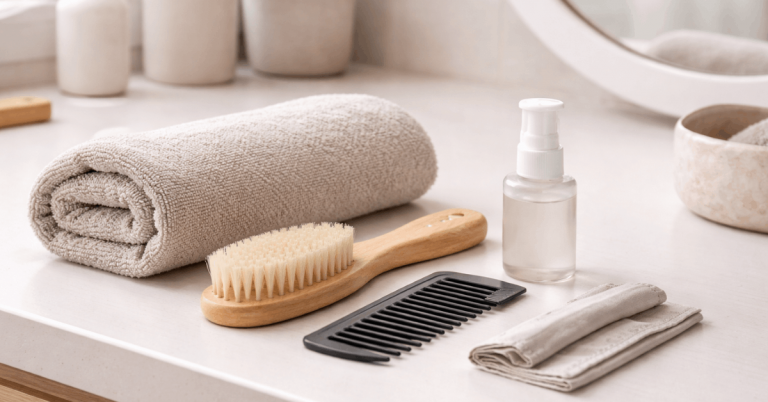
Clean tools are part of basic hair care, not an extra step. Dirty brushes and tools transfer oil, buildup, and bacteria back onto your hair and scalp.
- Not cleaning hairbrushes regularly: Oil, dust, and product residue collect on the bristles and spread back into clean hair.
- Letting tools stay damp after use: Moisture encourages bacterial growth and unpleasant odors.
- Sharing brushes or tools with others: This increases the risk of scalp irritation and hygiene issues.
- Ignoring buildup on styling tools: Residue on tools affects performance and pulls on hair during use.
- Replacing tools too late: Worn or damaged tools snag hair, leading to unnecessary breakage.
Using Too Much Product Every Day
More product does not mean better results. Daily overuse creates a buildup that weighs hair down and makes routine care more difficult.
- Applying more than needed: Excess product coats the hair, leaving it looking greasy or heavy.
- Using the product too close to the scalp: This causes flat roots, buildup, and faster oiliness.
- Layering multiple products daily: Combining creams, oils, and sprays increases residue without added benefit.
- Reapplying product without washing: Old product mixes with new layers, dulling hair texture.
- Using products meant for occasional use every day: Heavy treatments work best when used sparingly, not daily.

Rough Drying Habits After Washing
Hair is most fragile right after washing. Rough drying habits cause daily damage that builds up faster than most people expect.
- Rubbing hair with regular towels: Friction lifts the hair cuticle, increasing breakage.
- Twisting hair tightly in towels: This puts stress on wet strands and weakens them over time.
- Using high heat immediately: Hot air on soaking hair increases dryness and damage.
- Skipping gentle blotting: Pressing water out gently is safer than aggressive drying.
- Handling hair too much while wet: Excess touching and adjusting adds unnecessary tension.
Skipping Scalp Care in Daily Routines
Your scalp health affects how your hair grows, feels, and responds to daily care.
Ignoring the scalp creates problems that tools and products cannot fix on their own.
- Ignoring itch or discomfort: These signals often point to dryness, buildup, or irritation that needs attention.
- Overlooking excess oil: An oily scalp usually means imbalance, not a need for heavier products.
- Dismissing flakes or tightness: These signs suggest the scalp barrier is stressed or dry.
- Washing hair without focusing on the scalp: Skipping scalp cleansing leaves residue behind.
- Assuming scalp care is optional: Healthy-looking hair depends on a balanced, cared-for scalp.
Believing More Effort Equals Better Hair
Hair care works best when it is consistent and gentle, not intense or complicated.
Doing too much often creates stress that leads to breakage and dryness over time.
- Overhandling hair every day: Constant touching, adjusting, and styling weakens hair strands.
- Adding unnecessary steps: Extra steps increase friction without improving results.
- Using multiple tools in one routine: Repeated tool use adds heat and tension.
- Fixing problems across more products: Layering products often hides issues rather than solving them.
- Ignoring the value of simple routines: Basic habits protect hair better in the long run.
Sleeping Without Protecting Hair
Nighttime habits affect hair condition as much as daytime care. Lack of protection during sleep increases friction, leading to breakage and tangles.
- Going to bed with loose, uncontained hair: Hair rubs against surfaces and tangles overnight.
- Sleeping on rough fabrics: Coarse pillowcases increase friction and damage hair fibers.
- Skipping simple nighttime prep: Basic steps like detangling reduce morning breakage.
- Sleeping with damp hair: Wet hair stretches and tangles more easily during sleep.
- Assuming damage only happens during the day: Nighttime friction adds stress every night.
Ignoring Environmental Stress on Hair
Every day environments affect hair condition more than most people realize. Ongoing exposure causes dryness, buildup, and surface damage.
- Regular sun exposure: UV light weakens hair fibers, leading to dryness.
- Wind friction: Constant movement roughens the hair surface and increases breakage.
- Pollution buildup: Airborne particles settle on hair and scalp, dulling appearance.
- Indoor dry air: Heated and air-conditioned spaces reduce moisture balance.
- Skipping protection and cleansing: Residue and dryness remain without routine care.
Conclusion – Fixing Hair Care Starts with Small Daily Changes
Most hair problems stem from small daily haircare mistakes that are easy to overlook but simple to fix.
By choosing the right tools, handling your hair gently, and keeping routines consistent, you reduce damage and keep your scalp and hair more stable.
Start fixing one daily mistake today and build a routine you can actually maintain.