Packing a toiletry bag feels like a logic puzzle. Every trip, you cram in six styling tools and end up using two of them.
The beauty tools for travel conversation keeps repeating the same advice: buy the mini version of everything. That approach fills your bag fast and drains your wallet faster.
A smarter system starts at home. The tools that work for your daily routine should be the same ones that slide into a carry-on.
This guide is for the frequent flyer who wants fewer items, better results, and a bag that actually zips shut on the first try.
Do Daily Beauty Tools and Travel Tools Need to Be Different?
Every travel beauty article starts with a separate “travel kit” list.
And I think that advice costs more money than it saves, because a three-piece mini tool set from Ulta runs about $25 to $40, while one dual-purpose tool like the Revlon One-Step Hair Dryer and Volumizer can replace a blow dryer, round brush, and flat iron for around $30.
That price math changes the whole equation. Instead of building two separate kits, the goal should be choosing daily tools that already travel well.
Why “Buy the Travel Size” Is Expensive Advice
Mini blow dryers have weak motors. Travel-size flat irons heat unevenly. Tiny brushes can’t detangle thick or curly hair properly.
So what happens? The mini tools sit in your bag, and you end up using the hotel blow dryer anyway. That $35 travel styling set collects dust in a drawer between trips.

A better filter: if a tool doesn’t perform well enough to use every single morning at home, it won’t earn space in your luggage either.
Dual-Purpose Tools That Work at Home and on the Road
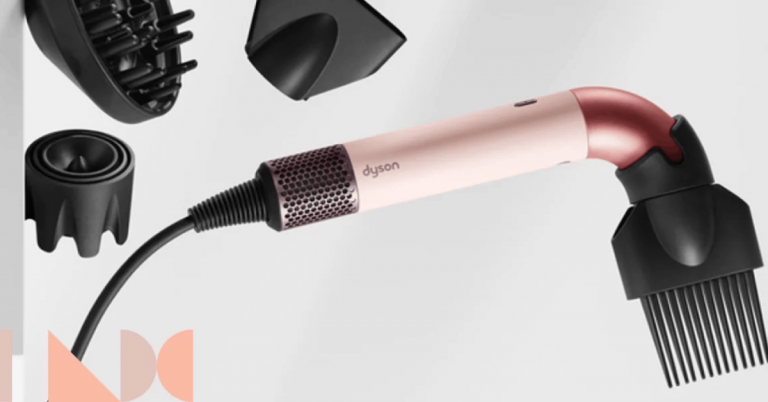
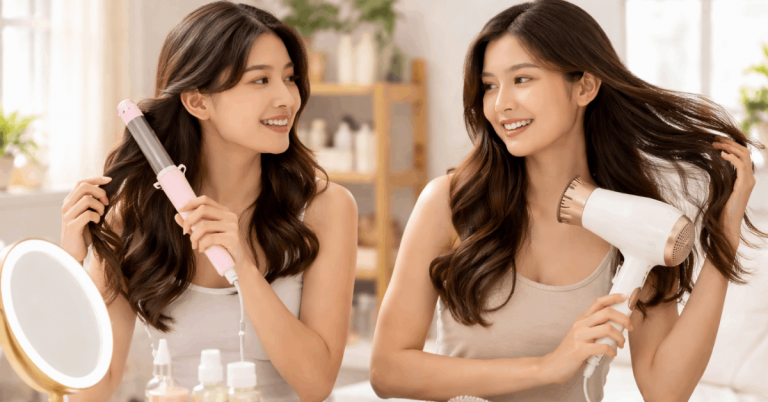
Multi-function styling tools cut your packing list dramatically. A ceramic flat iron that both straightens and curls eliminates one entire device. A blow dryer with a built-in diffuser attachment handles both smooth blowouts and textured curly styles.
The same rule applies to skincare. A silicone face scrubber is flat, rinses in seconds, and costs under $10. Compare that to packing a battery-powered cleansing brush that takes up half a toiletry pouch.
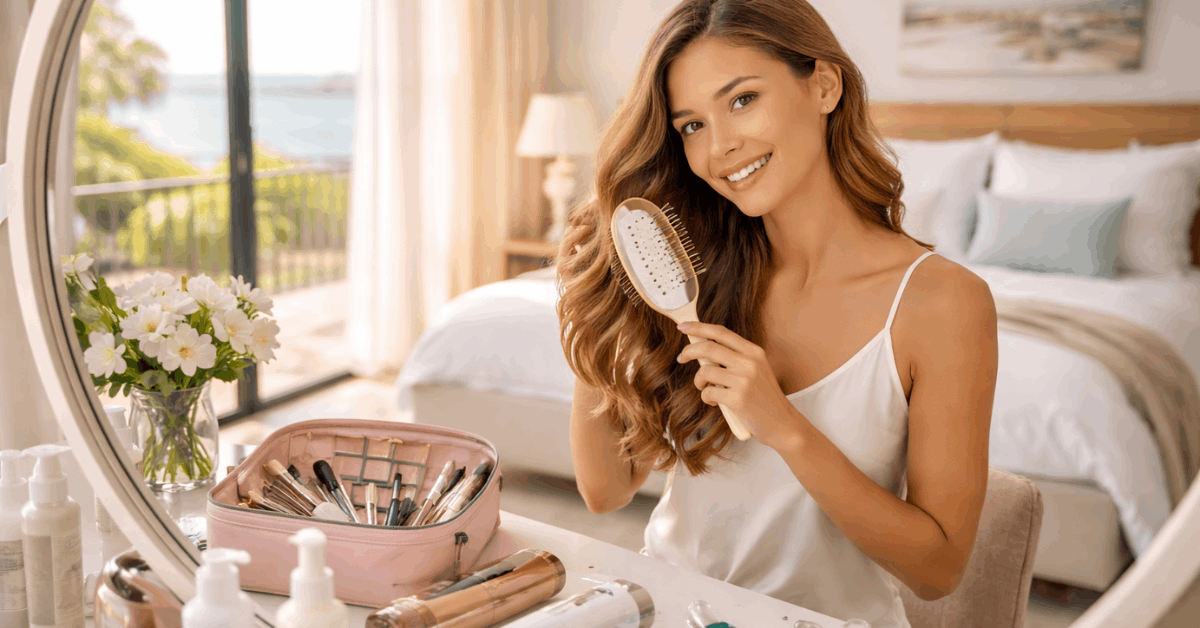
Best Beauty Tools for Your Daily Routine
Building a daily routine around fewer tools makes travel packing automatic. If your morning takes four tools at home, your suitcase already has its list.
Hair Brushes and Combs That Pull Double Duty
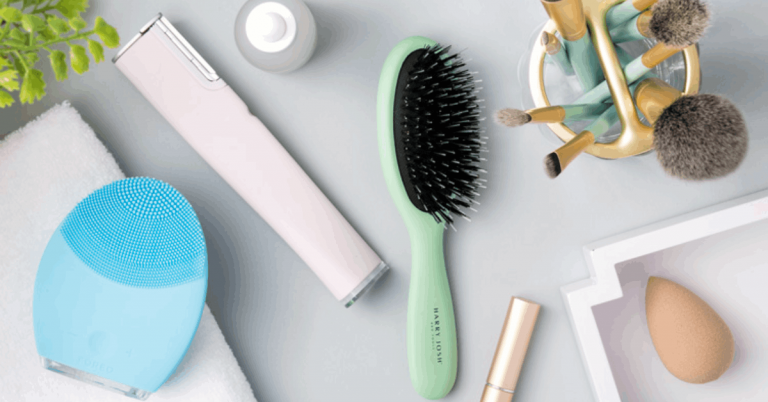
A wide-tooth comb handles wet hair without breakage. A detangling brush like the Wet Brush works on both dry styling and post-shower knots.
Skip the round brush unless you blow-dry every day. Carrying one brush that does two jobs beats carrying two that each do one.
Skincare Tools Worth the Counter Space
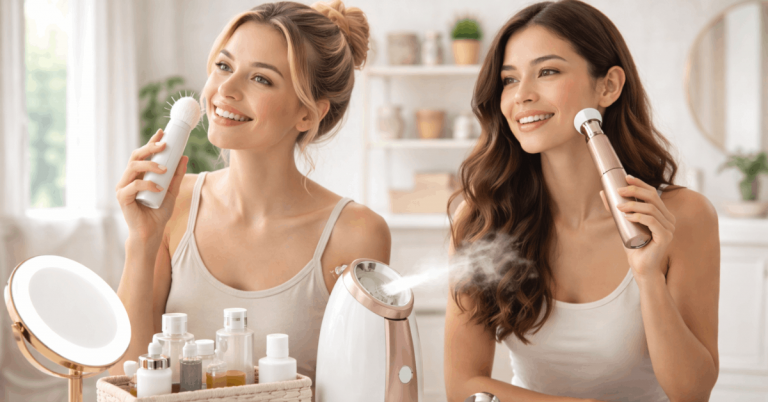
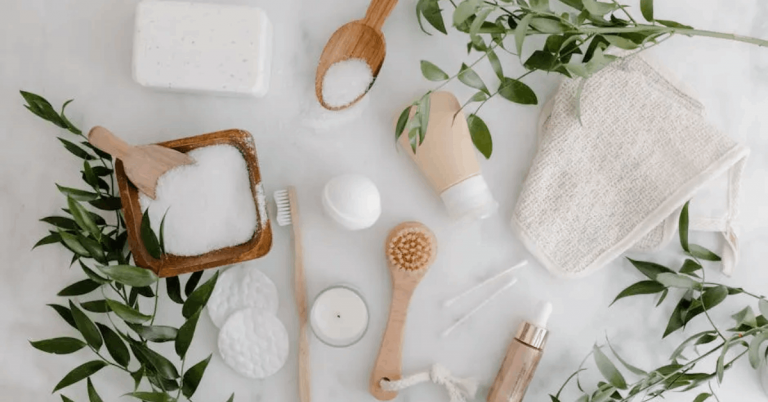
Facial cleansing brushes remove dirt and oil more thoroughly than fingers alone. Silicone scrubbers are the lowest-maintenance option: rinse, air dry, toss in a bag.
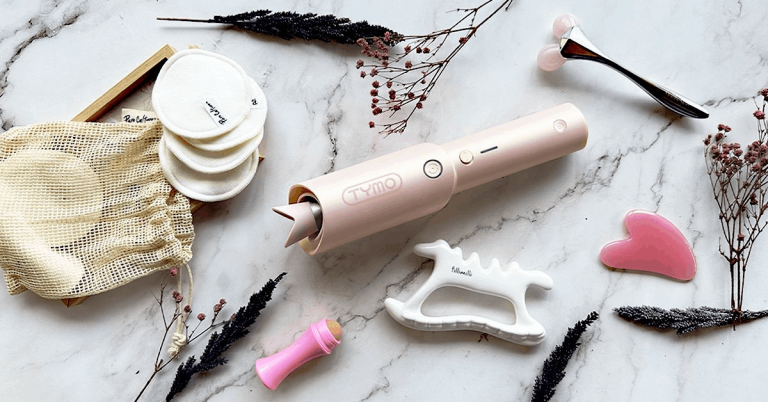
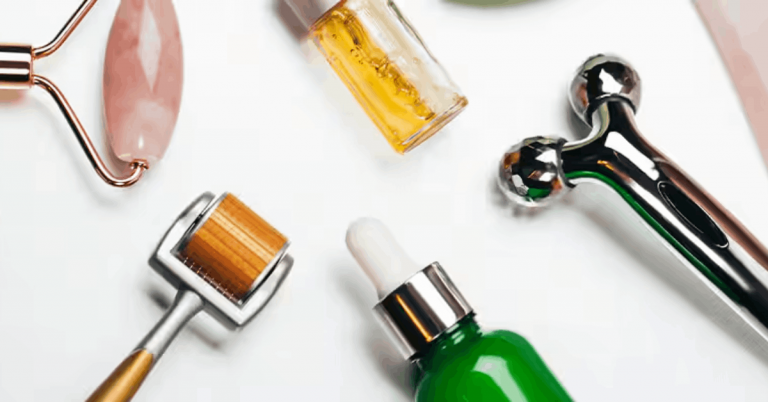
A jade or stainless steel facial roller can reduce morning puffiness. The Foreo Luna Mini is a rechargeable option that is waterproof and takes up less space than a bar of soap.
Heat Styling Devices: Pick One, Not Three
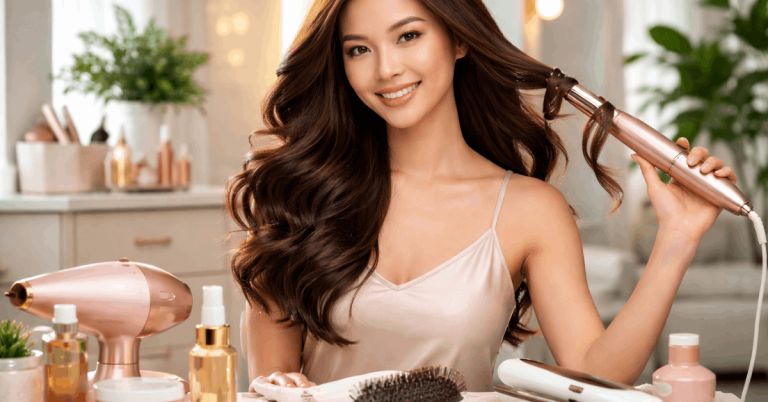
A ceramic flat iron with adjustable heat is the single best styling tool for someone who both straightens and curls. Set it to low for fine hair and medium for thicker textures.
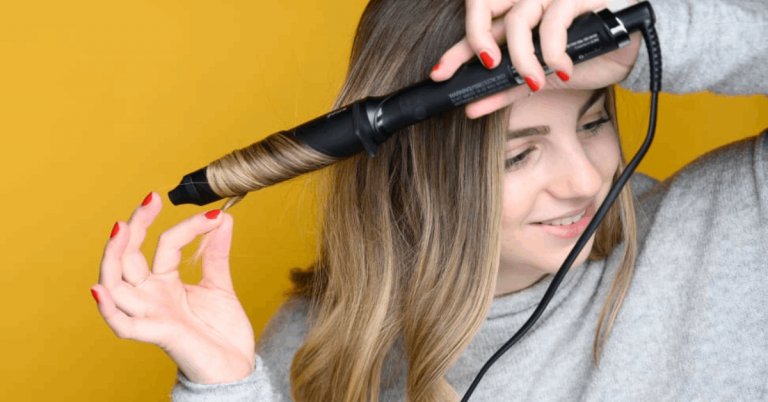
If a blow dryer is non-negotiable, go lightweight with a diffuser attachment. Skip the separate curling wand entirely. A flat iron does the same job once you learn the wrap technique, and that is one fewer cord to pack.
Makeup Brushes: The Three-Tool Rule
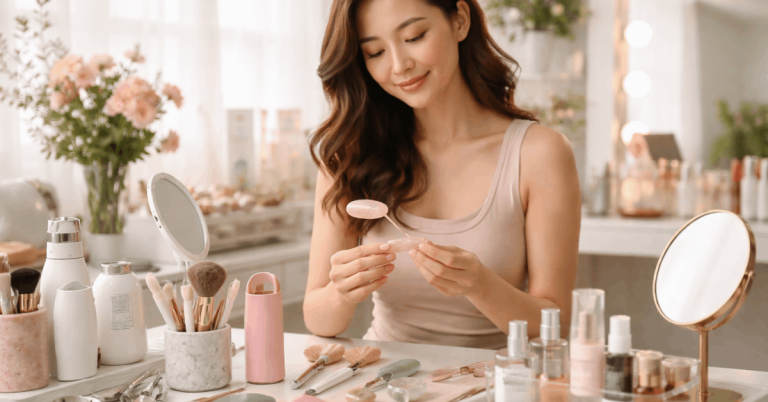
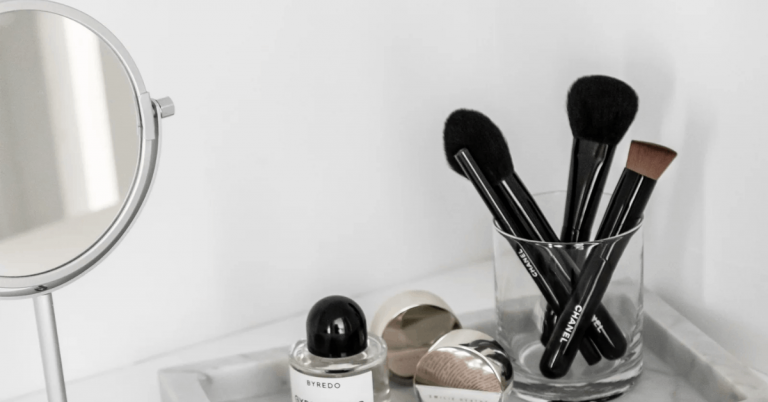
A foundation sponge, a blush brush, and a small eyeshadow brush cover most looks. Retractable versions keep bristles clean in your bag without extra cases.
Brush sets from Real Techniques and e.l.f. cost under $15 and come with compact carrying cases. An eyelash curler rounds out the kit without needing any product at all.
How to Tell If a Beauty Tool Is Actually Travel-Ready
Small does not mean portable. A bulky mini blow dryer with a rigid cord is harder to pack than a slim full-size flat iron. Size matters, but so do weight, cord flexibility, and charging method.
Size, Weight, and Power
The best travel beauty tools weigh under 12 ounces and fold or retract. Look for dual voltage (110-240V) on any heat tool. A single-voltage flat iron can fry on a European outlet, and a converter alone won’t always protect it.
USB-rechargeable devices are the easiest for travel. No adapters, no voltage worries.
Durability and Storage
Loose tools rattling in a bag get damaged fast. Hard-shell cases protect fragile items better than soft pouches. Silicone tool covers and heat-resistant wraps also work for flat irons and curling tools.
The test is simple: drop your toiletry bag from counter height. If anything inside would crack or bend, it needs better protection or a case.
Packing a Beauty Kit That Weighs Under Two Pounds
The goal is a kit that handles hair, skin, and makeup without exceeding carry-on weight limits. A realistic kit for a one-week trip looks like this:
| Tool | Home Use | Travel Use | Approx. Weight |
|---|---|---|---|
| Ceramic flat iron (dual voltage) | Daily styling | Straightening and curling | 10 oz |
| Silicone face scrubber | Nightly cleanse | Same routine | 1 oz |
| Detangling brush | Morning and night | Same routine | 3 oz |
| Retractable makeup brush set (3 pc) | Daily makeup | Same routine | 2 oz |
| Eyelash curler | Optional daily | Quick eye lift | 1 oz |
This kit weighs about 17 ounces total and handles every step of a morning routine.
A frequent traveler can pack these same five tools for a weekend or a two-week trip and never miss a full-size hair dryer.
Also read: Skincare Habits That Improve Skin Texture
Cleaning and Replacing Your Beauty Tools
Dirty tools cause breakouts and dull styling results. But the bigger problem nobody addresses: worn-out tools that still look fine. A brush with slightly bent bristles pulls and snags hair. A sponge that holds stains after washing is breeding bacteria.
When to Clean Each Tool
The schedule depends on the tool type:
- Hair brushes: remove trapped hair weekly, wash with shampoo every two weeks
- Silicone scrubbers: rinse after every use, deep clean once a week
- Makeup sponges and brushes: wash weekly with gentle soap, let air dry fully
- Heat tools: wipe the plates with a damp cloth after each use while still warm
- Facial rollers: wipe down with rubbing alcohol after each session
When to Replace Instead of Clean
Replacement timing is the part most beauty tool guides skip. A tool that performs at 70% capacity does more harm than going without it.
Replace makeup sponges every two months, even if they look clean. Hairbrushes with missing or bent bristles should go immediately. Cleansing devices that vibrate weaker than when new have lost their effectiveness. And any cracked or chipped tool is a safety issue, not a cosmetic one.
Budget-Friendly Beauty Tools That Travel Well
Good travel beauty tools do not need to be expensive. Drugstore brands carry reliable heat tools under $40. A three-piece makeup brush set from e.l.f. runs about $12. Silicone face scrubbers cost between $5 and $10 at most retailers.
The Tweezerman Travel Kit bundles brow and nail grooming tools in a compact pouch. It costs around $20 and eliminates packing individual tweezers, clippers, and a mirror.
My take on the budget question: I would rather spend $30 on one Revlon One-Step Styler that replaces three tools than $15 each on a mini dryer, mini brush, and mini iron that perform worse and cost $45 combined.
Common Mistakes When Packing Beauty Tools for Travel
Overpacking is the obvious mistake, but the subtler ones cause more problems:
- Packing full-size products when a refillable travel bottle does the same job
- Carrying single-use tools (like a standalone eyelash curler case) that waste space
- Forgetting to clean tools before a trip, which leads to breakouts in unfamiliar climates
- Choosing tools without dual voltage and hoping a plug adapter will be enough
The dual voltage issue is the one that ruins trips. A 110V-only flat iron on a 220V European outlet can overheat in seconds. Check the label on every heat tool before packing.
Questions People Ask About Beauty Tools for Travel
Q: Can I bring a flat iron in my carry-on bag?
TSA allows flat irons, curling irons, and hair dryers in carry-on luggage. Cordless butane-powered tools are the exception and usually need to go in checked bags. Always double-check airline-specific rules for international flights.
Q: How do I keep makeup brushes clean while traveling?
A small spray bottle of brush cleaner works between full washes. Spray, swirl on a towel, and let dry. This keeps bacteria low without needing soap and water at a hotel sink.
Q: Are mini beauty tools worth buying?
They can be useful if the motor and heating element match the full-size version. Many mini tools cut power along with size, which means weaker airflow or uneven heat. Compare wattage and reviews before buying the smaller version.
Q: What is the one beauty tool every traveler should pack first?
A dual-voltage ceramic flat iron covers the most ground. It straightens, curls, smooths flyaways, and works on any outlet worldwide. That one tool replaces at least two others in a typical packing list.
Q: Do silicone face scrubbers work as well as electric cleansing brushes?
For daily cleansing, silicone scrubbers perform similarly for a fraction of the price. Electric brushes offer deeper exfoliation, but they also need charging and take up more room. A $7 silicone scrubber is the smarter travel pick for anyone who wants clean skin without the bulk.
Conclusion
Fewer beauty tools in your bag means less stress and better results on every trip. The smartest travel kit starts with daily tools that already fold, recharge, and perform.
Stop buying mini versions of everything and start choosing tools that do two jobs instead. A flat iron, a face scrubber, and three brushes can handle more than a full countertop setup.