The serum collection keeps growing. The “holy grail” moisturizer changed three times this year. And somehow, your skin still feels bumpy under makeup.
If you already own good products but your skin texture still looks rough or uneven, the issue probably has nothing to do with what you are buying.
Skincare habits that improve skin texture come down to how and when you apply things. Sequence and frequency matter more than the ingredient list on any bottle.
This one trips up the people who care the most about their skin. The readers doing everything “right” are often the ones creating their own texture problems.
Why Does Skin Texture Get Worse When Your Routine Gets Better?
This sounds backward, but it happens constantly. Someone adds a chemical exfoliant, a retinol serum, a vitamin C step, and a new toner all within a few weeks. Each product is good on its own. Together, applied without spacing, they wreck the skin barrier.
A damaged barrier means moisture escapes faster than your moisturizer can replace it. The surface dries out in patches, dead cells clump instead of shedding evenly, and the skin responds with overproduction of oil to compensate.
How a Damaged Skin Barrier Creates Texture Problems
Healthy skin has a thin lipid layer that holds cells together in a smooth, even surface. That layer is made of ceramides, cholesterol, and fatty acids. Strip it too aggressively, and the cells underneath become exposed and uneven.

This is why someone using AHAs, BHAs, and retinol in the same week can end up with rougher skin than someone washing their face with a basic drugstore cleanser and nothing else. The texture gets worse because the barrier never has time to rebuild between active treatments.
Signs That Your Routine Is Causing the Problem
A few signals point to routine-induced texture damage:
- Skin feels tight or “squeaky clean” after cleansing, even when using a gentle cleanser
- Small rough bumps appear on cheeks or forehead that don’t look like typical acne
- Products that used to absorb quickly now sting or sit on top of the skin
- Flaky patches show up in areas where you apply exfoliants or retinol
If two or more of these match, pulling back on actives for 2 weeks can often tell you more than adding another product.
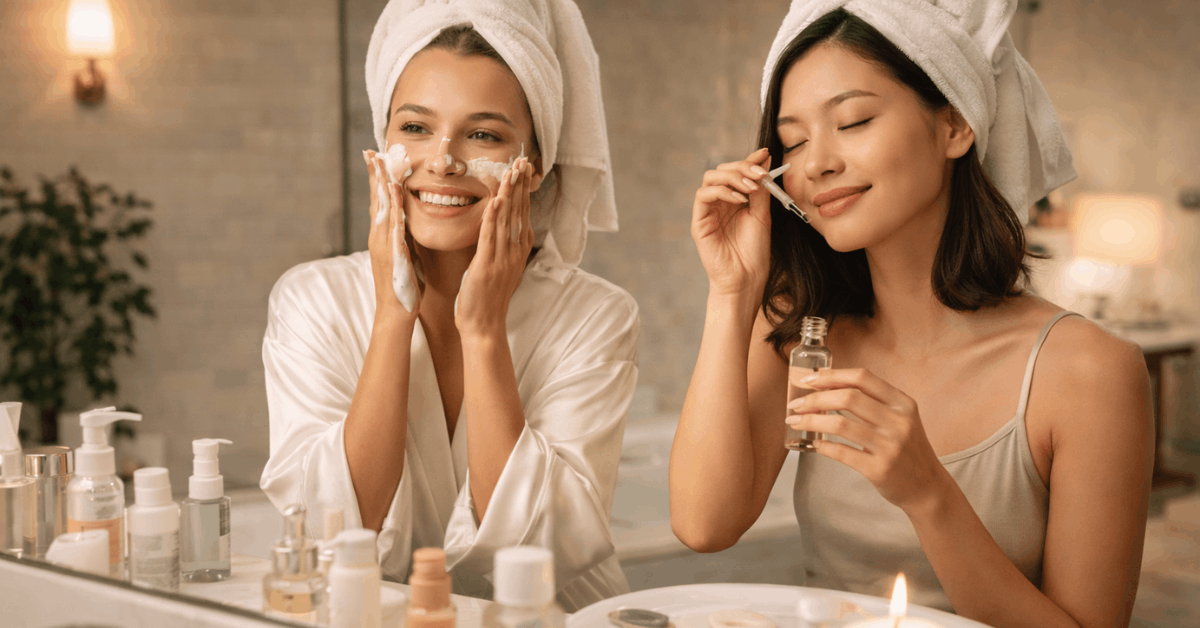
Cleansing Habits That Actually Change Skin Texture
Getting this step wrong creates a ripple effect across every other product. A cleanser that strips too much oil or leaves residue behind makes everything that follows less effective.
Picking the Right Cleanser for Texture
A pH-balanced cleanser around 5.5 protects the acid mantle while removing dirt and oil. Foaming cleansers tend to have higher pH levels, which can dehydrate the surface over time. Gel or cream cleansers sit closer to the skin’s natural pH range and work better for texture-focused routines.
I would pick a ceramide-based gel cleanser like CeraVe or La Roche-Posay over a foaming wash for anyone dealing with bumps or rough patches. The foam feels satisfying, but that squeaky feeling comes at a cost.
Double Cleansing for Sunscreen and Makeup Removal
Evening cleansing needs two steps if sunscreen or makeup was worn during the day. An oil-based first cleanse dissolves SPF and pigment. A water-based second cleanse removes whatever the oil cleanser loosened.
Skipping the first step means sunscreen residue stays trapped in pores overnight. That residue builds up over days and creates the kind of congestion that shows up as bumpy, uneven texture.
The Exfoliation Debate: Less Is More for Texture
I think the standard advice to exfoliate two to three times a week is too aggressive for the majority of people chasing smoother skin texture. Most texture complaints I see online come from people who are already exfoliating. They do not need more exfoliation. They need less.
A single weekly session with a lactic acid product at 5% to 10% concentration can deliver smoother results than three sessions with glycolic acid at higher percentages.
Lactic acid has a larger molecular size, so it works on the surface layer without penetrating deep enough to trigger irritation. Glycolic acid goes deeper, which sounds better but causes more inflammation on sensitive or barrier-compromised skin.
Chemical vs. Physical Exfoliation for Texture
| Feature | Chemical Exfoliants (AHAs/BHAs) | Physical Exfoliants (Scrubs) |
|---|---|---|
| How it works | Dissolves bonds between dead cells | Physically buffs cells off the surface |
| Risk of microtears | None | Moderate to high with large-grain scrubs |
| Best frequency | Once or twice per week | Once per week maximum |
| Best for | Dullness, clogged pores, uneven tone | Surface flaking, very dry patches |
The takeaway: chemical exfoliants give more consistent results for texture, but physical scrubs still have a place when used gently and infrequently.
When Niacinamide Beats Exfoliation
Niacinamide at 5% concentration reduces pore visibility and strengthens the skin barrier at the same time. It does the smoothing work that many people want from exfoliants, but without removing anything from the surface.
For skin that already looks irritated or over-treated, swapping an exfoliant for niacinamide for 4 weeks often produces better texture improvement than continuing to exfoliate.
Also read: Simple Skincare for Changing Weather
Moisturizing and SPF Habits That Protect Texture Long-Term
Cleansing and exfoliation get all the attention, but the two steps that protect texture day after day are moisturizing and sun protection. Skipping either one undoes the work of every other product in the routine.
Why Moisturizer Timing Matters
Applying moisturizer to damp skin within 60 seconds of cleansing traps significantly more hydration than applying to dry skin 5 minutes later. The damp surface lets humectants like hyaluronic acid and glycerin pull water inward instead of drawing moisture out of the skin when the air is dry.
Lightweight gel moisturizers work well for oily skin types. Cream formulas with ceramides suit dry or mature skin better. The texture of the moisturizer should match the skin type, not the season.
SPF and Texture Damage
UV exposure breaks down collagen and thickens the outer layer of skin over time. That thickening creates the rough, leathery feel that shows up in sun-damaged areas.
SPF 30 or higher every morning, rain or shine, is the single highest-return habit for texture. Reapplication matters when spending more than 2 hours outdoors. The American Academy of Dermatology’s sunscreen guide breaks down SPF ratings and reapplication timing clearly.
Lifestyle Habits That Show Up on Your Face
The products stop at the surface. What happens below the skin depends on sleep, diet, and stress patterns.
Sleep and Cell Turnover
Skin cell turnover peaks during sleep. Fewer than 7 hours consistently slows that renewal cycle, and dead cells accumulate faster than they shed. The result is a dull, uneven surface that no serum can fully fix.
Clean pillowcases matter too. Cotton absorbs oils and transfers bacteria back to the face every night. Changing pillowcases every 3 to 4 days, or switching to silk, reduces that overnight contamination.
Diet, Hydration, and Inflammation
High-sugar foods trigger an inflammatory response that increases oil production and slows wound healing. Omega-3 fatty acids from fish, flaxseed, or walnuts support the lipid layer of the skin barrier.
Water intake alone will not fix texture problems, but chronic dehydration makes every other issue worse. The skin is the last organ to receive water from what you drink, so consistent hydration throughout the day matters more than chugging a liter at once.
Tools and Weekly Treatments That Help Texture
A few tools can make a noticeable difference when used correctly. The wrong tool, or too much frequency, creates more problems.
Effective tools for texture improvement include:
- Silicone cleansing pads: gentler than bristle brushes, easier to sanitize, and less likely to irritate sensitive skin
- Jade rollers or gua sha stones: help with lymphatic drainage and reduce morning puffiness when used on clean, moisturized skin
- Clay masks (once per week): absorb excess oil and draw out congestion from pores without the abrasion of a scrub
Overnight exfoliating serums with lactic acid or enzyme blends handle deeper texture issues while you sleep. A short steam session before masking opens pores and helps the mask absorb more effectively.
I would avoid facial cleansing brushes with stiff bristles entirely. Even the “gentle” settings on most rotating brushes create enough friction to compromise a weakened barrier. The Paula’s Choice ingredient dictionary is a solid reference for checking whether a product or tool ingredient suits your skin type.
A Texture-Focused Routine That Keeps Things Simple
Stacking 8 products twice a day is the fastest way to overwhelm the skin. A texture-focused routine needs 4 to 5 steps maximum.
Morning: gentle cleanser, niacinamide serum or hydrating toner, moisturizer on damp skin, SPF 30+.
Evening: oil cleanser (if wearing SPF or makeup), gentle cleanser, moisturizer. Add a lactic acid exfoliant once per week in place of the evening moisturizer step.
One common mistake: introducing multiple new products within the same week. Adding one product at a time and tracking results over 2 weeks prevents the confusion of not knowing what is helping and what is hurting.
Questions People Ask About Skincare Habits That Improve Skin Texture
Q: How long does it take to see skin texture improvement?
Skin cells take about 28 days to turn over completely, so give any new habit at least 4 to 6 weeks before judging results. Faster changes usually mean you are seeing hydration effects, not structural improvement.
Q: Can drinking more water fix rough skin texture?
Water helps, but it reaches the skin last after every other organ gets its share. Topical hydration with humectants like glycerin or hyaluronic acid does more for surface texture than an extra glass of water.
Q: Is retinol good for improving skin texture?
Retinol accelerates cell turnover and can smooth texture over months of consistent use. Start at a low concentration (0.25% to 0.5%) and apply only 2 to 3 nights per week to avoid irritation that creates new texture problems.
Q: Should I exfoliate more if my skin feels bumpy?
Bumps often come from over-exfoliation or a damaged barrier, not from under-exfoliation. Cutting back to once a week and focusing on barrier repair usually clears those bumps faster than adding more acids.
Q: Do face rollers actually improve skin texture?
Face rollers temporarily reduce puffiness and may support product absorption. They will not change texture on their own, but used after serum application, they help the product spread evenly and penetrate the surface layer.
Conclusion
Smoother skin texture comes from fewer products applied at the right time, not more steps. The barrier protects everything underneath, and rebuilding it fixes problems that no serum can reach.
Tracking your skin’s response every 2 weeks keeps the routine honest and the guesswork low. Start with cleansing and moisturizer timing before buying anything new.