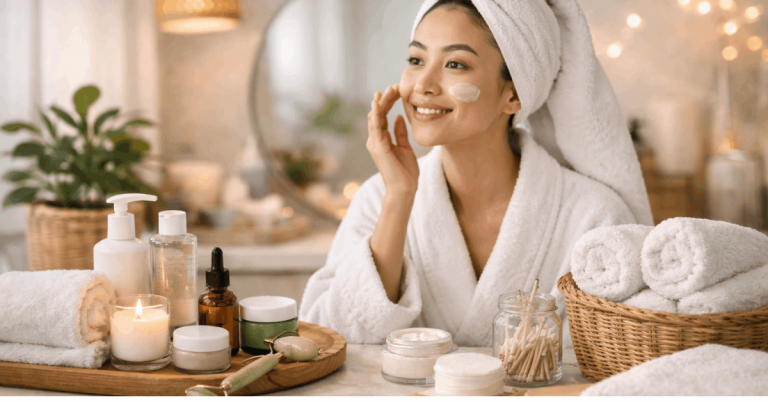
Maintaining healthy skin doesn’t have to be complicated or expensive. How to Keep Skin Healthy With Minimal Products is a topic many people are curious about as they try to simplify routines.
This guide focuses on what your skin actually needs and how to keep it functioning well with less. You’ll learn how to skip the clutter and still get real results.
Understand What Your Skin Actually Needs
Most skincare issues stem from misunderstanding your skin’s true needs. Skin health relies on balance, hydration, and protection, not a shelf full of products.

The Skin’s Basic Functions
Skin has its own natural mechanisms for repair, hydration, and protection. When functioning properly, it forms a barrier that keeps moisture in and irritants out.
Disrupting this balance with too many products can actually weaken the skin. A minimal routine helps support your skin’s built-in defenses.
Signs of a Healthy Skin Barrier
A strong skin barrier feels smooth, appears even-toned, and doesn’t react easily. You won’t feel dry, itchy, or overly oily if your skin is functioning well.
Redness, flakiness, and breakouts may indicate that your barrier is compromised. When your barrier is balanced, you’ll notice better results with fewer products.
Stick to Core Steps: Cleanse, Moisturize, and Protect
You don’t need a 10-step routine to get healthy skin. These three steps—cleansing, moisturizing, and protecting—are enough for most people.
How to Choose a Gentle Cleanser
Cleansing should remove dirt, oil, and sunscreen without stripping natural oils. Use fragrance-free, low-foam cleansers that match your skin type.
A cleanser should leave your skin feeling clean but not tight or dry. If your face feels squeaky or stings, it’s too harsh. For minimal routines, this is one product you don’t want to skip.
What to Look for in a Daily Moisturizer?
A basic moisturizer helps restore hydration and prevent moisture loss. Look for simple formulas with humectants like glycerin or hyaluronic acid.
Avoid unnecessary active ingredients like acids or retinoids in your main moisturizer. You only need one that feels comfortable, absorbs well, and doesn’t clog pores. Lightweight or richer textures depend on your skin type and climate.
Why Sunscreen Is Non-Negotiable?
UV damage is the top cause of premature aging, dark spots, and skin texture problems. Even if your routine is minimal, sunscreen is essential.
Choose a broad-spectrum SPF 30 or higher that you’ll actually wear every day. Mineral or chemical—both are fine if they suit your skin. Without sun protection, no skincare routine can keep your skin healthy in the long run.
Avoid Overusing Serums and Actives
Adding too many targeted products can backfire. Serums with strong actives like acids or retinoids can cause sensitivity or irritation when layered unnecessarily.
When Are Actives Helpful?
Use actives only when there’s a clear skin concern. For example, niacinamide for oil control, or azelaic acid for redness.
But not everyone needs them every day. Introduce one product at a time and watch how your skin reacts. Most benefits come from consistency, not quantity.
When to Skip Them Entirely?
If your skin is doing fine—no irritation, dryness, or breakouts—you don’t need extra actives. A healthy barrier often corrects minor skin problems naturally.
Less product exposure means fewer chances of allergic or adverse reactions. Focus on stability first, then only add if something specific is missing.
The Role of Consistency and Simplicity
Two short habits make the biggest impact: doing the same routine daily and keeping it simple. Your skin doesn’t need constant change.
- Consistent routines help your skin adapt and heal over time.
- Simplicity prevents ingredient overload and confusion.
- Fewer products mean less risk of interaction or irritation.
- Repetitive habits are easier to stick to, especially in busy schedules.
- You get better at spotting what actually works when the routine is minimal.
Once your routine is consistent and minimal, you’ll be able to notice when something disrupts it—and adjust with confidence.
Choose Multi-Use Products When Possible
Multifunctional products can help reduce clutter while still supporting skin health. Look for items that combine two or more essential steps.
Great Multi-Taskers to Consider
Some moisturizers now include SPF, making morning routines quicker. Cleansing balms often remove makeup and cleanse in one go.
A moisturizer with calming ingredients like centella or panthenol can double as a spot soother. These smart choices reduce how many things you apply while keeping the routine complete.
What to Watch Out For?
Just because something is labeled “multi-use” doesn’t mean it fits every routine. Be cautious with products that claim to do too much but contain overlapping actives or potential irritants.
Read the ingredients and check for simplicity. Choose only the ones that serve real function, not marketing fluff.
Know Your Skin Type and Climate Conditions
The fewer products you use, the more important it is to match each one properly to your skin type and environment.
How to Identify Your Skin Type?
Normal skin feels balanced, oily skin shines easily, dry skin flakes or feels tight, and sensitive skin reacts quickly. Combination skin has dry and oily areas.
Understanding your type helps you choose the right product texture and strength. Your skin type may also change seasonally or with age.
Adapting to Local Climate
Humid environments need lighter moisturizers; dry climates may require occlusives like squalane or shea butter. Cold weather needs more protection from wind and moisture loss.
If you travel, keep a mini set that adapts to temperature and humidity. Your minimal routine can stay the same in structure, but you may need to tweak the textures or ingredients.
Hydration Comes From More Than Skincare
External products aren’t the only source of hydration. Lifestyle and environment choices also support skin moisture levels and overall balance.
- Drink enough water throughout the day.
- Use a humidifier in dry indoor settings.
- Limit long, hot showers that dry out your skin.
- Eat hydrating foods like cucumbers, oranges, and leafy greens.
- Get enough sleep to support skin repair.
By keeping your body hydrated and well-rested, your skin reflects the benefits—no added serum required.
Signs You’re Using Too Many Products
Sometimes your skin tells you when to scale back. Watch for these indicators of product overload or imbalance.
Red Flags to Look Out For
If you see frequent redness, flaking, or small bumps, your barrier might be overworked. Sudden breakouts can happen when actives are layered too aggressively.
Shiny but dehydrated skin is another common side effect of harsh combinations. A burning or stinging sensation after applying products is a sign to pause and simplify. Always go back to basics when in doubt.
When to Consult a Dermatologist?
Even with a simple routine, professional guidance can help. Dermatologists can assess your skin and offer insight into underlying issues you can’t fix with products alone.
When Is It Time to Get Help?
If your skin shows no improvement after months of care, don’t guess—ask an expert. Chronic acne, persistent irritation, or sudden rashes should not be self-treated.

A minimal routine helps you track reactions, but some conditions need prescription support. Getting the right diagnosis will help you refine your product use even further.
Simple Habits, Healthy Results
You don’t need a cabinet full of skincare to see results. Learning how to keep skin healthy with minimal products empowers you to focus on what works.
Choose products with purpose, skip what you don’t need, and support your skin with small, consistent habits. Start simple and let your skin show you the rest.