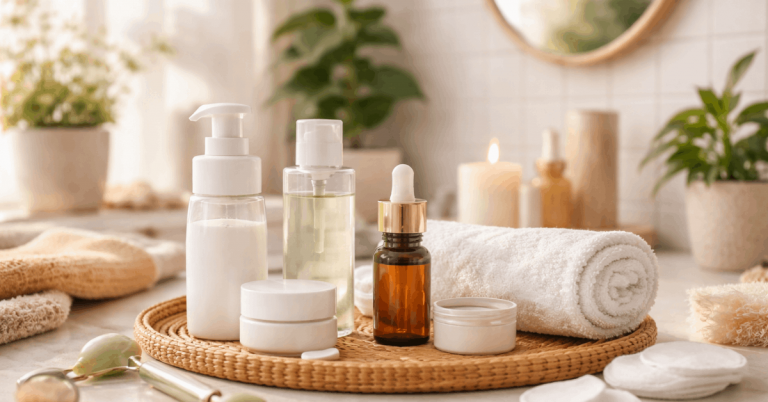
Keeping skin healthy with fewer products starts by protecting the skin barrier, not chasing every new active ingredient. A steady cleanser, moisturizer, and sunscreen covers daily needs and makes reactions easier to notice.
This helps when routines feel crowded, expensive, or hard to repeat. It leaves room for a targeted formula only when a clear concern remains.
Begin With Your Skin’s Daily Signals
Skin gives useful information through tightness, shine, flaking, breakouts, or stinging. Watch for repeat patterns and recent triggers before changing the routine.

Start With Comfort, Not a Perfect Skin Label
Oily, dry, combination, and sensitive skin can change with weather, stress, makeup, shaving, medication, or a new formula.
After cleansing, your face should feel clean but comfortable, not squeaky, hot, or tight around the mouth. Persistent flakes, redness, or sensitivity can follow over-washing, rough scrubs, or several strong products used together.
Return to gentle basics when your face feels overwhelmed, and note what preceded the change rather than buying a random fix.
Treat Flare-Ups as Clues
A shiny forehead after a humid commute does not always require a stronger cleanser, and dry cheeks do not always need an oil-heavy routine.
Notice whether a reaction began after extra sun, late-night cleansing, a new treatment, or several new items.
Keep the routine steady for a few weeks unless swelling, hives, persistent burning, or a spreading rash appears. This creates clearer feedback and prevents product hopping that hides the real trigger.
Keep Three Essentials in Rotation
Most people do not need multiple formulas for daily care. Build it around three repeatable steps that protect comfort and skin tolerance.
- Cleanse away sunscreen, sweat, and buildup.
- Moisturize to reduce uncomfortable dryness.
- Protect exposed skin with sunscreen.
Choose a Cleanser That Leaves No Tightness
A cleanser should remove sunscreen, makeup, sweat, and excess oil without leaving the face rough or uncomfortable. Use lukewarm water, fingertips, and a soft towel pressed against skin rather than dragging it.
Gel textures may suit oilier skin, while lotions or creams can suit dry or reactive skin. Avoid harsh soap and frequent scrubbing because unnecessary friction and stripping cleansers can make irritation harder to manage.
Also Read: How to Build a Simple Skincare Routine

Use Moisture to Support Everyday Comfort
Moisturizer reduces water loss, and oily complexions can still benefit from a light gel or lotion. Apply it to damp skin, then add more only where cheeks, lips, or other areas stay uncomfortable.
CeraVe PM Facial Moisturizing Lotion is a lightweight example, but texture and tolerance should guide your choice. Aim for steady hydration and an easy habit, not a layer that feels heavy by midday.
Make Sun Protection the Final Morning Step
Use broad-spectrum sunscreen with SPF 30 or higher as the final skincare step before makeup or going outdoors during the day.
Choose a formula that works with your tone, climate, and routine, because one that pills, stings, or feels greasy is less likely to be used.
Reapply according to the label after swimming, sweating, towel-drying, or time outside. Daily protection limits avoidable UV exposure and supports the work of the rest of your routine.
Be Selective With Treatments
Targeted products are optional additions, not proof that a routine is serious. Add them only after the core routine feels comfortable and easy to repeat.
Add an Active Only for a Specific Issue
Choose one concern—clogged pores, visible marks, oiliness, or uneven texture—then select a treatment for that problem.
Niacinamide, azelaic acid, retinoids, vitamin C, and exfoliating acids can suit different needs, but using several together makes reactions difficult to trace.
Start at the lowest practical frequency, follow directions, and give your skin time to settle. More frequent use is not always more effective, especially when redness, peeling, or new sensitivity appears.
Know When Your Skin Needs Less, Not More
Skip extra treatments when your face is calm, comfortable, and stable with the basics. Burning, persistent stinging, increased flaking, or clusters of small bumps can signal irritation or too many competing layers.
Simplify to cleanser, moisturizer, and sunscreen until discomfort settles, then reintroduce one item only if needed. This protects your tolerance and stops costly experimentation with products that may worsen the problem.
Adjust Texture for Weather and Daily Life
A minimal routine can stay simple through seasonal changes when you adjust texture rather than rebuild every step. Think about humidity, indoor air, and sun exposure before deciding a product has failed.
Make Small Changes Before Starting Over
Light gels and lotions may feel better in humid weather, while a cream or ointment may help dry patches during cold or air-conditioned months.
Keep the same basic order, then use less or more product where your skin needs it instead of replacing every bottle.
Shorter lukewarm showers, clean pillowcases, enough sleep, and avoiding constant face-touching can also support daily comfort and reduce avoidable stressors. These habits are not miracle fixes, but they make a minimal routine easier to maintain.
Know When to Ask a Dermatologist
A smaller routine makes changes easier to track, but it cannot diagnose every condition. Seek professional input when symptoms persist or self-treatment fails.
Persistent Symptoms Deserve More Than Trial and Error
Painful acne, scarring, spreading rashes, eczema-like patches, recurring hives, or reactions to many products deserve medical assessment.
Keep a short note of symptoms, product names, timing, and photographs taken in similar light to help a clinician see the pattern.
Prescription treatment or a diagnosis may be more useful than rotating through another group of cleansers and serums. Getting help early can reduce ongoing discomfort and costly experimentation.
Conclusion: Let a Small Routine Do Its Job
A healthy routine is one you can follow when busy, tired, traveling, or not interested in a long process. Keep cleanser, moisturizer, and sunscreen within reach, and change only what serves a clear purpose.
Notice your skin’s response before adding a treatment or replacing a product that already works. With consistent basics and less pressure to buy, your routine can stay calm, useful, and easier to maintain.