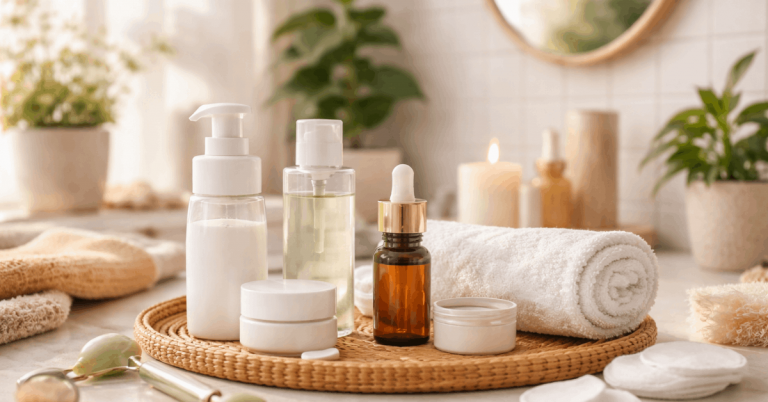
A smaller budget does not mean settling for harsh soap or random “beauty hacks.” Skincare essentials for everyday comfort begin with three jobs: remove buildup, replace moisture, and protect skin from daylight. That is enough for many people who want care that feels useful, not expensive.
This guide is for anyone who has bought trending products, then stopped using them. It shows what belongs in a routine, what can wait, and when a concern needs care. The goal is a calmer approach, not a flawless-looking shelf.
Start With What Your Skin Meets Every Day
Skin responds to more than what is on a label. Heat, sweat, shaving, makeup, hair spray, and rough towels can change how your face feels. Notice when issues happen; that daily pattern can reveal more than a review from another routine.

An oily forehead may be linked to heat or styling residue, while dry cheeks may follow a strong foaming wash. Looking at habits first stops small changes from becoming a shopping emergency. It lets you focus on useful basics rather than buying products to correct irritation caused by one habit.
Put Your Budget Into the Products You Use Most
A cleanser, moisturizer, and sunscreen come first because you use them daily. They do not need matching packaging, a luxury price, or long claim lists. Check size, directions, and skin-type advice, then choose a small routine you will genuinely use.
Treatments can wait until your basics feel comfortable. A brightening serum cannot solve a cleanser that leaves skin sore, and an exfoliant cannot replace moisture. Add something only when you can name the specific concern it should address, such as dryness, clogged pores, or roughness.
Pick a Cleanser That Does Not Leave Your Face Tight
A cleanser should remove sunscreen, sweat, and oil without leaving your face squeaky or stretched. Use lukewarm water, rub briefly, and skip daily scrubs. A gentle cleanser is easier for dry or reactive skin to tolerate.
CeraVe Hydrating Facial Cleanser is an official example for normal-to-dry skin and lists ceramides and hyaluronic acid. It is not a rule for every person. Check the price, read the label, and test a new formula on a small area before regular daily use.
Let Moisture and Sun Protection Work as One Habit
Moisturizer can reduce tightness after washing, air-conditioning, makeup, or shaving. Use broad-spectrum sunscreen in daylight; exposure happens during errands and commutes. Look for a comfortable texture that will not make you skip the step.
Cetaphil Daily Facial Moisturizer SPF 35 is an official product page for a moisturizer with sunscreen. Some people prefer fewer layers; others choose separate products. Review directions and the recommended amount, because sun protection works only when applied properly and reapplied as needed.
Treat Extras Like Tools, Not Daily Requirements
Toners, masks, exfoliants, and serums can help, but they are not always needed. Trouble begins when several are opened together or added before basics settle. Buy an extra product for a clear reason, not because it promises an overnight change.
Give one change time before deciding whether it helps. Stop immediately if there is burning, swelling, hives, or obvious worsening. Otherwise, note the start date and frequency. That makes product reactions easier to track and keeps you from replacing one uncertain choice with another.
Use a Short Pause Before You Buy
When a sale or viral video makes a product tempting, pause before adding it to your cart. This check keeps spending focused and prevents duplicates from filling the shelf:
- Does it replace something finished?
- Does it solve one clear concern?
- Can you patch-test it first?
A low price is not value when a product sits unused, irritates skin, or clashes with what you own. Avoid lemon juice, toothpaste, baking soda, and rough scrubs promoted as budget fixes. They can cause avoidable irritation, followed by spending on products meant to calm the damage.
Look Beyond the Bathroom Counter
Ordinary habits can matter as much as serums. Remove makeup before bed, wash your face after sweating, and change pillowcases regularly. This reduces residue that can make you blame the wrong product. It helps your basic routine work without more special treatments.
Food, water, and sleep deserve a realistic role. Water supports general health, but it cannot replace moisturizer, and one “clean” meal will not undo an irritating cleanser. Aim for regular habits you can afford and maintain, rather than costly supplements, detox drinks, or restrictive diets.
Check What Moves From Your Hair Onto Your Face
Bumps around the temples, forehead, jawline, neck, or upper back may come from hair products, not face cream. Leave-in conditioner, oils, wax, dry shampoo, and heat protectants can reach skin and pillowcases. Wipe your hairline after styling and look for repeat patterns.
You do not need to throw away every hair product at once. Try rinsing more thoroughly, keeping heavy formulas away from your forehead, or changing pillowcases more often for a week. This may reveal a likely trigger before you buy acne treatments that do not address the cause.
Also Read: Best Detangling Brushes for Everyday Hair Care
Know When a Simple Routine Needs More Than DIY Care
Simple care is a sensible start, but it cannot diagnose painful cysts, spreading redness, swelling, open skin, severe itching, or repeated reactions to gentle products. Those signs deserve individual guidance from a dermatologist or qualified health professional, not stronger exfoliants.
Bring a short list of products and a timeline of when symptoms began. Note whether sun, heat, shaving, a hair product, or a new formula makes things worse. That helps separate temporary irritation from a condition that needs a different plan and can prevent unrelated purchases.
Keep the Routine You Can Still Afford Next Month
The most useful routine is one you can follow when life changes or a bottle runs out. Keep cleanser, moisturizer, and sunscreen where you will reach for them. Let an empty bottle, not advertising, tell you when to shop. A repeatable routine is easier to keep and adjust.
Start with products that solve ordinary needs, then add an extra only when it earns a clear place. Give skin time to respond before deciding something has failed. That is the point of skincare essentials for everyday comfort: fewer steps, better reasons for each purchase, and habits that do not demand too much money or attention.