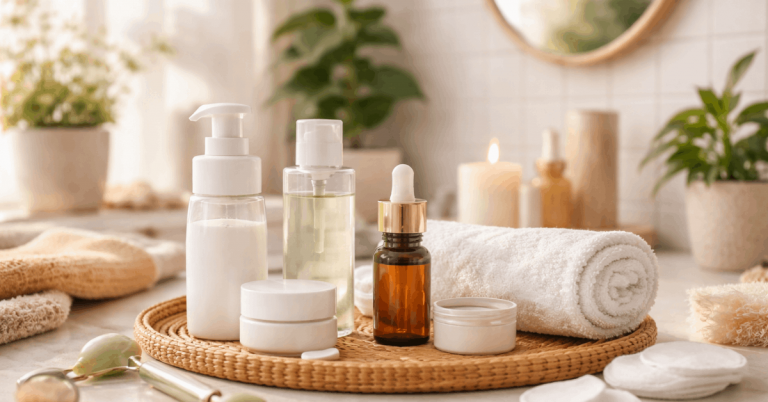
Somewhere around your tenth serum purchase, a familiar thought creeps in. Why does your skin still look the same after years of buying products?
That question haunts anyone who has tried retinol, niacinamide, hyaluronic acid, and vitamin C without seeing real change. The products were never the problem.
Long-term skin health depends on boring things. Consistency, sun protection, clean tools, and a routine short enough that you’ll do it when you’re exhausted on a Tuesday night.
This is a skincare tips guide built for the person who has tried everything except sticking with three steps for six straight months.
How Your Skin Actually Works And Why That Matters for Your Routine
Skincare articles love jumping straight to product recommendations. But spending two minutes understanding what your skin does on its own changes how you treat it forever.
Your skin has layers, and each one has a specific job. The outer layer, the epidermis, blocks bacteria, pollution, and UV rays. Below that, the dermis holds collagen and elastin, the proteins that keep skin firm. The deepest layer stores fat and connects skin to muscle.
Why Your Skin Barrier Breaks Down
Damage happens when the epidermis loses its ability to hold moisture and block irritants. Harsh cleansers, over-exfoliation, and unprotected sun exposure all weaken this barrier.
Once the barrier cracks, everything gets worse fast. Redness, dryness, breakouts, and sensitivity all trace back to the same root cause: a stripped barrier that can’t do its job.

I think the biggest mistake people make is treating symptoms like acne or flakiness with more products when the real fix is to stop using so many products and let the barrier repair itself over 4 to 6 weeks.
Collagen, Moisture, and Cell Turnover
Three processes keep skin looking young. Collagen production gives structure. Moisture retention keeps skin plump. Cell turnover replaces dead cells with fresh ones.
All three slow down with age. Collagen production drops roughly 1% per year after age 20, according to dermatological research published through the American Academy of Dermatology. That math adds up quietly.

The goal of any long-term skincare routine is to support these three processes without interfering with them. A lot of trendy products do the opposite.
A Daily Skincare Routine That Survives Real Life
The gap nobody talks about in skincare content is routine survivability. A 9-step Korean skincare routine sounds great on a Sunday afternoon. On a Wednesday at 11 PM after a long day? That routine dies.
The 3-Step Foundation
A routine that lasts needs to be short enough for your worst day. Three steps handle 90% of the work:
- Gentle cleanser: Removes dirt and oil without stripping moisture. Foaming cleansers can be too harsh for dry or sensitive skin types.
- Moisturizer matched to your skin type: Gel-based for oily skin, cream-based for dry skin. Apply to slightly damp skin for better absorption.
- Broad-spectrum SPF 30 or higher every morning: This single step prevents more visible aging than any serum on the market.
That’s it. Everything else is a bonus layer, not a requirement.
Also read: Why Hair Care Routines Fail and How to Fix Them
Nighttime Additions That Are Worth It
The PM routine can be slightly longer because there’s no sunscreen step. After cleansing, a retinol product applied 2 to 3 times per week accelerates cell turnover and supports collagen.
Follow retinol with a heavier moisturizer or a dedicated night cream. The skin repairs itself during sleep, and a thicker barrier cream locks moisture in during that process.
One thing I’d push back on: the widespread advice to use retinol every single night right from the start. Starting at 2 to 3 times per week and building up over 6 to 8 weeks prevents the irritation that makes people quit retinol entirely.
Weekly Skincare Habits That Build on Daily Care
Daily routines handle maintenance. Weekly habits target deeper issues like texture, buildup, and congestion.
Exfoliation Done Right
Exfoliate once or twice per week to clear dead skin cells. Chemical exfoliants like AHAs (glycolic acid, lactic acid) or BHAs (salicylic acid) tend to work more evenly than physical scrubs.
Over-exfoliation is one of the fastest ways to destroy your skin barrier. Signs of overdoing it include tightness after washing, increased redness, and sudden sensitivity to products that never bothered you before.
Face Masks for Targeted Concerns
Masks work best when matched to a specific need rather than used randomly. Clay masks pull excess oil and work well for congested, oily skin. Hydrating sheet masks deliver a moisture boost for dry or dehydrated skin.
Limit masks to once a week. Using them more often creates dependency where your skin expects external hydration instead of retaining its own.
Skincare Tools: Are Jade Rollers and Derma Rollers Worth the Hype?
The skincare tool market has exploded in the last few years. But I think most people should skip jade rollers and gua sha stones entirely until their basic routine has been consistent for at least 3 months. Tools are the final 5% of skincare, and spending money there before the first 95% is solid is just a distraction.
That said, some tools do have real uses when added at the right time.
Facial Cleansing Brushes vs. Your Hands
Soft-bristle facial brushes remove product buildup and dead skin more thoroughly than hands alone. They provide light exfoliation without aggressive scrubbing.
The catch: these brushes need to be cleaned after every single use. A dirty brush sitting in your bathroom collects bacteria fast and turns a skincare tool into a breakout machine.
| Tool | Best For | Frequency | Biggest Risk |
|---|---|---|---|
| Facial brush | Deep cleansing, light exfoliation | Daily or every other day | Bacterial buildup if not cleaned |
| Jade roller / Gua sha | Reducing puffiness, product absorption | 3-4 times per week | Minimal risk, low reward without serum |
| Derma roller (0.25mm) | Collagen stimulation, texture improvement | Once per week maximum | Infection if not properly disinfected |
The tool that carries the most risk is the derma roller. Rolling tiny needles across your face creates micro-injuries. Those injuries need a sterile tool and a clean face, otherwise you’re pushing bacteria directly into open skin.
Derma Roller Safety Rules
Never use a derma roller over active acne, open wounds, or irritated skin. Disinfect the roller before and after each session with 70% isopropyl alcohol. Follow rolling with a hydrating serum, not an active ingredient like vitamin C or retinol that could cause burning.
Limit derma rolling to once per week at most. Replace the roller head every 3 to 4 weeks as the needles dull and become less hygienic.
Lifestyle Habits That Affect Skin More Than Products
A $200 serum can’t outperform a bad diet and 4 hours of sleep. Skin reflects internal health as much as external care.
Food and Water
Hydration starts internally. Drinking enough water keeps skin cells functioning properly, and dehydration shows up as dullness and fine lines before it shows up as thirst.
Foods rich in omega-3 fatty acids (salmon, walnuts, flaxseed) and antioxidants (berries, leafy greens) support the skin’s repair process. Processed sugar and dairy trigger inflammation in some people, which shows up as breakouts along the jawline and cheeks.
Sleep, Stress, and Your Skin Barrier
Chronic sleep deprivation weakens the skin barrier and increases cortisol, which raises oil production. The result is a cycle of oily, irritated skin that no cleanser can fix because the problem is happening from the inside.
Managing stress directly improves skin stability. This isn’t wellness fluff. Cortisol measurably increases sebum production, and chronically high cortisol levels accelerate collagen breakdown.
Environmental Protection Beyond Sunscreen
UV protection matters all year, not just in summer. But pollution is a second, less discussed threat. Particulate matter from car exhaust and industrial emissions settles on skin and generates free radicals that break down collagen.
An antioxidant serum applied under sunscreen in the morning adds a second layer of defense against environmental damage. Vitamin C serums are the most studied option for this purpose, according to research indexed through PubMed.
Skincare Adjustments by Age Group
Skin needs shift over time, and the routine that worked at 22 won’t cut it at 40. Adjusting products and tools by decade keeps care matched to what your skin is doing right now.
Teens Through Mid-20s
Stick to mild, fragrance-free cleansers and lightweight moisturizers. Sunscreen daily. Skip heavy anti-aging products because your collagen production is still at its peak. The biggest priority at this stage is not creating damage, but repairing it.
Late 20s Through 40s
This is when retinol, peptides, and heavier moisturizers start earning their place. Night repair creams become useful as cell turnover slows. Facial massage tools like gua sha can improve circulation and product absorption at this stage.
Eye creams with peptides can help with fine lines around the eyes, where skin is thinnest and shows age earliest.
50s and Beyond
Deep hydration becomes the top priority. The skin produces less oil naturally, so stripping cleansers cause more harm than ever. Choose cream-based cleansers and rich moisturizers. Gentle chemical exfoliation once a week removes buildup without irritation.
Tool Hygiene Mistakes That Cause Breakouts
Dirty tools are worse than no tools at all. Keeping them clean takes seconds and prevents the most common tool-related skin problems.
Follow these rules for every skincare tool you own:
- Wash brushes and rollers with mild soap after each use and let them air dry completely
- Replace brush heads or sponge attachments every 3 to 4 weeks
- Store tools in a clean, dry space away from bathroom humidity where mold and bacteria thrive
- Disinfect derma rollers with isopropyl alcohol before and after every session
Skipping these steps turns helpful tools into a direct cause of the breakouts and irritation you’re trying to fix.
Questions People Ask About Skincare Tips for Long-Term Skin Health
Q: How long does it take to see results from a consistent skincare routine?
Skin cell turnover takes roughly 28 days for younger adults and longer as you age. Plan on 6 to 12 weeks of a consistent routine before judging whether products are working for your skin.
Q: Can I use retinol and vitamin C together?
These two ingredients can be used in the same routine but work better when separated. Vitamin C goes on in the morning under sunscreen, and retinol goes on at night. Layering both at the same time can cause irritation for sensitive skin.
Q: Do I still need sunscreen if I work indoors all day?
UVA rays pass through windows, so yes. Anyone sitting near a window during the day is getting UV exposure. SPF 30 on your face in the morning takes 30 seconds and prevents cumulative damage over years.
Q: Are expensive skincare products better than drugstore options?
Price has a weak correlation with effectiveness. A $12 moisturizer with ceramides and a $60 one can perform identically. Look at the ingredient list and concentration rather than the brand name or packaging.
Q: How do I know if I’m over-exfoliating?
Tightness after washing, stinging when applying products that never bothered you, visible redness, and increased breakouts are all warning signs. Pull back to cleansing and moisturizing only for 2 weeks and let the barrier recover.
Conclusion
Lasting skin health comes from a short routine done consistently, not a complicated one done occasionally. Tools and serums add small gains on top of a strong daily foundation of cleanser, moisturizer, and sunscreen.
Adjust your products as your skin changes with each decade rather than chasing every new trend. The best skincare routine is the one boring enough that you’ll still be doing it six months from now.