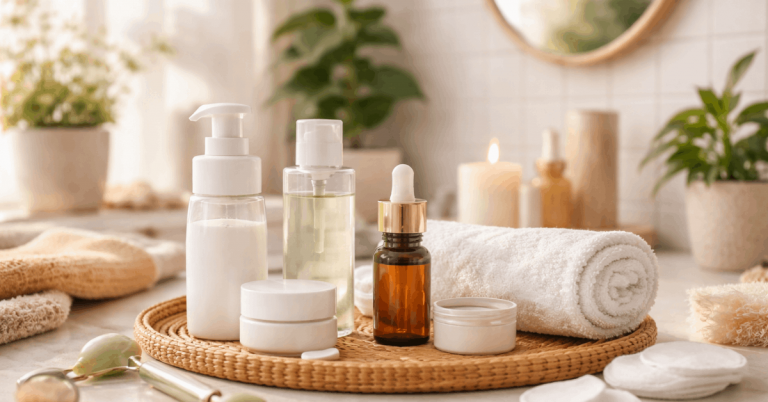
That new serum arrived yesterday. The toner sits next to three other toners. Your shelfie looks incredible, but your skin has never been angrier.
Skincare mistakes rarely come from laziness. They come from doing too much, too fast, with too many products fighting each other on your face.
The frustrating part? Every skincare article tells you to add something. Few of them tell you what to stop doing, and that second list matters far more.
So let’s talk about the skincare mistakes that are silently making things worse, and the one piece of common advice I think is flat-out wrong.
Why Layering More Products Makes Your Skin Worse
The 7-step and 10-step routines that blew up on social media created a generation of skincare collectors. People own serums they bought because of a 30-second video, not because their skin needed them. The result is routine overload, where the products themselves become the problem.
When too many active ingredients hit your skin at once, they compete. Some cancel each other out. Others create irritation that looks like a breakout, so you add another product to fix the breakout. And the cycle gets worse.
Active Ingredients That Fight Each Other
Vitamin C and retinol are the classic bad pairing. Both are effective on their own, but layering them together in a single routine often causes redness and peeling. The fix is simple: vitamin C in the morning, retinol at night.
Chemical exfoliants stacked on retinol create a similar problem. AHAs, BHAs, and retinol all increase skin cell turnover. Combining them without spacing creates a raw, sensitized surface that takes weeks to calm down.
I think the whole concept of a “routine” with more than 4 products is doing more damage than skipping skincare entirely, because at least skipping skincare lets your skin barrier stay intact.
A cleanser, a moisturizer, a sunscreen, and one active ingredient targeted at your specific concern: that covers it. Everything beyond that needs a reason, not just a TikTok recommendation.

The 4-Week Testing Rule
Switching products every few days makes it impossible to know what works. Skin cells take roughly 28 days to complete a turnover cycle, which means a new product needs at least 4 weeks before you can judge whether it’s helping.
The temptation to swap is strong, especially when a product doesn’t show instant results. But quitting a retinol after 10 days because you’re purging means you stopped right before the purging was about to end.
One product at a time. Four weeks minimum. That’s the only way to build a routine that makes sense for your skin instead of your feed.
Skincare Mistakes That Damage Your Skin Barrier
Your skin barrier is a thin layer of lipids that holds moisture in and keeps irritants out. When it’s damaged, everything stings, everything flakes, and your skin looks dull no matter how many hydrating products you apply. The barrier damage usually comes from the cleansing step, not the treatment step.
Overcleansing Strips More Than Dirt
I think twice-a-day cleansing is too much for most people, and this is where I disagree with the standard advice. Almost every skincare article says to cleanse morning and night. But morning skin hasn’t been exposed to pollution, sunscreen, or makeup.

It’s been against a (hopefully clean) pillowcase for 8 hours. A splash of lukewarm water in the morning is enough for the majority of skin types.
Harsh cleansers used twice daily strip the natural oils your skin produces overnight. Those oils aren’t dirt. They’re part of your barrier. Removing them forces your skin to overproduce oil during the day, which leads to the exact shine and breakouts you were trying to avoid.
Save the cleanser for your evening routine, when you’re removing sunscreen, makeup, sweat, and pollution. That’s when a gentle, pH-balanced cleanser earns its place.
Hot Water and Your Moisture Barrier
Water temperature matters more than the cleanser brand. Hot water dissolves the lipid layer that keeps your skin protected, and the damage is immediate. That tight, “squeaky clean” feeling after a hot shower? That’s your barrier being stripped.
Lukewarm water is the move for face washing. If you can’t tell whether the water is warm or cool, that’s the right temperature.
Here’s a test most people skip: after washing your face, wait 15 minutes without applying anything. If your skin feels tight and dry, the water was too hot or the cleanser was too harsh. Healthy skin should feel comfortable in that window, not desperate for moisturizer.
Sunscreen Mistakes People Make Every Morning
Sunscreen gets the most universal advice of any skincare product: wear it daily, SPF 30 or higher, reapply every 2 hours. That advice is correct. But how people apply sunscreen is where things break down, and the application errors matter almost as much as skipping it entirely.
SPF Indoors and on Cloudy Days
UVA rays penetrate glass. That means the window next to your desk at home or in the office is letting UV radiation reach your skin. Cloudy days aren’t a free pass either. Up to 80% of UV rays pass through clouds, according to the American Academy of Dermatology.
Daily SPF application, even on days when you don’t go outside, is one of the few non-negotiable habits. A broad-spectrum SPF 30 is the minimum.
The Amount Problem Nobody Talks About
The right SPF means nothing if the amount is wrong. A pea-sized drop doesn’t cover your face. The recommended amount is roughly two finger-lengths of product, which is about a quarter teaspoon.
Skipping the neck and chest is the other common error. These areas get the same sun exposure as your face and show aging faster because the skin is thinner. Extend your sunscreen application down to the collarbone.
Make sunscreen the last step of your morning skincare. Let it sit for a few minutes before applying makeup. And reapply every 2 hours if you’re spending time near windows or outdoors.
| Sunscreen Habit | Common Mistake | Better Approach |
|---|---|---|
| Amount applied | Pea-sized drop for the whole face | Two finger-lengths (quarter teaspoon) |
| Coverage area | Face only | Face, neck, chest, and ears |
| Reapplication | Once in the morning, done | Every 2 hours during sun or light exposure |
| Cloudy day use | Skipped entirely | Applied normally (up to 80% UV penetrates clouds) |
The biggest gap in sunscreen advice is the amount, not the SPF number.
Also read: Simple Skincare Habits That Make a Difference
Habits Outside Your Bathroom That Wreck Your Skin
Products are only one part of skin health. What happens between your morning and evening routines has a measurable effect on breakouts, texture, and aging. The bathroom shelf gets all the attention, but the kitchen, bedroom, and stress levels matter just as much.
Diet, Sleep, and Stress
Sugary and processed foods spike insulin, which increases oil production and can trigger acne flares. This connection between diet and skin is well-documented, though it gets buried under product recommendations.
Sleep is when skin cells repair. Consistently getting fewer than 7 hours leads to puffiness, uneven skin tone, and faster development of fine lines. No serum replaces a full night’s sleep.
Chronic stress raises cortisol, which triggers inflammation. That inflammation shows up as redness, sensitivity, and sudden breakouts. Managing stress through exercise, rest, and downtime has a direct effect on how your skin looks.
Things that damage your skin outside your routine:
- Dirty pillowcases collect bacteria, oil, and dead skin cells that press into your face for 8 hours
- Touching your face transfers bacteria from your hands into pores, especially along the jawline
- Dehydration makes skin tight and flaky, and no topical moisturizer fully replaces drinking water consistently
Expired Products and Dirty Tools
Skincare products have a shelf life, and using them past that date can cause irritation. The PAO symbol (a small jar icon with a number) on the packaging tells you how many months a product lasts after opening. A typical moisturizer lasts 6 to 12 months once opened.
Products that change color, smell, or texture should be thrown away immediately. Storage matters too: direct sunlight and heat degrade active ingredients like vitamin C and retinol faster than their listed expiration date.
Brushes, sponges, and spatulas need weekly cleaning. Double-dipping fingers into jars contaminates the product. Pump bottles and tubes are more hygienic than open-jar packaging.
Knowing Your Skin Type Changes Everything
People spend money on products designed for skin types they don’t have. Oily skin gets loaded with drying astringents that make oil production worse. Dry skin gets lightweight gel moisturizers that evaporate before doing anything useful.
A simple test: wash your face with a gentle cleanser, wait 30 minutes with nothing on it, then observe. If your T-zone is shiny but your cheeks feel normal, that’s combination skin. If everything feels tight, that’s dry. If everything shines, that’s oily.
The price of the product doesn’t determine how well it works. Expensive lines often contain fragrance and filler ingredients that look good on the label but irritate skin. The Cleveland Clinic’s dermatology resource page has a solid breakdown of ingredient types worth checking before buying anything new.
I think expensive skincare is one of the biggest traps in the industry, specifically because a $12 CeraVe moisturizer with ceramides outperforms most $60+ department store creams that rely on fragrance and packaging over formulation.
Questions People Ask About Skincare Mistakes
Q: Can skincare products cause acne even if they say “non-comedogenic”?
That label isn’t regulated by the FDA, so brands can use it freely. Test any new product on a small area for a week before applying it to your full face, and watch for tiny bumps along the jawline or forehead.
Q: How do I know if my skin barrier is damaged?
The signs are stinging when applying products that didn’t sting before, persistent redness, and skin that feels tight even after moisturizing. Pulling back to just cleanser, moisturizer, and SPF for 2 to 4 weeks usually lets the barrier repair itself.
Q: Is double cleansing every night necessary?
Only if you wear heavy makeup or waterproof sunscreen. For bare-skin days, a single gentle cleanser is enough. Over-cleansing at night defeats the purpose of double cleansing, which is to remove product buildup without stripping oils.
Q: Should I stop all actives if my skin is irritated?
Temporarily, yes. Drop retinol, exfoliants, and vitamin C until the irritation calms down. Stick with a bare-bones routine of gentle cleanser, fragrance-free moisturizer, and SPF for at least 2 weeks before reintroducing one active at a time.
Q: Does drinking more water clear up skin?
Hydration helps skin function, but water alone won’t fix acne or texture issues caused by product reactions or hormonal changes. Think of water as a baseline, not a treatment.
Conclusion
Skincare mistakes usually happen because people do too much, not too little. Cutting your routine to the essentials gives your barrier room to recover.
A simple, consistent approach with the right products for your skin type beats any 10-step routine. The best thing you can do for your skin this week is remove one product, not add another.