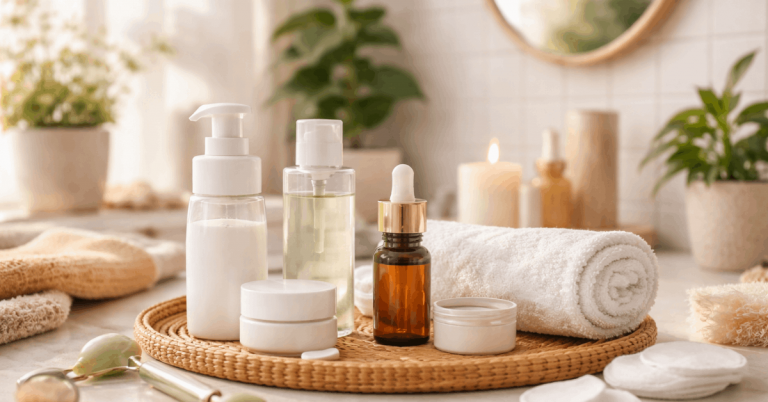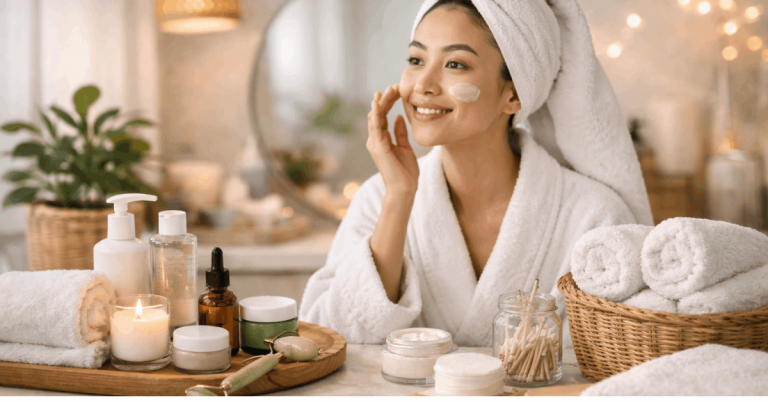
Taking care of your skin doesn’t have to be complicated. Skincare basics for beginners will help you avoid confusion and make better choices from the start.
Many people struggle to begin because they don’t know what works. This guide walks you through simple steps and everyday habits to care for your skin with confidence.
Know Your Skin Type First
Before choosing any product, understand your skin type. This affects which ingredients work best and how your skin reacts to products.
Skincare basics for beginners start with recognizing the difference between oily, dry, combination, and sensitive skin. This ensures you avoid irritation and build a routine that actually helps.
Oily, Dry, or In-Between?
Oily skin often looks shiny and feels greasy by midday. Dry skin feels tight, may flake, and often lacks natural glow.
Combination skin has an oily T-zone and dry cheeks. Sensitive skin tends to react quickly to new products.

How to Identify It at Home?
After washing your face, wait 30 minutes without applying anything. If your skin feels dry or flaky, it’s dry.
If it looks shiny all over, it’s oily. If it’s shiny in the T-zone but dry on the sides, it’s a combination.
Why This Step Matters?
Using the wrong product for your skin type can lead to breakouts or dryness. You’ll waste money and time.
Knowing your skin type guides you toward better results and easier product choices. This is the foundation of a working skincare routine.
Build a Simple Routine That Works
You don’t need ten steps to get results. The key is staying consistent with the basics.
In skincare basics for beginners, three steps are often enough: cleansing, moisturizing, and sun protection. Each plays a different role in keeping your skin balanced and healthy.
Cleanser
A good cleanser removes oil, dirt, and buildup without drying your skin. Choose a gentle, fragrance-free option for daily use.
Avoid harsh scrubs or soaps, which can damage the skin barrier. Wash your face twice daily, in the morning and before bed.
Moisturizer
Hydration is essential for every skin type. Moisturizers help trap water and strengthen your skin barrier.
Choose a light gel for oily skin or a cream for dry skin. Apply it after cleansing while your skin is still slightly damp.
Sunscreen
Sun exposure is the top cause of early aging and skin damage. Use a broad-spectrum sunscreen with SPF 30 or higher.
Apply it every morning, even on cloudy days. If you’re outdoors, reapply every 2 hours.
Helpful Extras to Consider
After you’ve mastered the basics, you can slowly add more steps. These additions are optional but can help with concerns like acne or dull skin. Stick to one change at a time to avoid reactions.
Exfoliants
Exfoliation removes dead skin and unclogs pores. Start with once a week using a gentle exfoliant.
Choose between chemical (like AHAs) or physical (like soft scrubs). Don’t overdo it, especially if your skin is sensitive.
Serums
Serums are lightweight formulas with active ingredients. Niacinamide helps with redness and pores, while hyaluronic acid boosts hydration.
Apply serums after cleansing and before moisturizing. Use only one at a time if you’re new to them.
Toners
Toners help rebalance the skin after cleansing. Some hydrate; others control oil. Pick an alcohol-free formula that suits your skin type. Apply with clean hands or a cotton pad.
Start With a Simple Day and Night Plan
Beginners often wonder when to use each product. A consistent routine will help your skin adapt and improve. The steps stay mostly the same morning and night, with sunscreen added during the day.
Morning Routine
Clean your face with a gentle cleanser. Apply a lightweight moisturizer suited to your skin type. Finish with sunscreen as the final step. Keep your routine fast and easy to stick with.
Evening Routine
Remove makeup if you wore any, then cleanse. Apply a serum or toner if needed. Use a richer moisturizer before bed. This gives your skin time to recover overnight.
Adding Products Slowly
Introduce one new product every two weeks. Watch for signs of irritation or breakouts. This way, you can pinpoint what works. Patch-test new items before using them all over your face.
Tips for Buying the Right Products
Shopping for skincare can feel overwhelming. Stick to simple, beginner-safe products with minimal ingredients. Avoid hype and read labels carefully to avoid irritation.
Ingredient Basics
Look for fragrance-free, non-comedogenic options. Avoid alcohols and essential oils if you have sensitive skin.
For hydration, look for hyaluronic acid or glycerin. For acne, salicylic acid or benzoyl peroxide may help.
Avoid Marketing Traps
More expensive doesn’t mean better. Don’t buy a 10-step set if you only need three products. Influencer trends don’t always work for everyone. Focus on what suits your skin.
Stick to Drugstore Brands
Brands like CeraVe, Cetaphil, or The Ordinary offer effective, affordable options. You don’t need luxury products to get good results.
Consistency matters more than brand names. Save money by building your routine slowly.
Everyday Habits That Make a Difference
Skincare isn’t just about products. Simple daily habits can support your routine and protect your skin. These practices are low-effort but give strong results over time.
Healthy Sleep and Water Intake
Lack of sleep can cause puffiness and dullness. Aim for at least 7 hours a night. Drink enough water to support hydration from within. Skin reflects how your body feels.
Keep Things Clean
Wash pillowcases and towels regularly. Clean your phone screen and avoid touching your face. These small steps reduce bacteria on your skin. Fewer bacteria mean fewer breakouts.
Hands Off Your Face
Don’t pop pimples or pick at scabs. It can lead to scarring and slow healing. Apply spot treatments instead. Use cotton swabs, not fingers, for skincare applications.

When Things Don’t Go as Planned?
Even with a good routine, things can go wrong. Breakouts or irritation can happen when starting new products. Don’t panic; your skin may need time to adjust.
Purging vs Reaction
Purging happens when actives speed up cell turnover. This brings pimples to the surface quickly.
It usually clears within weeks. A bad reaction causes burning or rash and means you should stop the product.
Don’t Use Everything at Once
Stick to 3–4 core products. Too many activities can weaken your barrier. Give each product time to show results. Skincare takes weeks, not days.
When to Ask for Help?
Sometimes, professional guidance is necessary to move forward. If you’ve tried multiple beginner-safe products with no results, take the next step.
- If skin issues continue beyond 4 weeks, seek help from a dermatologist.
- You may need prescription products tailored to your condition.
- A professional can help you avoid unnecessary mistakes or irritation.
- Dermatologists can identify underlying causes like allergies or hormonal acne.
- Getting help early prevents long-term skin damage and frustration.
Keep Your Routine Realistic and Consistent
Too many steps can discourage you. Focus on what fits your time and lifestyle. A simple routine done daily will always beat a long one you can’t follow.
Don’t Rush Results
Skin cycles take 28–42 days. Give products at least a month before judging. If it works slowly, that’s normal. Quick fixes rarely last.
Adjust With the Seasons
In cold weather, use richer moisturizers. In summer, you may need lighter products. Adjust but don’t overhaul. Your skin needs stability.
Listen to Your Skin
If your skin feels tight or stings, simplify. Don’t chase perfect skin—aim for healthy, calm skin. Progress is personal. What works for others may not suit you.
Your Skin Routine, Your Rules
You don’t need a shelf full of products to care for your skin. The second sentence of this guide introduced skincare basics for beginners, and now you know how to build a routine that fits your needs.
Keep it simple, stay consistent, and listen to your skin. Progress takes time, but the results will show.